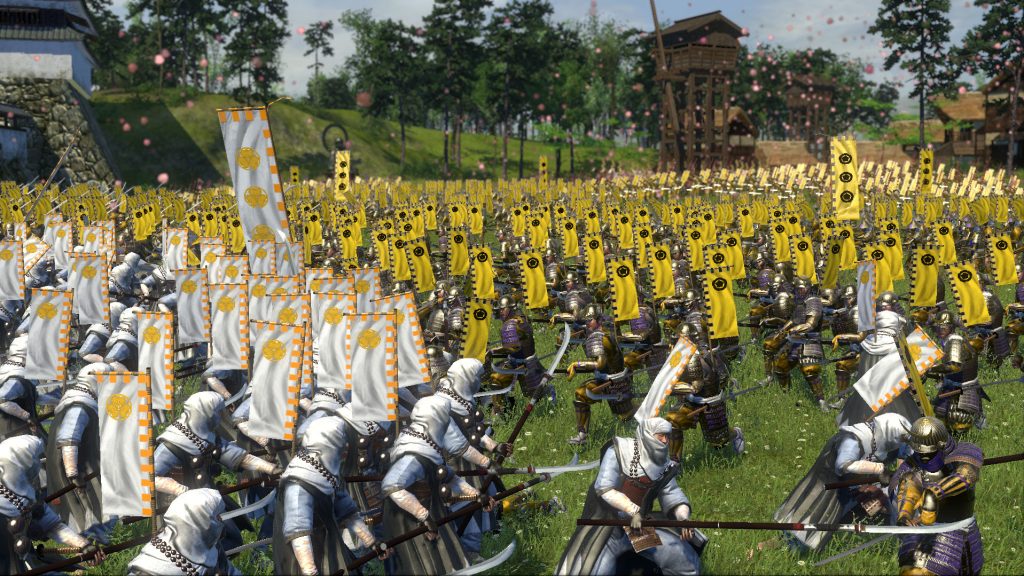
TL;DR: The Total War Shogun 2 Shimazu campaign opening starts in Satsuma under Shimazu Takahisa, at war with Ito in Osumi and Hyuga. Use an affordable mixed army, adding the clan’s improved katana samurai when they solve a real combat need. Make Osumi the first territorial objective, then recover or continue toward Hyuga according to losses. Keep the initially peaceful Sagara relationship useful while building Satsuma’s food, smithing and eventual maritime economy.

The Shimazu clan reference describes the base Sengoku start, including Ito’s two provinces and Sagara as a trade partner. The Satsuma province reference identifies the home smithing specialty and coastal position. Those advantages support an opening; they do not make Kyushu automatically safe or profitable.
On this page
Total War Shogun 2 Shimazu campaign opening: Satsuma to Osumi
- Protect the home province while preparing the first fight against Ito.
- Use the existing spears, bows and generals as a mixed force.
- Add an available katana unit if its combat benefit and upkeep fit the budget.
- Take Osumi when the army can hold the result as well as win the assault.
- Recover after heavy losses, or continue the Ito campaign toward Hyuga when ready.
- Keep Sagara and the home economy in view before extending farther across Kyushu.
This opening gives the clan’s sword advantage a defined job: help defeat Ito without exhausting the force that must defend the acquisitions. Recruiting several expensive units or launching a separate northern war before the first route works can waste the benefit of the corner position.
1. Understand what the Satsuma start gives you
Shimazu’s home region offers smithing and a coastal position near overseas trade opportunities. The clan has improved katana samurai, reduced recruitment and upkeep for them, and increased loyalty for generals. Use these as separate strengths rather than assuming they remove every military and financial constraint.
The smithing province is a reason to develop a useful recruitment center. Troops trained there can benefit from the relevant local infrastructure, but a powerful home recruit still needs time and money to reach later fronts. The source itself notes the distance problem as the realm grows.
Sagara in Higo begins as a trading relationship, while Ito is the immediate war. Keep that distinction clear. Higo’s horses can be attractive later, but taking an initially peaceful neighbor’s land can create another front while the first army is still occupied against Ito.
A corner limits some approach directions without guaranteeing enemy behavior. If another clan threatens Satsuma while the main force marches toward Hyuga, the home advantage will only matter if you retained a workable response. Keep the immediate war and future territorial ambitions separate.
2. Use katana quality inside an affordable mixed force
The reference’s initial information lists general bodyguards, yari samurai, yari ashigaru and bow ashigaru. That is a mixed opening force, not an all-katana army. Keep the useful roles already present while considering what the clan’s sword troops would add.
The katana samurai reference describes Shimazu’s early recruitment access and improved, cheaper version of the unit. Katana samurai are strong anti-infantry troops with useful morale, but they remain vulnerable to cavalry and missiles. A discount does not make them the correct answer to every opponent.
Add one available sword unit when you need a stronger infantry attack or a more durable combat role and can pay the continuing upkeep. Retain spears to protect against cavalry and bows to pressure a suitable target. Adding sword power while removing all spear coverage can create a new weakness.
Recruit toward the first target’s actual defense. If the current infantry can hold the opponent and the important shortage is ranged support, another bow unit may serve better than a second katana purchase. If the line is damaged, replenishment and a replacement can be more urgent than increasing the number of specialists.
For a hypothetical budget, assume a new katana unit leaves 1,000 cash while projected construction and repairs need 1,200. The military purchase prevents that immediate development unless you change the plan. The unit can still be worthwhile if it makes the next fight sufficiently safer, but the tradeoff should be deliberate.
3. Let spears hold while swords find a useful attack
Use the spear line to anchor the battle and the katana unit for an attack that exploits its anti-infantry strength. The yari ashigaru reference describes the directional defense of Yari Wall. Your own spears can hold a front while the swords approach a vulnerable side.
Do not assume katana samurai should charge every enemy wall frontally. Their unit reference specifically notes the difficulty of attacking prepared Yari Wall head-on and the value of flanking. Create an opening by fixing the enemy line, then use a position that avoids its strongest defense.
Preserve the swords’ condition for that attack. The unit reference favors a rested force with a useful slope advantage, so avoid tiring it through repeated pursuit before the infantry fight. A well-timed flank against an engaged opponent uses the recruitment investment more purposefully than a long unsupported chase followed by a frontal collision.
Protect Bow Ashigaru from an unopposed charge. Their unit reference describes weak melee and cavalry protection. A better sword unit elsewhere does not protect bows standing beyond the line’s flank.
Keep Shimazu Takahisa supporting morale unless a direct attack has a defined benefit. The official manual describes the general’s influence and rally role, and warns of the morale effect of his death. The clan’s loyalty trait does not make risking the daimyo harmless.
In a siege, take the castle’s actual routes and defense into account. The manual describes layered killing areas around the central objective. Sending sword troops alone over a wall can expose an expensive unit to several defenders. Support the entry and retain units capable of holding the result.

4. Treat Osumi and Hyuga as two stages
Ito controls Osumi and Hyuga in the cited opening. Capturing the neighboring Osumi position advances the first war, but it does not eliminate the remaining enemy base. The clan reference specifically notes the travel toward Hyuga and the time Ito can have to rebuild there.
Inspect what remains of your force after taking Osumi. If the main infantry suffered badly, restore the roles needed for the next assault. Holding near the new frontier can protect the gain while the army recovers. Do not buy one healthy specialist and assume the entire damaged force is ready again.
If losses are light and the home province is secure, continuing toward Hyuga can prevent the first war from dragging on. Still assess the new garrison and enemy army before attacking. A favorable first fight does not establish the strength of the second settlement.
Keep the army’s return route and the home response practical. Moving deep into Ito territory while ignoring a changing Sagara relationship can force a retreat at the wrong time. A local agreement supports the campaign, but an enemy’s willingness to keep it is not under your control.
Judge the occupation and repair costs according to how you intend to use the new holding. A settlement meant to fund the army has less immediate value when productive buildings are damaged. Retain enough money to make the conquest useful, rather than spending the full treasury before the assault.
5. Fund food, smithing and the next march
Improve the economic constraint that prevents the next stage. The manual links castle growth to increased food consumption and farm development. The food reference also describes surplus supporting town wealth growth across the faction.
Do not upgrade every castle merely to obtain more construction space. Satsuma’s recruitment role may justify a particular improvement, while Osumi might first need a farm, repairs or public-order support. Choose each province’s next job before buying capacity.
Maintain a margin for the army’s continuing cost. Shimazu’s reduced katana upkeep helps, but a larger force still competes with repairs, agents and construction. Compare the projected turn balance with the treasury you will retain after the next purchase.
Research one useful art at a time. Choose toward an affordable building, unit or campaign benefit, and identify where you will use it. Pursuing several attractive goals without the money for their follow-up construction can delay the development that would support your current force.
Honor and loyalty still deserve attention. The clan’s more loyal generals are an advantage, not a reason to ignore their condition or the daimyo’s reputation. Maintain leadership that can support the next war, especially when you have few available family commanders.
Maritime trade is a funded opportunity
Satsuma’s coastal position and proximity to trade nodes create potential income. They do not provide an instant free fleet: the cited starting information lists no navy. Develop the required available port and ships when the army and basic economy leave enough money.
Assess the actual node and sea route before committing. A node another clan already holds or a vulnerable shipping route is a different proposition from an accessible trading opportunity. Keep enough reserve to defend or replace the naval commitment instead of assuming all maritime income remains secure.
6. Decide whether to pause or continue against Ito
Pause after a costly Osumi victory
Assume the assault succeeded but left the spear line and katana unit badly damaged. Hold the gain, repair useful production and restore the army before the Hyuga march. Keep Sagara’s frontier manageable and avoid opening another northern campaign while the first force recovers.
The pause costs momentum, so give it a useful end condition. Resume when the army’s battlefield roles work, the captured province can be retained and the treasury supports movement plus upkeep. Waiting for every optional building is unnecessary if those conditions are already met.
Continue when the army can fight and retain Hyuga
Assume Osumi is stable, the army remains healthy and no urgent force threatens Satsuma. Continue the Ito campaign with Hyuga as a defined objective. Win and hold the remaining position before treating the whole of Kyushu as the next immediate target.
Afterward, reconsider Higo and other regional opportunities according to actual relationships, access and defense. Sagara’s horses can improve a later cavalry plan, but conquest is only one way a resource relationship can matter. Compare the value of a useful partner with the expense of taking and governing another frontier.
When is the opening complete?
The opening has done its job when the Ito front is manageable, Satsuma supports recruitment and food demand, and the army can pursue a further objective without abandoning a fragile base. Build toward later expansion and Realm Divide with dependable production and reserves. The corner start is a platform for that preparation.
Frequently asked questions
Who is Shimazu’s first enemy?
The cited base campaign starts at war with Ito, which holds Osumi and Hyuga.
Should I immediately recruit an all-katana army?
No. Add swords for a real infantry need while preserving spear protection, ranged support and an affordable turn balance.
Is Sagara already an enemy?
The cited opening lists Sagara as a trade partner. Relations can change, so assess the frontier while fighting Ito.
Does the coast guarantee early wealth?
No. Ports, ships, accessible trade and a defensible sea route still need funding and attention.
Sources and further reading
- https://totalwar.fandom.com/wiki/Shimazu_Clan
- https://totalwar.fandom.com/wiki/Satsuma_(Shogun_2_province)
- https://totalwar.fandom.com/wiki/Katana_Samurai
- https://totalwar.fandom.com/wiki/Yari_Ashigaru_(Total_War:_Shogun_2)
- https://totalwar.fandom.com/wiki/Bow_Ashigaru
- https://www.feralinteractive.com/en/manuals/shogun2tw/latest/linux/
- https://totalwar.fandom.com/wiki/Food
- https://totalwar.fandom.com/wiki/Realm_Divide
Keep exploring
Total War Shogun 2 Naval Bombardment: check the campaign first
The queried coastal bombardment and land-battle naval support belong to Fall of the Samurai, rather than base SHOGUN 2 naval combat.
Total War Attila vs Total War Shogun 2: survive or reunite?
ATTILA offers late-antique survival and destructive warfare; SHOGUN 2 centers a clan campaign on reunifying Japan.
Total War Rome 2 vs Total War Shogun 2: empire or clan?
ROME II suits classical empire building; SHOGUN 2 suits a focused Japanese clan campaign with growing generals and agents.