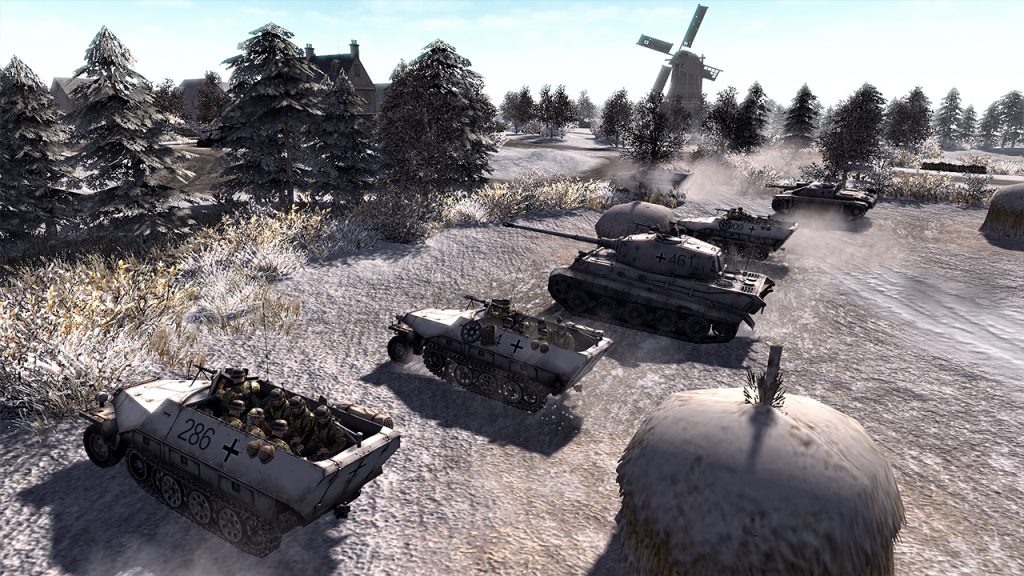
TL;DR: Men of War Assault Squad 2 smoke grenade tactics should address a specific sight problem during a movement or recovery. Confirm the smoke equipment, plan a destination in real cover, control firing orders and watch other enemy spotting angles. Treat smoke as a conditional aid rather than a guarantee that units cannot be seen or hit.
Use smoke to attempt a better movement window, then judge the result before committing more soldiers. A visible cloud does not prove that every enemy has lost sight, that a known target is no longer engaged or that incoming fire cannot reach the area. The route and supporting force still matter.

The official manual identifies the smoke-grenade command, but its accompanying table description appears mismatched. Historical community discussions also disagree about smoke effectiveness. This guide therefore provides a conservative decision process without claiming a current verified duration, radius or invisibility rule.
On this page
Men of War Assault Squad 2 smoke grenade tactics: define the move
Name the action you want to support before selecting the grenade. You might be trying to move infantry from one covered position to another or support a short recovery task behind your line. Those jobs need a route and an end point, not just a cloud placed somewhere near the force.
Inspect the selected soldier’s equipment and the command panel. The manual lists F3 for Smoke Grenade in its release-era controls table, but use the current label and your assigned binding. Do not interpret that table’s unrelated descriptive text as a damage or range claim for smoke.
Choose the soldier deliberately. Check whether you selected one unit or a whole squad, especially when the commander and supporting infantry stand together. The supply and selection systems described in the manual can change how a seemingly individual order affects the group.
Keep the rest of the force doing its job while you prepare the action. Infantry watching a flank and a gun covering an approach should not leave their positions merely because another soldier is handling smoke equipment.
Address the sight line that creates the problem
Identify which enemy position sees the intended route. A single gun facing the crossing creates a different sight problem from several units observing it from the road and the neighboring building. Smoke in one direction cannot be assumed to address every angle.
The April 2015 community discussion specifically raises shared sight from other units and reports both limited and useful situations. These are historical player observations, not a controlled present-build test. They support the need to assess multiple angles rather than a promise that one placement hides the force.
Plan the smoke placement around the particular crossing or working area you are trying to affect, then inspect the actual cloud and continuing enemy behavior. Do not immediately send every unit through because the effect is visible on your screen.
Have a fallback if the route remains contested. Your next order can be to remain in cover, use another approach or address the observing enemy position with available support. The grenade’s use does not obligate you to complete a movement that still looks unfavorable.
Coordinate firing orders and a destination in cover
Use Hold Fire when the purpose of the movement is to avoid revealing the moving infantry by their own firing. The manual documents hold fire as useful for concealing movement or conserving ammunition. It does not establish a universal smoke-specific guarantee, so keep observing what the enemy actually does.
The June 2014 smoke discussion includes reports that firing and side sight affect usefulness, alongside opposing reports that smoke does not provide the expected concealment. This guide does not adopt either set of anecdotes as an exact current rule.
The important operational check is the unit’s purpose. A moving group attempting to cross should not accidentally be left firing because its prior order remains active. A defending group covering the approach might still need to fire, so do not apply hold fire indiscriminately to the whole force.
Choose real cover at the destination. The manual distinguishes cover at suitable objects from camouflage and field of view. Smoke is not a wall, an armor upgrade or a substitute for a useful position after the crossing ends.
When the soldiers reach the destination, inspect their position and restore the orders needed for their next task. Forgetting Hold Fire can leave a correctly moved squad silent during the following defense. Order management remains part of the tactic after the smoke effect disappears.

Check why incoming fire continues
If enemies keep firing, inspect other viewing angles, the unit’s current firing behavior and whether the route remains exposed to an active weapon. Do not assume the only explanation is a defective grenade or immediately spend more smoke on the same unclear problem.
Distinguish the player’s view from the game’s target information. The historical threads report smoke obscuring manual observation while other players describe continued engagement through it. A cloud that makes the scene hard to see does not by itself prove that AI-controlled units have lost their target.
Do not use fixed grenade counts or anecdotal timing as a universal solution. The community thread contains numerical reports from individual experiments, but they do not establish reliable current values for all targets, patches or mods. Inspect the actual setup you are playing.
Consider whether the enemy weapon should be addressed directly. If the crossing remains under useful fire from several positions, smoke alone might not change enough. Another covered approach or a supported attack on the observing position can be the next decision.
Use a conservative vehicle-recovery example
Imagine a damaged vehicle sits near your defended line and a soldier needs to work beside it. This is a hypothetical planning example, not a recorded smoke test.
First diagnose whether the vehicle needs a repairable component, fuel, crew or ammunition. The manual documents those as separate tasks. Smoke is not useful preparation for a repair operation if the vehicle actually needs fuel or has a component destroyed beyond field repair.
Then inspect the approaches around the recovery site. Keep infantry covering likely close threats and choose a route for the repairer. If smoke is available, use it only as an additional attempt to manage a specific sight line, while watching whether enemy fire continues.
If the site stays exposed, stop the recovery or change the tactical condition. Sending successive repairers beside the same threatened hull does not become sound simply because another smoke cloud is present.
After successful servicing, move the vehicle to a useful protected position where possible. The end of the tactic is a recovered capability and a protected soldier, not merely spending the grenade.
End the action with a functional check
Check the moving group, its orders and the objective after the action. Did the infantry reach cover, does the specialist still carry useful equipment, and can the force now perform the next task? Those are practical results to assess without inventing a smoke success rate.
If the action failed, identify what remained unchanged: another sight angle, continued firing, an unsuitable route or a different active threat. Change that condition before repeating the same attempt.
Use the game hub for the wider movement and recovery mechanics. For the next smoke action, decide on the route, the observing threat and the protected destination first.
FAQ
Does smoke guarantee that infantry become invisible?
No guarantee is supported here. Historical community reports conflict and describe other viewing angles and firing behavior. Judge the current situation before committing the force.
Should you combine smoke with Hold Fire?
Use Hold Fire when the moving group’s task is to avoid opening fire. The manual documents that concealment purpose, but it does not prove a universal smoke-specific outcome.
Does smoke physically stop bullets or shells?
Do not treat it as physical protection. Use a route and destination in real cover and observe whether the enemy continues engaging the area.
Why are there no fixed smoke duration or grenade-count values?
The cited manual does not establish them and historical anecdotal reports do not verify current behavior across builds and mods. This guide avoids presenting those reports as universal mechanics.
Sources and further reading
Keep exploring
Men of War Assault Squad 2 vs Steel Division 2: units or battlegroups?
Choose Assault Squad 2 for direct control and varied WWII skirmishes; choose Steel Division 2 for battlegroup preparation and battalion-level campaign decisions.
Company of Heroes 2 vs Men of War Assault Squad 2: squads or direct control?
Company of Heroes 2 vs Men of War Assault Squad 2: compare cover and combined arms with direct soldier control, skirmishes and the right game package.
Men of War Assault Squad 2 vs Gates of Hell Ostfront: missions or Conquest?
Men of War Assault Squad 2 vs Gates of Hell Ostfront: compare varied skirmish missions, direct-control views and Conquest army development.