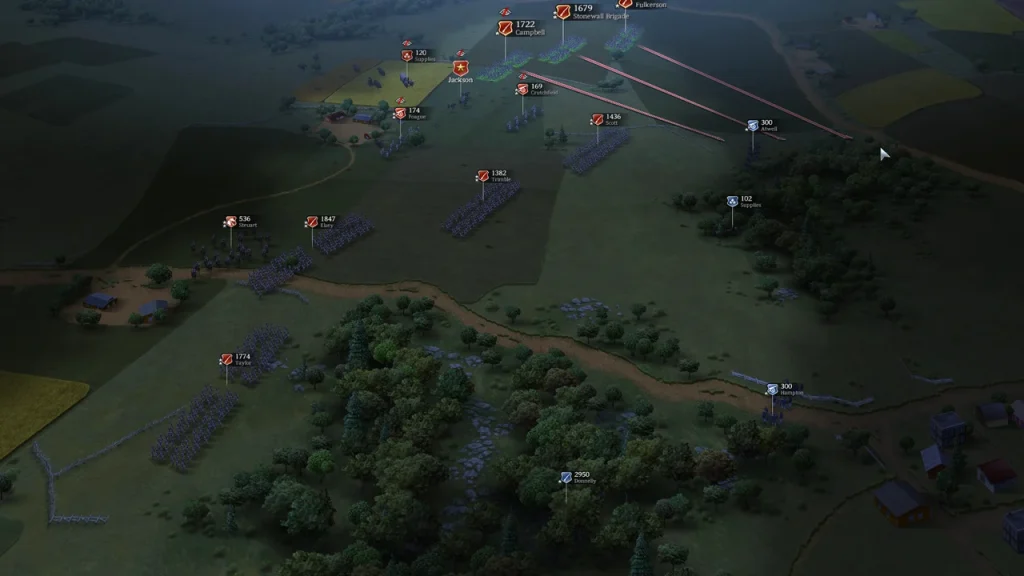
Ultimate General Civil War army organization should produce a force that can fill the next mission’s jobs and deployment slots. Arrange corps, divisions and brigades around command, equipment and battlefield roles. Organization capacity allows more formations, but it does not provide their officers, recruits or weapons. Read the next briefing before expanding, and repair command gaps before assuming another brigade makes the army stronger.
Quick plan: inspect the hierarchy, identify the limiting capacity, assign officers and roles, fund complete formations, and confirm which corps and brigades the next mission can use. This guide follows the official UGCW manual and the developer’s game overview. It does not prescribe a fixed corps count or an optimal roster for every campaign.

On this page
Ultimate General Civil War army organization: build a deployable force
Start with the next mission rather than the largest possible camp roster. Read its objectives, corps and brigade slots, and starting or reinforcement arrangements. Identify the force that must be ready when the opening phase begins.
List the jobs that force needs: holding infantry, supporting fire, scouting, protected artillery and a reserve. Your available resources may require prioritizing those roles. A new formation has value when it addresses a task and can reach the battlefield at a useful time.
Keep an organization note that records the next deployment and the shortages preventing it. This turns a broad wish for a bigger army into specific changes you can afford and verify.
Understand the corps division and brigade hierarchy
The manual describes corps commanded by corps generals, with subordinate divisions and brigades. A brigade is the lowest organizational unit in this system and can contain infantry, cavalry, artillery or skirmishers. Each layer supplies a different kind of command.
The corps general appears as a separate battlefield unit and helps nearby troops within the command radius. Division officers are represented through their subordinate formations and affect command and efficiency. Brigade officers contribute their own abilities to the unit they lead.
Inspect the whole chain when a formation’s efficiency is poor. The manual links command to the brigade officer and division commander, and explains that larger units require suitable command. A complete-looking hierarchy can still contain a command problem that matters in battle.
Use Organization to solve a specific capacity limit
The Organization career category controls formation capacity, including the corps, divisions and brigade arrangements available to the army. Read the current limits shown in camp. Decide whether your intended next force is blocked by a capacity limit or by another shortage.
If there is no room for a needed brigade, organization investment may address that restriction. If there is room but no equipment or suitable officer, more capacity does not solve the problem. Spend according to the actual constraint rather than treating a higher limit as automatically useful.
The manual says career changes apply on the next campaign turn. Plan that timing and confirm the current interface before relying on a newly chosen point. Do not promise an immediate expansion based solely on a tooltip you have just selected.
Fill command gaps before adding formations
Inspect every officer assignment and any wounded or lost officers after battle. The manual explains that officer casualties can reduce command and impose an efficiency penalty. Check the unit’s current details before attributing poor performance to insufficient men.
Use Barracks to compare Academy officers available to hire with officers in Reserve. The official manual image shows those separate areas. Choose an officer with suitable rank and command for the intended assignment, and include the hiring cost in the budget.
A new brigade needs its own command as well. Avoid using all available officers on expansion while leaving an important existing formation unresolved. Verify brigade and division assignments after changes, especially when preparing a larger unit.

Assign brigades by battlefield job
Give infantry positions it can hold or support. Decide which formations are intended to remain in the main line and which can act as a reserve. Check strength, skills and equipment against those jobs instead of standardizing every brigade without a reason.
Assign specialist units where the force can support them. Skirmishers can scout and delay but are vulnerable in melee. Cavalry roles depend on carbine or shock equipment and the ability to dismount. Artillery needs spotting, protection and supply. Those distinctions should shape the army’s roles before purchasing another unit.
A formation with no clear purpose can consume a deployment slot that another unit needs. Review the assignments together: who sees the threat, who holds it, who supports the fight and who responds if the first unit cannot continue?
Fund each new formation as a complete unit
Creating a brigade requires capacity, an appropriate officer, recruits and equipment. Check all of them before committing. If one requirement is missing, revise the plan or resolve the shortage rather than counting the proposed unit as ready.
Compare creation with repairing or enlarging an existing formation. A second unit can fill another position, but also needs command and a slot. Expansion concentrates men under an existing commander and changes the size that command must support. Inspect efficiency and the live replacement costs for the latter option.
Reserve resources for the rest of the force. One complete new brigade can be helpful; one bought at the cost of leaving several essential units under-equipped may produce an army that cannot carry out its plan.
Read the next battle deployment before arranging corps
Campaign briefings limit the corps and brigades that can be committed. The manual also describes differences between starting forces and later reinforcements. Check which selected formations begin on the map and which your plan must wait for.
Place the needed opening roles in the available deployment arrangement. Do not assume all of a large camp army arrives together or that every mission uses the same slots. Read the current screen and inspect the selected brigade cards before starting.
The historical manual deployment screenshot demonstrates corps, division and brigade selection in a bounded area. Its roster and headcounts illustrate the controls; they do not establish the best structure for your next battle.
Keep a reserve the mission can actually use
Give the reserve a defined job, such as supporting an exposed side or replacing a tired holding formation. Check that its arrival and route let it perform that task. A unit held in camp is different from one available behind the battlefield line.
Keep the reserve equipped and commanded. If its strength or skills differ from the first-line unit, account for that in the relief plan. It may need support rather than taking over an isolated position alone.
There is no universal reserve count here. Choose by the mission’s commitments, the force you can fund and the problems the opening units may need help solving.
Review the structure after casualties
Return to the officer assignments, brigade strength and weapon stock after each battle. Check which roles became weak and which units actually contributed. A damaged structure may need a replacement officer or equipment before it needs another formation.
When considering disbanding, read the manual and current action carefully: it returns unit resources to the army but changes the formation available for future assignments. Do not use it as a routine cure without reviewing the consequences for your next deployment.
Use the Ultimate General Civil War guide hub for size, equipment and replacement details. Update the organization note with the next force, officer gaps and funded reserve before leaving camp.
FAQ
Does higher Organization automatically create more fighting strength?
It increases the capacity available to the army, but new units still require officers, recruits and equipment. Check whether capacity is the shortage actually blocking your plan.
Why can a veteran brigade have poor efficiency?
Inspect brigade and division command, officer casualties and the formation’s size. The manual links command with efficiency, so experienced soldiers can still suffer from unsuitable or interrupted leadership.
Can every corps participate in every battle?
Read the current briefing. Missions impose deployment limits and can separate the starting force from reinforcements; the full camp roster is not a promise of simultaneous battlefield availability.
Sources and further reading
Keep exploring

Hearts of Iron 4 vs Ultimate General Civil War: nation or army command?
Pick HOI4 for national industrial and political war planning; pick Ultimate General: Civil War for tactical formation command and an army that carries battle consequences forward.
Gates of Hell Ostfront vs Ultimate General Civil War: which army campaign?
Choose Ostfront for a researched WWII force and direct control; choose Ultimate General: Civil War for brigade command and a campaign shaped by surviving soldiers and officers.
Games like Ultimate General Civil War: 3 clear choices
Criterion-based alternative selection for UGCW players: same-franchise focused battlefield, same-war national strategy, or different-period gunpowder regional campaign; explicit scope and evidence limits.