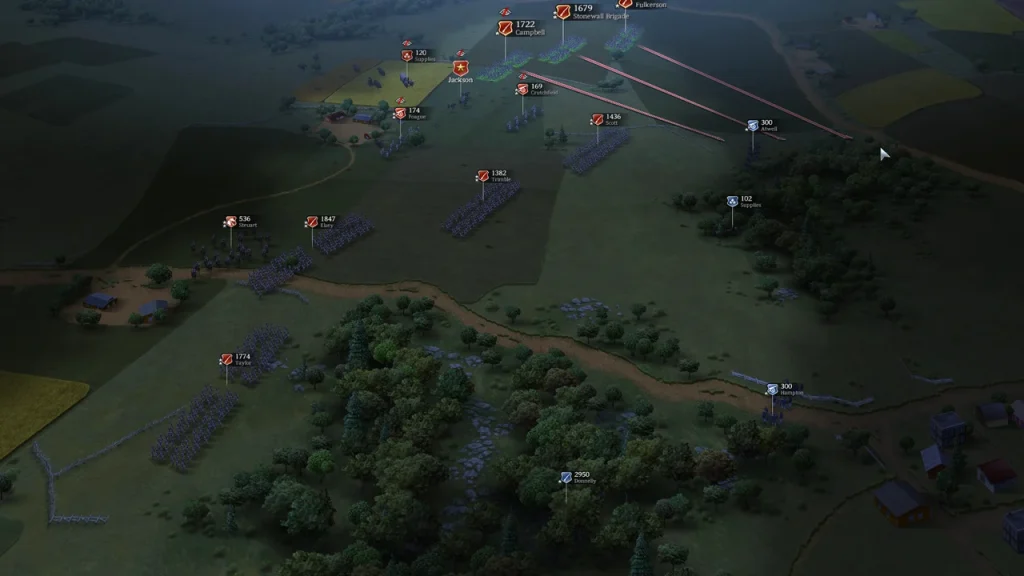
Ultimate General Civil War veteran replacement costs buy the preservation of a brigade’s skills, not simply more men. The official manual says Rookie replacements dilute skills, while Veteran replacements maintain them at a gold cost that rises with the average quality being preserved. Compare both choices at the same target strength, then include recruits, weapons and the repairs needed elsewhere in the army. There is no universal veteran price per soldier supported by this guide.
Quick plan: inspect a damaged unit, compare equal-strength previews, identify the quality its next role needs, and apply only the repairs the full army can fund. This guide follows the official UGCW manual and the developer’s game overview. Historical screenshots show the comparison fields; they do not supply current prices.

On this page
Ultimate General Civil War veteran replacement costs: price the quality you need
Begin with the brigade’s next assignment. A unit expected to carry a demanding firing or holding role may need its existing skills more than a supporting formation used for a lighter task. That is a reason to examine the Veteran option, not a rule that every experienced unit must receive a full refill.
Read its current strength, skills, officer and weapon before opening the replacement decision. If command or equipment is unsuitable, preserving the soldiers’ skills alone may not solve the problem. Budget for the usable unit you need rather than for a target headcount in isolation.
Compare Rookie and Veteran at the same target strength
Choose a proposed strength with the slider, then inspect Rookie and Veteran previews at that same number. Record the gold, recruits and resulting skills. When comparing Ultimate General Civil War veteran replacement costs, hold the proposed headcount constant. Holding the size constant makes it easier to see what the additional Veteran expense preserves.
The official manual illustrates this with the same Loomis infantry brigade under both choices. Its displayed 1,500 soldiers and prices are historical UI examples. Use your own camp values for the decision, and do not calculate a universal rate from that image.
If the two previews appear very different, examine the skill fields before applying either. A cheaper replacement can create a brigade whose original assignment needs adjustment. An expensive one can preserve useful quality while leaving fewer resources for the rest of the force.
Read skill preservation separately from headcount
The manual describes brigade quality through skills such as efficiency, morale, stamina, firearms and melee, while command depends on leadership. Rookie replacement dilutes the soldiers’ skills. Veteran replacement maintains them at the corresponding cost.
Look at the skills relevant to the next task. A firing brigade needs a different assessment from a unit intended for a close-combat opportunity. Preserving everything may be attractive, but the army’s budget requires deciding which existing strengths matter most in the coming battle.
Also inspect officer and division command. The manual explains that larger units need suitable leadership to operate efficiently. Paying for veteran soldiers does not remove a command penalty or the consequences of an officer casualty.
Check weapons and recruits before judging the gold bill
Both replacement methods still need recruits and equipment for the added soldiers. Check Armory stock for the brigade’s selected weapon and inspect the shop when stock is insufficient. A low replacement wage does not make the equipment free.
If neither stock nor shop supplies enough of the current weapon, your intended expansion is constrained. Compare a smaller repair or another equipment choice with its own role and cost. Confirm equipment with Equip and troop replacements with the separate Apply preview.
Record the combined commitment: recruits consumed, Ultimate General Civil War veteran replacement costs and any required equipment purchase. Then check remaining money and weapons before judging whether the repair is affordable for the campaign.

Choose which units deserve expensive repairs
Rank repairs by the next deployment’s needs. Start with units whose jobs depend on maintaining their existing quality and whose command and equipment support that job. Compare them with formations that can accept a different replacement choice or a less demanding assignment.
A selective plan might preserve one important firing brigade while using rookies in a supporting formation, provided the resulting skills remain suitable. Another campaign may need veterans in several units or may not be able to afford that choice. Use the live previews and assignments instead of a fixed spending fraction.
Do not base the decision only on stars or prestige. The manual ties star progression to average skills. Inspect the actual fields and what the unit must do; a familiar unit name is not enough to justify exhausting the repair budget.
Compare a smaller repair with a full refill
If Ultimate General Civil War veteran replacement costs exceed the available repair budget, lower the proposed strength and inspect the new preview. Compare the smaller preserved unit with the larger Rookie-filled alternative. Consider command, resilience and the support the mission can provide to each.
The smaller option may leave enough money to equip a reserve or replace an officer. The larger option may provide more numerical staying power while weakening skills. These are different force plans, so evaluate what each one leaves for the rest of the deployable army.
This is not a recommendation for a fixed infantry size. The manual distinguishes numbers from effective firing and notes that not all men fire simultaneously. Your repair should fit the task and available support.
Use Training with the campaign timing in mind
The Training career category reduces the expense of veteran replacement according to the manual. Consider Training when Ultimate General Civil War veteran replacement costs repeatedly consume money needed for other campaign repairs. Compare that need with other constraints such as organization, ammunition or resource rewards.
The manual says career changes apply on the next campaign turn. Do not promise that assigning a point immediately discounts a replacement you are about to buy. Inspect the current camp preview and budget from the cost actually displayed.
Training can help the long-term plan, but it does not supply recruits, weapons or command. If one of those is the limiting shortage, reducing the veteran wage alone does not make the desired formation ready.
Apply one repair then rebuild the remaining budget
Confirm a selected repair only after reading the preview. Inspect the resulting unit and resources, then reassess the next brigade. This prevents several individually affordable plans from becoming an unaffordable combined commitment.
Check for unresolved officers, equipment and supply before using the remaining money on another full refill. The aim is a force that can execute the next deployment, with each important role funded. Keep a short record of which quality you preserved and which compromise you accepted.
Review casualties before repeating the expense
After the next battle, examine why the repaired unit lost men. Sustained pressure on a necessary position is different from an unsupported charge or an exposed crossing. If the task or route repeatedly produces avoidable losses, another expensive refill will reproduce the cost without addressing its cause.
Inspect what the unit contributed, what support it received and whether its skills mattered to the assignment. Use that evidence to decide the next repair. Related army, equipment and size topics are in the Ultimate General Civil War guide hub.
FAQ
Why do Ultimate General Civil War veteran replacement costs rise in a strong unit?
The manual says the gold cost rises with the average quality being preserved. Use the brigade’s current preview rather than a fixed historical price per soldier.
Are rookies always the wrong choice?
They dilute skills but cost less in replacement gold. Compare the resulting unit with its next role and the resources needed elsewhere. A selective Rookie repair can be a deliberate campaign compromise.
Does Training solve every replacement shortage?
It addresses veteran expense. Recruits, weapons, organization and command remain separate requirements, and the manual places career changes on the next campaign turn.
Sources and further reading
Keep exploring

Hearts of Iron 4 vs Ultimate General Civil War: nation or army command?
Pick HOI4 for national industrial and political war planning; pick Ultimate General: Civil War for tactical formation command and an army that carries battle consequences forward.
Gates of Hell Ostfront vs Ultimate General Civil War: which army campaign?
Choose Ostfront for a researched WWII force and direct control; choose Ultimate General: Civil War for brigade command and a campaign shaped by surviving soldiers and officers.
Games like Ultimate General Civil War: 3 clear choices
Criterion-based alternative selection for UGCW players: same-franchise focused battlefield, same-war national strategy, or different-period gunpowder regional campaign; explicit scope and evidence limits.