Games like Ultimate General Civil War serve different parts of its appeal. Choose Ultimate General: Gettysburg for a focused Civil War battlefield game with familiar movement-arrow controls, Grand Tactician: The Civil War for a wider war involving national resources and army supply, or Total War: NAPOLEON if you want regional campaigns and gunpowder armies in a different historical setting. Start with the part of UGCW you want to keep.
On this page
Games like Ultimate General Civil War: choose by the job you enjoy
UGCW combines tactical battles with an army you manage between engagements. Its official game overview describes linked campaign battles, officers, surviving brigades, equipment and supply. That combination gives the alternatives two separate standards: how they handle battlefield command and what they ask you to manage outside battle.

If drawing a line, watching morale and finding a flank are your favorite decisions, prioritize the tactical layer. If choosing equipment, replacing losses and preparing the next deployment keeps you playing, inspect the campaign systems. A game set in the same war can still move much more of your attention to national administration.
The choices below use official game descriptions and identifiable gameplay screenshots. The recommendations concern documented scope and the kind of decisions each game offers. They do not rank AI intelligence, technical stability or performance from a new playtest.
| What you want next | Start with | Main difference to check |
|---|---|---|
| More Civil War battle command with movement arrows and morale | Ultimate General: Gettysburg | A dynamic Gettysburg battle rather than UGCW’s full-war campaign |
| A wider Civil War strategy layer with supplies and national decisions | Grand Tactician: The Civil War | Managing the war beyond the army’s next battle |
| Gunpowder armies and regional campaigning in another period | Total War: NAPOLEON | Napoleonic factions, campaign geography and unit system |

Ultimate General: Gettysburg for a focused tactical follow-up
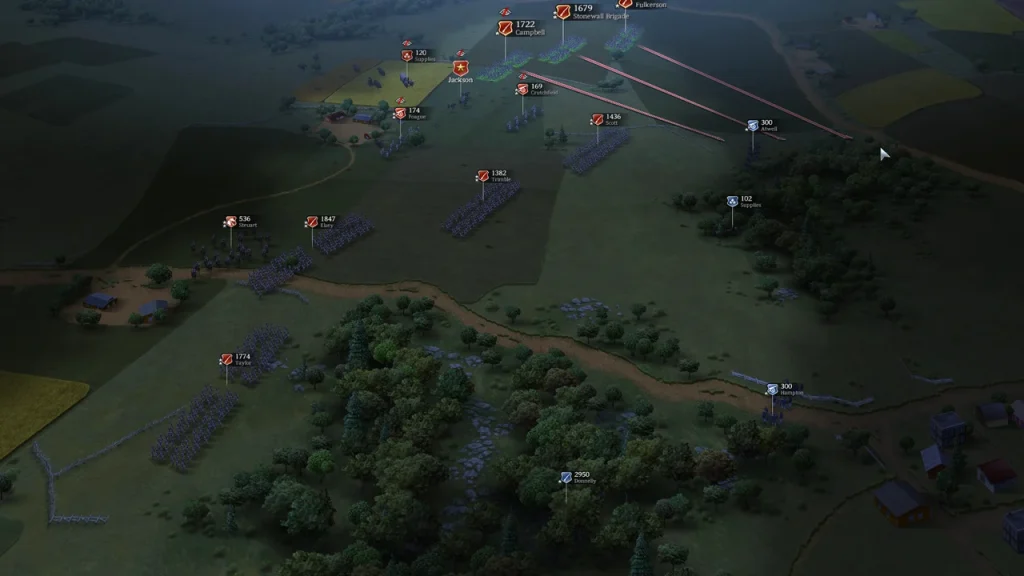
Ultimate General: Gettysburg is the direct franchise option for players who want the battlefield side of UGCW. Game-Labs’ official Gettysburg listing describes commanding either the Union or Confederate army in a dynamic battle fought through time phases. Outcomes and decisions can alter the next engagement, and the battle can last up to four days.
The documented controls include drawing movement arrows, while units can realign, switch targets and withdraw on their own initiative. Terrain, sight, morale and condition affect battle decisions. Those are concrete points of similarity for a UGCW player who enjoys positioning formations and supervising their response to pressure.
The smaller historical scope changes the reason to choose it. Gettysburg concentrates on one battle and its possible course. It does not replace UGCW’s full-war progression through different campaign engagements. Pick it when revisiting a familiar battlefield from another angle sounds appealing, rather than when you want a larger strategic map.
The official screenshot shows Confederate movement arrows advancing toward Union formations, with labeled terrain and a battle clock. That gives a useful view of the command presentation. It cannot establish whether this game’s AI will suit you better than UGCW’s; that depends on play rather than a promotional claim.
Before buying, inspect gameplay that shows a complete phase, including an attempted withdrawal or change of plan. Check whether you enjoy the game’s narrower focus and the visual information used to command the line. If rebuilding a persistent army between many different battles is essential, compare Grand Tactician next.
Grand Tactician: The Civil War for wider war management
Grand Tactician: The Civil War (1861-1865) is the stronger candidate when you want decisions above the battlefield. Its official game description combines a real-time strategic campaign with tactical battles. You run a nation, muster and support armies, move them and then command troops when opposing forces meet.
The description explicitly includes treasury pressure, citizen and troop morale, drafting, supply flows and railway development. Land and sea operations include sieges, raids and blockades. These systems give a UGCW player who enjoys army preparation a broader set of causes to manage before the next fight.
That broader scope is also the reason to be selective. If you mainly want to draw a battlefield line and fight immediately, national management may add decisions you do not want. If you want to understand why an army can march, remain supplied or receive support, those decisions are the attraction.
Tactical battles remain part of the package. The official description lists multi-day engagements, engineering work, reinforcements and reserves. It also lists separate historical battles alongside campaign starting scenarios, so you can inspect both the strategic and tactical modes when judging the fit.
The official screenshot selected here shows the Battle of Olustee with infantry, guns, a railroad objective and a detailed unit panel. It illustrates the different presentation of troop state and battlefield command. It is an official gameplay image, not a result from this site’s campaign.
Choose this route if supply, commanders and the wider conduct of the Civil War are the decisions you want to add. Review footage showing campaign administration as well as combat. A battle trailer alone cannot tell you whether you enjoy maintaining the systems that support that battle.

Total War: NAPOLEON for a different gunpowder campaign
Total War: NAPOLEON changes the war while retaining an interest in armies, artillery, cavalry and campaigning. The official Definitive Edition listing describes campaigns from Napoleon’s early Italian operations through Waterloo, with included additional content such as the Peninsular Campaign and the Coalition Battle Pack.
The Peninsular Campaign uses an independent regional map and offers France, Great Britain and Spain with different starting situations. Its description includes political alignment and guerrilla units and agents. This provides a campaign reason to choose Napoleon beyond merely replacing Union flags with European ones.
For a UGCW player, the fit is the opportunity to manage another historical army and fight in a gunpowder setting. The equipment, unit roles, factions and regional campaign decisions belong to Napoleon’s system. Do not assume UGCW’s brigade efficiency, supply radius or command buttons transfer unchanged.
The official screenshot here is a campaign map around Vienna with army markers, regions and selected unit cards. It shows the layer you will spend time managing between battles. Compare that presentation with UGCW’s camp and deployment screens when deciding which kind of preparation you prefer.
Start here when you want a new period and campaign geography. If the American Civil War itself is a requirement, the two earlier choices match that setting more directly. Before purchasing an edition or extra content, inspect the package description so the campaign you want is included.
Check the alternative against one real preference
Write down the UGCW decision you most want to repeat. It might be finding a covered firing position, keeping a brigade from wavering or preparing an equipped army for the next engagement. Then check footage and the official description for that decision in the candidate game.
For Gettysburg, inspect battlefield orders and the choices between phases. For Grand Tactician, inspect the national campaign and the flow of supplies. For Napoleon, inspect the regional campaign and the battle system together. This comparison narrows the search more effectively than asking which game is universally closest.
Also check the current system requirements for your platform and recent information on the version you intend to use. A documented feature does not prove performance on your computer. Keep mod comparisons separate from the base-game features discussed here.
If you want to improve your current campaign before moving on, use the Ultimate General Civil War guide hub. Choose the next game when its added decisions are the ones you want to spend time making.
FAQ
Which option keeps the same war and a focused battlefield scope?
Ultimate General: Gettysburg is the direct franchise choice. It concentrates on Gettysburg’s dynamic multi-day battle rather than the full-war campaign of UGCW.
Which option adds national resources and supply networks?
Grand Tactician explicitly includes treasury, national morale, army supplies and railways in its strategic campaign. Inspect that management layer before choosing it for combat alone.
Do these recommendations compare current AI quality?
No. They compare documented systems and scope. Assess the current version’s behavior through complete gameplay and relevant player reports rather than treating an official screenshot as a test.
Sources and further reading
Keep exploring

Hearts of Iron 4 vs Ultimate General Civil War: nation or army command?
Pick HOI4 for national industrial and political war planning; pick Ultimate General: Civil War for tactical formation command and an army that carries battle consequences forward.
Gates of Hell Ostfront vs Ultimate General Civil War: which army campaign?
Choose Ostfront for a researched WWII force and direct control; choose Ultimate General: Civil War for brigade command and a campaign shaped by surviving soldiers and officers.
Ultimate General Civil War Gettysburg Union Battle: 9 Essential Defense Steps
Campaign-specific Union sequence and corps-role transitions from opening delay to Cemetery Hill, left ridge defense, Culp's Hill and central assault with conditional counterattack.