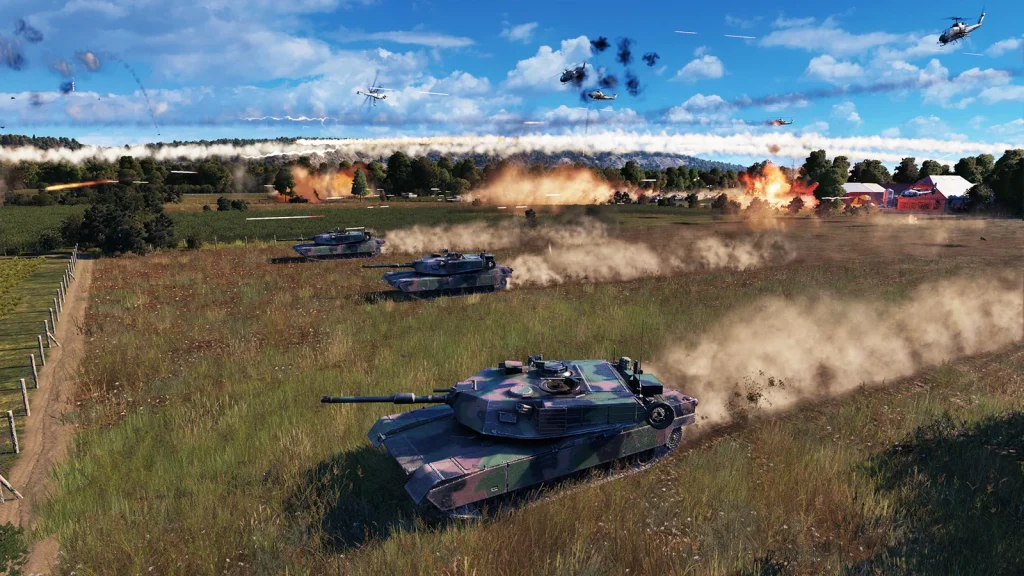
The best war strategy games without base building let you spend the battle on deployment and unit decisions. WARNO suits modern combined arms, Steel Division 2 provides division-based WW2 tactics, and Into the Breach focuses on a small mech squad and a turn-based grid. Avoiding a conventional RTS base does not remove planning, supply or resource limits.
On this page
WARNO starts from the battlegroup you prepare
WARNO organizes your force around a military formation and its available units. The official description emphasizes building a battlegroup and commanding it on a tactical battlefield, rather than growing a civilian settlement during the match.

That makes it a strong fit if you want to spend attention on reconnaissance, approaches, fire support and combined arms. Your available forces need useful jobs, and the initial deployment should support a plan for the ground you intend to contest.
The work removed is the conventional worker-and-building opening. The work retained includes force preparation, reinforcement decisions and coordinating many different capabilities. A tank still needs information and support to fight effectively.
The drawback is the size of the tactical problem. Without a base queue, the battlefield can still demand considerable attention. Start with a clear purpose for the battlegroup instead of choosing every attractive unit and hoping the deck will explain itself.

Steel Division 2 makes the division’s tools the constraint
Steel Division 2 uses division-based decks and real-time WW2 battles. The military formation determines the selection you prepare, so the question is how to field and coordinate that force.
Choose it when the desired evening is about infantry, armor, artillery and other support on a broad battlefield. Inspect units in the armory, give them roles in the battlegroup, and consider how the available capabilities cover the approaches you expect to face.
Army General adds a strategic campaign of battalion movement and supply. That is an additional operational layer, not a requirement to manage a civilian base inside every tactical engagement. Check which mode you want before comparing the two kinds of workload.
The limitation is that the preparation is substantial. Knowing the historical vehicle names does not automatically tell you what a division can do in the game. Learn a manageable force and inspect its gaps before expanding the roster or match size.

Into the Breach gives you a smaller decision space
Into the Breach is the focused turn-based option. You control a mech squad, enemy attacks are telegraphed, and civilian buildings contribute the power you are trying to protect.
It is the best fit here when removing base building should also remove real-time pressure and a large army interface. The immediate problem is the threatened tiles and the tools your few units can use to change that outcome.
Weapons, pilots and mech squads still change what the force can do across an attempt. That provides development without a conventional RTS production base. A small force can have several competing objectives even when every unit is visible at once.
The drawback is that compact does not mean easy. Position, collateral risk and mission goals can create a difficult turn. Choose it when you want to reason about the grid, not when you want a strategy game that requires no tactical planning.
Choose what replaces the base queue
WARNO replaces it with a Cold War battlegroup and a large tactical contest. Steel Division 2 offers WW2 formations with optional operational campaigns. Into the Breach concentrates the problem into a small squad and deliberate turns.
This shortlist uses official force and battle systems rather than an invented measure of clicks saved. Watch the relevant battle mode before buying, then browse our strategy game lists if command scale or session length matters as much as removing the base.
Sources and further reading
Keep exploring

Hearts of Iron 4 occupation laws: control resistance without draining reserves
Match occupation policy to resistance, compliance and a garrison you can actually supply; use stronger control only when the situation justifies its cost.

wargame red dragon radar anti air management: coverage and weapon-state decisions
A source-backed guide to managing specific radar-related weapons within a complete Wargame Red Dragon air defense.
wargame red dragon sead aircraft: choose a mission that helps
A concise source-backed guide to choosing and reassessing a useful SEAD mission in Wargame Red Dragon.