The best war strategy games with asymmetrical factions make a new side change your decisions, not only the color of the units. Northgard changes settlement strategy through clan mechanics, WARNO builds battlegroups around distinct military formations, and Company of Heroes 2 gives armies different tools for its combined-arms battles. Choose the kind of difference you want to learn.
On this page
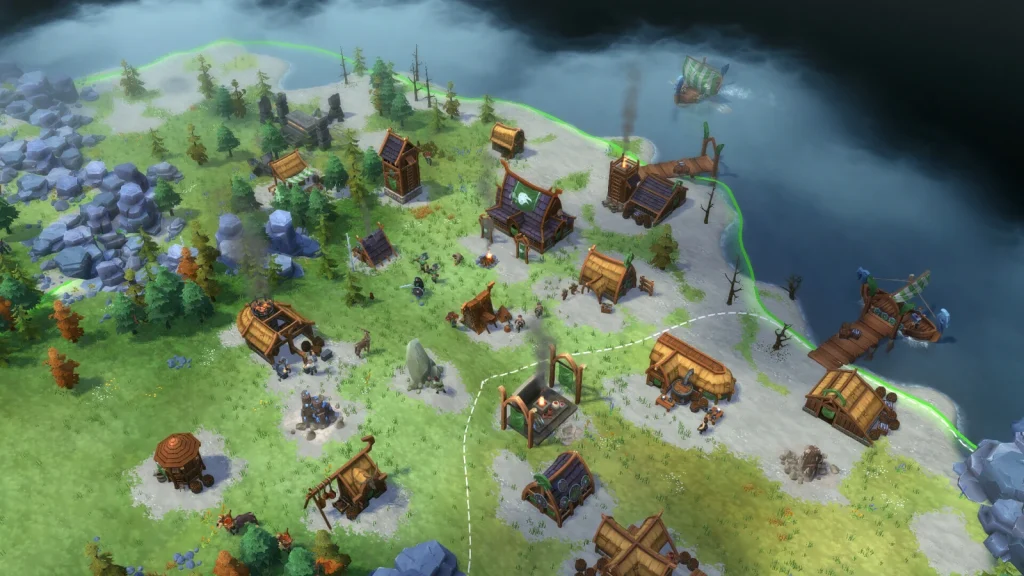
Northgard changes the economy behind the fight
Northgard gives clans their own bonuses, features and mechanics. Its official description combines jobs, resources, winter survival and different victory routes, so asymmetry reaches beyond the battlefield roster.

That suits players who want a new faction to change the opening plan and economic priorities. A clan choice can influence how you prepare for winter, expand territory and pursue a victory route rather than simply which weapon you buy.
Solo or cooperative Conquest adds a succession of special challenges, while multiplayer offers another place to compare clan plans. Choose the mode you actually want to play when investigating a clan’s design.
The limitation is learning and content ownership. Different mechanics take time to understand, and optional clans should be checked separately. An official claim of distinct identities does not prove that every matchup is equally balanced in the current build.

WARNO makes the available formation shape the plan
WARNO draws on NATO and Warsaw Pact national arsenals, then organizes battlegroups around divisions and brigades with distinct identities. The available selection is part of the strategy you are choosing.
Pick it when you want to solve a combined-arms problem with different tools. A formation’s mix of infantry, armor, reconnaissance, air defense and aircraft can encourage a different deployment rather than let every deck cover every task equally.
The official description identifies the armory as a place to inspect and compare units. Use that information to understand a formation’s options before copying a battlegroup without knowing why the chosen units fit together.
The drawback is that asymmetry can expose a gap you have not planned around. A familiar tactic may not work with the next formation’s available units. Begin with a clear job for each part of the battlegroup and adapt to the roster rather than expecting a universal deck.

Company of Heroes 2 changes the tactical toolkit
Company of Heroes 2 centers battles on cover, line of sight, combined arms and counters. The official listing identifies the Soviet and Wehrmacht armies in the base game, then describes other armies associated with additional products.
Those descriptions make the differences concrete. The Western Front armies contrast specialized elite forces with a combined-arms expeditionary army, while the British army adds a technology choice involving mobility and defense. Check the current product required for the army you want.
It suits players who want asymmetry inside a close tactical fight. Army selection changes which tools solve the engagement, while positioning and counters remain part of the shared battlefield language.
The limitation is tactical workload. A distinctive army does not remove the need to manage units, cover and timing. Choose it when learning those tools is the attraction, not when faction differences are mainly a reason to avoid real-time control.
Learn the difference by changing one plan
For a new side, identify its strongest practical option, its missing tool and the part of your old opening that needs revision. Use a small match or scenario to explore that difference before assuming the faction is weak because your previous plan failed.
This shortlist uses official faction descriptions and actual game images, without a tier list or invented current balance score. Check the installed version and included armies on the linked pages. Browse our strategy game lists when you want a particular historical period, campaign type or lower tactical workload alongside faction variety.
Sources and further reading
Keep exploring

Hearts of Iron 4 occupation laws: control resistance without draining reserves
Match occupation policy to resistance, compliance and a garrison you can actually supply; use stronger control only when the situation justifies its cost.
wargame red dragon radar anti air management: coverage and weapon-state decisions
A source-backed guide to managing specific radar-related weapons within a complete Wargame Red Dragon air defense.
wargame red dragon sead aircraft: choose a mission that helps
A concise source-backed guide to choosing and reassessing a useful SEAD mission in Wargame Red Dragon.