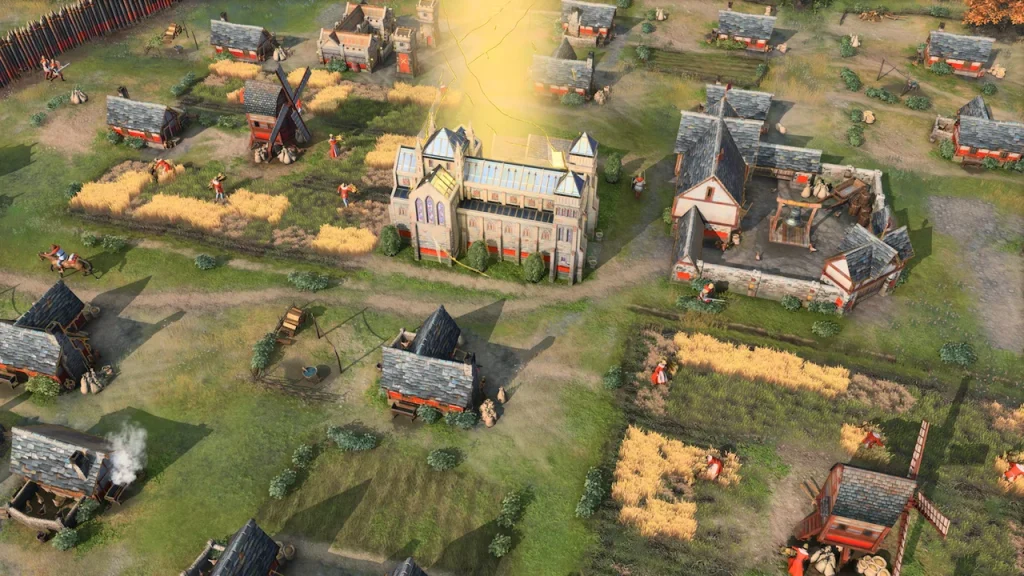
TL;DR: For Age of Empires 4 vs Total War Attila, choose AoE4 if you want city building, resource management and unit command within a real-time strategy session. Choose Attila if you want a persistent turn-based empire campaign, with politics, family management and separate real-time battles. The shared historical theme makes them plausible alternatives; the different session structure is what should decide the purchase.
Quick verdict: AoE4 is the direct shortlist choice for its advertised historical missions and online RTS formats. Attila is the direct shortlist choice for its 395 AD campaign and the management of an established or emerging empire. Neither product description establishes a universal winner for difficulty, realism or performance.

Checked November 8, 2026. This is an editorial comparison of AoE4’s official Steam description, Total War: ATTILA’s official Steam description and named content-pack descriptions. It is not a hands-on comparison. No current prices, player counts, measured frame rates or numerical review scores are assigned.
On this page
Age of Empires 4 vs Total War Attila: which session do you want?
This comparison is useful for a buyer who wants a historical strategy game but has time or budget for one new purchase. One person may want to develop a town during an RTS match. Another may want to reopen a continuing empire campaign and deal with its political situation. Those are specific alternatives even though the games belong to different strategy formats.
| Buying criterion | Age of Empires IV | Total War: ATTILA |
|---|---|---|
| Main structure | Real-time city building and resource management | Turn-based campaign with real-time battles |
| Base historical attraction | Anniversary historical campaigns | 395 AD and the late Roman world |
| Empire-management emphasis | Development within the RTS framework | Politics, family tree and civic management |
| Separate content example | Named civilizations, campaigns and Crucible additions | Culture packs and Age of Charlemagne campaign |
| Steam platforms listed | Windows | Windows, macOS and Linux |
1. Choose continuous RTS management or a persistent campaign
AoE4’s description explicitly combines building cities, managing resources and directing units. Its appeal is having these development decisions inside a real-time strategy experience. Choose that structure if seeing a settlement grow during play is central to what you want from the game.
Attila explicitly combines turn-based strategy with real-time tactics. Its campaign is the continuing framework in which the player manages an empire; its battles are another layer. That is a stronger match when you want decisions about a wider state to persist beyond one battlefield session.
Neither format is inherently the more serious option. They ask you to enjoy different kinds of management. A player interested in an evolving town does not necessarily want to spend the same evening on a family tree or political situation. A player interested in imperial continuity may find that the real-time town-development loop answers a different question.
Use a concrete test: what would you be excited to reopen tomorrow? If the answer is another RTS mission or multiplayer match, inspect AoE4’s modes. If the answer is the same empire and its ongoing position, inspect Attila’s campaign. That preference is more informative than comparing the age of the releases.

2. Pick the historical setting before counting content
Attila’s base campaign begins in 395 AD. The official description focuses on the Roman world, emerging kingdoms and a setting of instability. It specifically presents the Western Roman Empire as beginning with extensive territory but internal political weakness and pressure around it.
That starting situation is a clear product attraction for someone interested in late Roman history. You are not simply looking at medieval architecture and choosing which screenshot is prettier. The established empire and its continuing management are part of the advertised campaign premise.
AoE4’s Anniversary description instead advertises four historical campaigns and 35 missions spanning approximately 500 years from the Dark Ages toward the Renaissance. It mentions historical figures such as Joan of Arc and Genghis Khan. The appeal is a campaign collection across different stories within the RTS framework.
If one particular period is the reason to buy, identify it directly. A late Roman campaign buyer has a clearer reason to consider Attila. A buyer attracted to AoE4’s named mission collection has a clearer reason to consider AoE4. Their historical range should not be converted into an invented ranking of educational accuracy.
3. Decide which management systems interest you
Attila’s developer description identifies politics, a family tree, civic management and technological progression among its systems. These are useful buying criteria because they tell you that empire administration is part of the product, rather than merely a backdrop for selecting a battle.
AoE4 advertises resource management and city building, with civilizations offering different systems within the RTS. The choice is not “management or no management.” It is whether you want the real-time development framework or the political and civic framework described for Attila’s continuing campaign.
A player who enjoys looking after an established state may view Attila’s additional campaign systems as the main benefit. A player who wants the town and units to remain the focus may view those same systems as an unwanted change of activity. That is a question of fit, not a claim about which game is easier.
For someone returning to strategy after a long break, familiarity with historical games is not enough to settle this. Decide whether the management categories themselves interest you. Learning an unfamiliar interface can be worthwhile when it supports the activity you want; adding systems you do not enjoy will not improve the purchase simply because they are numerous.
4. Compare the specific campaign or culture pack you would buy
Attila’s Age of Charlemagne Campaign Pack is a separate content product. Its description identifies a new European campaign beginning in 768 AD, eight playable factions, new technologies and buildings, and its own campaign presentation. It should not be counted as part of every base-game purchase.
The Viking Forefathers Culture Pack serves a different purpose. It adds Geats, Jutes and Danes as playable factions, with the description naming single or multiplayer campaigns and custom or multiplayer battles. A culture pack and a new campaign map are distinct kinds of content.
AoE4’s current expansions also differ. Yue Fei’s Legacy describes a campaign and Jin Dynasty civilization. Raiders of the North describes Vikings, Scots and expanded Crucible content, including two-player cooperative Crucible. Similar historical labels do not mean these products provide the same game format.
This creates a useful medieval buying scenario. If your interest is a new persistent Total War campaign, inspect Age of Charlemagne. If your interest is playing named civilizations in AoE4’s RTS and Crucible framework, inspect the corresponding AoE4 product. Read exact bundle contents and requirements before choosing based on the size of the package.

5. Name the multiplayer activity your friends want
AoE4 advertises competition, cooperation and spectating with up to seven friends in PvP and PvE modes, along with ranked seasons. That is direct evidence for a group interested in its RTS format. It does not turn every base or expansion campaign into the same cooperative activity.
Attila’s Steam categories include online and LAN PvP and co-op. The Viking Forefathers description also explicitly names multiplayer campaign and battle use for those factions. These facts establish multiplayer options, while the exact campaign, lobby and version still need to match the group’s plan.
The relevant choice is whether you want an RTS match or a continuing campaign arrangement. A group attracted to AoE4’s city-development loop should evaluate its specific PvP or PvE format. A group attracted to Attila’s imperial campaign should confirm the campaign rules and compatibility rather than treating a co-op badge as a complete explanation.
AoE4’s current categories also advertise Cross-Platform Multiplayer. That label does not resolve every storefront, console, mode or input combination. Likewise, Attila’s platform badges do not prove that all platform versions can play together. Agree on exact versions before a coordinated purchase.
Neither release date nor an advertised player limit proves present matchmaking availability. If opponents at a particular hour are essential, seek current evidence for that mode. This comparison uses the documented multiplayer formats to explain fit and does not claim a larger or healthier community for either game.

6. Consider tutorials, creation tools and your purpose for them
AoE4 explicitly advertises a tutorial and Campaign Story Mode aimed at first-time players. That gives someone new to RTS games a documented introduction to investigate. It is a meaningful benefit when learning the real-time development framework is part of the goal.
Attila’s product pitch emphasizes the late Roman survival campaign and its management systems. The material used here does not provide a comparable basis for ranking the two tutorials. That absence is a limit of this comparison, rather than proof that Attila offers no help or is unsuitable for every newcomer.
AoE4’s store description also advertises creator tools for maps, mission scenarios, tuning packs and new modes. That is relevant if making custom content is part of your planned use. It is separate from the historical campaign story or the number of factions in your library.
If one particular modification is deciding the purchase, work backward from that project’s current documentation. Check the required game, content packs and version. General modding discussions, old videos or attractive screenshots do not establish that a specific item works with the copy you will install.
7. Check platform listings and evidence without inventing a benchmark
The current Steam data lists Windows for AoE4 and Windows, macOS and Linux for Attila. That makes the Attila listing relevant to a buyer using one of those other systems. Feral Interactive appears among the Attila developer and publisher information.
A platform listing is a starting point, not proof of compatibility with every present operating-system release. Check the requirements for the version you intend to use. For multiplayer, also verify update and version compatibility rather than assuming that every platform badge describes the same build.
The older release is not automatically the faster option. This comparison does not measure frame rates, loading time, stability or controller comfort. If your PC or device is the deciding factor, use current requirements and a hands-on report with relevant hardware and settings.
The supplied pictures are official game screenshots, not this author’s play sessions. The selected Attila assets retain a visible “Development in Progress” label on the official store. They illustrate promotional campaign and battle presentation rather than verifying a current build. Use separate evidence for technical suitability on your computer.
Choose the game around the activity you will repeat
Choose AoE4 for real-time development and historical missions. Its city building, resource management, Anniversary mission collection and newcomer-focused features provide the documented reasons. Inspect a named expansion only if its extra civilization, campaign or Crucible format is relevant.
Choose Attila for a continuing late Roman empire campaign. Its turn-based layer, political and civic management, and 395 AD premise are the direct attraction. If the desired period is 768 AD instead, evaluate Age of Charlemagne as its own content purchase.
Choose with your friends around an exact mode. AoE4’s advertised PvP/PvE session and Attila’s multiplayer campaign or battle options are different group activities. Agree on the intended one before buying matching editions.
The final Age of Empires 4 vs Total War Attila decision follows session structure, historical interest and content ownership. Neither game needs to win every category to be the better purchase for you. The useful choice is the one that matches the activity you want to reopen.
Continue with the AoE4 guide hub, the Attila guide hub, or the AoE4 editorial review for a closer look at the product you select.
Sources and further reading
Keep exploring
Games Like Age of Empires 4: economy, settlement or tactics?
Northgard fits resource and victory planning; Manor Lords fits settlement design; COH3 fits tactical combat with a campaign layer.
Age of Empires 2 Definitive Edition vs Age of Empires 4: where to start
Choose campaign breadth in AoE II DE or documented onboarding and newer presentation in AoE IV.
Age of Empires 4 Naval Combat: 6 Dock and Fleet Checks
A Dock-menu guide separating English combat, fishing, transport and trade ships, current per-item prices and unmeasured performance.