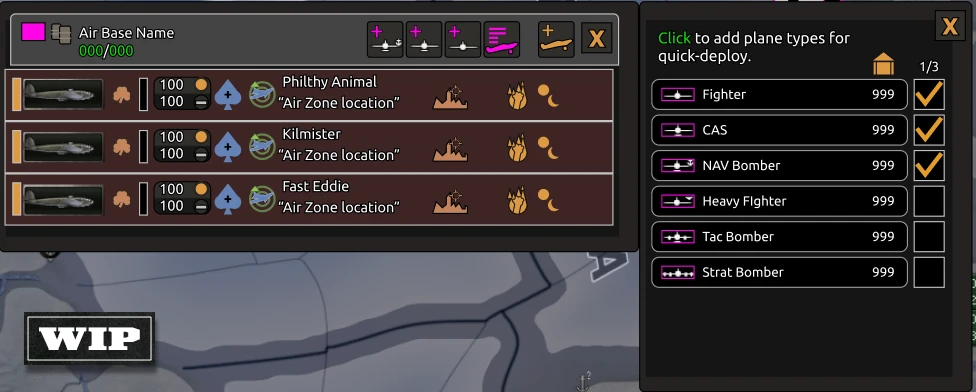
TL;DR: Hearts of Iron 4 paratrooper planning requires eligible divisions, sufficient assigned transport wings, a reachable destination and the required air control. Gather the troops and transports at the departure location, then read the drop order’s actual conditions. Plan how the landed force will be supplied and relieved before launching.
A drawn drop arrow is not proof that the operation can execute. Check the force, transport requirement, coverage and air situation in sequence so you address the blocked condition rather than guessing.

The official 2026 airborne discussion describes the practical launch and post-landing difficulties. Released transport-requirement and coverage changes provide additional checks. This guide supplies no fixed plane ratio, air-control percentage or guaranteed victory-point tactic.
On this page
Hearts of Iron 4 paratrooper planning: define the objective
Give the airborne force a limited job with a plausible survival plan. Consider an objective that supports another operation, such as a position near a force that can link up, rather than treating every distant target as equally useful.
Inspect known defenders, nearby enemy approaches and the terrain. A drop that reaches the intended province can still leave the force unable to hold it against counterattack.
The developer’s 2026 discussion warns that landed airborne units can suffer serious damage and disorganization. Take that vulnerability into account when deciding how far from supporting troops to commit them.
For an illustrative operation, plan a drop near an advance that can reach the position. Identify the route and force responsible for the link-up, and reconsider the drop if that advance cannot make credible progress.
Confirm eligible troops and transports at the origin
Inspect the actual division template for paradrop eligibility. Adding equipment or support can change what the force is allowed to do; the unit’s name does not establish eligibility.
The released 1.12.5 notes specifically prevent some flame-tank equipment from being paradropped. That is a concrete reason to check the current template rather than copying an older support-company combination without inspection.
Move the eligible divisions to the appropriate departure location and verify that the transports are based there. The 2026 developer account identifies getting jump-capable troops and their transports together as a necessary part of the process.
Create the paradrop order from that origin to the intended destination and assign the divisions. Inspect the arrow and assignment information to confirm which force the operation will send.
Verify completed aircraft relocation. The amended 1.19.4 notes fix a case where wings could acquire a destination base’s range without actually moving there. Use the actual base and completed move when judging the operation.
Read transport requirements from the order
Inspect how many transport wings the drop requires and how many are assigned and available. The released transport-requirement change adds missing-wing information to the order’s map-arrow tooltip.
Resolve the stated deficit instead of relying on a remembered aircraft-per-division ratio. Read the current operation, because wing organization and requirements can differ from those in old guides.
Check that the aircraft needed for this drop are available for the operation. Review other transport commitments and their current orders instead of treating every transport in the national inventory as dedicated to this one plan.
Keep air supply and troop transport as separate jobs in your planning. Even if the same aircraft category has relevant capabilities, you still need to inspect the mission and equipment commitment supporting the task you intend to perform.
Check fuel availability too. The official 1.11.6 release notes establish fuel consumption for operating transport planes. Having sufficient aircraft does not settle every operating condition.

Check range and the required air control
Verify that the current departure base and transport equipment can cover the selected destination. The released 1.13 changes prevent paradrop targeting of regions without the required coverage.
The developer’s later transport-technology explanation describes additional technologies that extend transport range for paradrops and air supply. Inspect the technologies and equipment actually available in your setup.
A closer airbase or suitable transport equipment can be worth considering when range blocks the objective. Recheck the order after making the change. A different origin can alter the rest of the operation as well.
Read the drop’s air-control conditions in the current interface. The 2026 airborne discussion identifies acquiring sufficient air superiority as part of launching. Do not infer that a favorable indicator in one region satisfies the entire order.
Inspect all regions and conditions the operation identifies. Correct fighter mission assignments and actual coverage where needed, then observe the air situation before expecting the transports to depart.
| Blocked condition | Inspect | Response to consider |
|---|---|---|
| Ineligible force | Actual battalions and support equipment | Use an eligible template |
| Missing transports | Assigned wings and order requirement | Provide the stated transport commitment |
| Unreachable destination | Actual base, equipment range and coverage | Choose a usable origin or objective |
| Insufficient air control | Regions and requirements named by the order | Reassess fighter deployment and timing |
Plan supply and relief before launching
Decide how the airborne force will survive after the drop. A successful arrival establishes a position; it does not automatically provide a connected supply route or immediate supporting troops.
Identify the ground force or landing operation expected to link up. Choose an objective and timing that fit its actual progress, rather than assuming airborne troops can hold indefinitely while another attack is still being prepared.
Where you intend to use air supply, inspect its available mission, range and operating requirements separately. Do not assume that assigning aircraft for the paradrop also establishes the continuing supply mission.
Check the likely enemy response. If the landing position has several exposed approaches and little support, a smaller operational ambition may be more credible than a deeper drop.
Use the risk to decide whether to launch at all. The developer’s current-problem discussion includes the possibility of catastrophic losses from a bad drop. Preparing an order does not obligate you to execute it when the relief plan is failing.
Review the landed force before the next drop
Inspect the division after arrival. Check its strength, organization, supply and immediate threats before ordering it to take additional territory.
Confirm whether the objective has served the wider operation. Holding a province briefly may have little value if the supporting force cannot reach it or the main attack no longer benefits.
Compare the actual outcome with the assumptions made before launch. Separate a transport or coverage problem from a landing that executed but was defeated afterward; those failures call for different changes.
The 2026 Dev Corner asks for feedback on future airborne improvements and explicitly says such ideas are not guaranteed. This guide does not assume a promised new interface or automatic post-drop protection is already available.
FAQ and the launch decision
Why do eligible paratroopers refuse to jump?
Check their assignment and origin, then inspect the transport requirement, actual coverage and air-control conditions on the order.
How many transport planes do I need?
Read the current order’s requirement and missing-wing information. Do not apply one fixed ratio from an older guide.
Can a completed drop still fail?
Yes. Inspect landed strength, organization, supply and counterattacks as well as the arrival itself.
The Hearts of Iron 4 beginner guide provides wider campaign preparation. Before launching, verify the order’s conditions and identify the force that will support or relieve the landing.
Sources and further reading
- https://steamstore-a.akamaihd.net/news/externalpost/steam_community_announcements/1837955055365908
- https://steamstore-a.akamaihd.net/news/externalpost/steam_community_announcements/4732747437201347534
- https://steamstore-a.akamaihd.net/news/externalpost/steam_community_announcements/5220292521195227441
- https://steamstore-a.akamaihd.net/news/externalpost/steam_community_announcements/6212244583190426134
- https://steamstore-a.akamaihd.net/news/externalpost/steam_community_announcements/6154735015628017529
- https://steamstore-a.akamaihd.net/news/externalpost/steam_community_announcements/1847286114049046
Keep exploring

Hearts of Iron 4 occupation laws: control resistance without draining reserves
Match occupation policy to resistance, compliance and a garrison you can actually supply; use stronger control only when the situation justifies its cost.
Games Like Hearts of Iron 4: choose what you want to command
Choose Stellaris for another empire project, CK3 for personal politics and heirs, or Ultimate General Civil War for tactical army progression.
Stellaris vs Hearts of Iron 4: discovery or industrial war planning?
Choose Stellaris for discovering a galaxy and shaping a space society; choose Hearts of Iron IV for coordinating industry, army design and politics around a WWII nation.