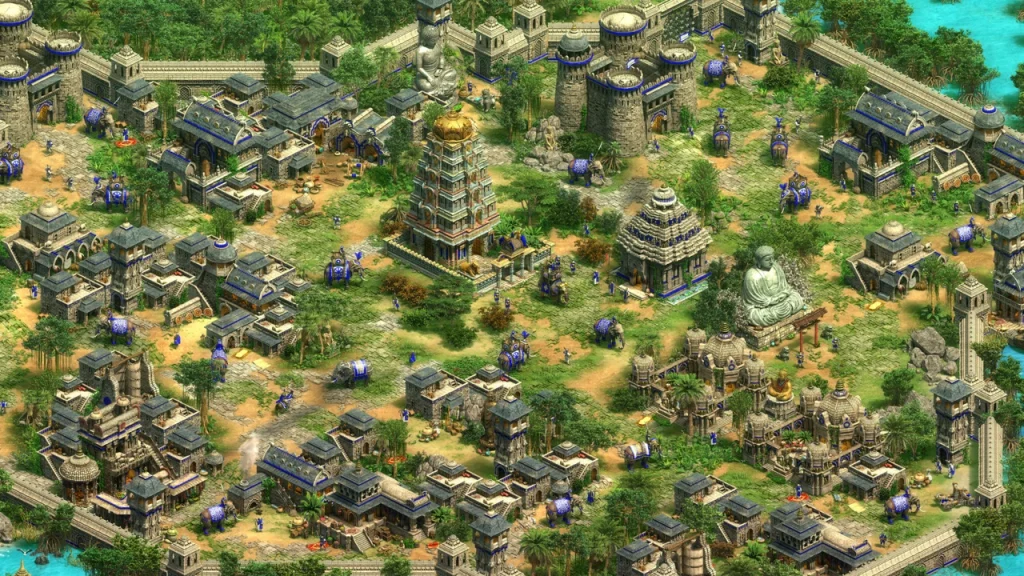
TL;DR: Identify the elephant unit before choosing a response. Spearman-line units and protected Monks fit the checked weaknesses of Battle Elephants and Persian War Elephants, while Elephant Archers and Khmer Ballista Elephants require attention to their ranged roles and different counter lists.
This Age of Empires 2 Definitive Edition countering elephants guide begins with the unit name, not the animal model. A Battle Elephant is close-range cavalry, an Elephant Archer is a mounted ranged unit, and a Ballista Elephant is Khmer Siege Cavalry with a pass-through attack. Treating them as the same threat can send an otherwise sensible counter into an unfavorable role.

The distinctions below refer to Age of Empires II: Definitive Edition. Unit descriptions and civilization effects were checked in the English technology-tree reference. Use the actual unit and research panels in your installed match when a version or modifier differs. This is a role-based decision guide without guaranteed combat ratios or measured conversion times.
On this page
Age of Empires 2 Definitive Edition countering elephants: three steps
1. Read the unit name and civilization
Select a visible opponent when information permits and distinguish Battle Elephant, War Elephant, Elephant Archer, or Ballista Elephant. Note whether the name includes an Elite upgrade. A later line upgrade changes the unit profile, so a result from an earlier-age practice group does not automatically apply to the upgraded version.
Identify the civilization as well. Persian War Elephants and Khmer Ballista Elephants are different unique units, while other elephant lines have their own availability. The civilization can also change bonuses, speed, resistance, and upgrade choices. Do not assume every elephant seen in a match is produced by the same building or has the same ranged attack behavior.
2. Choose a response from the relevant role
For Battle Elephants and War Elephants, start by checking your Spearman-line and Monk availability. Their checked descriptions list those weaknesses. For Elephant Archers, inspect Skirmishers, Camel Riders, and the Spearman-line options in the relevant tooltip. For Ballista Elephants, the checked description instead highlights cavalry and siege weapons as unfavorable opponents.
This is a selection process rather than a complete army prescription. Your current age, production buildings, research, resources, and the opponent’s supporting units determine what can be useful now. A theoretical Imperial upgrade does not solve a missing Castle-age response, and a counter you cannot produce or control does not protect the economy simply because its name appears in a guide.
3. Preserve gathering and fund replacements
Notice which workers or routes are exposed while the response is being prepared. Move workers to a safer available gathering or garrison option if the situation demands it, then restore jobs when the interruption passes. Keep Houses and Town Center production in view. Several population-blocked counters cannot help until there is room for them to complete.
Budget the response building and research as well as units. A new Monastery costs wood before its Monks cost gold; a new Barracks uses construction resources before it trains infantry. Avoid adding several production routes at once without enough income to use them. The useful response is one that arrives, has the right role, and can be replaced without collapsing worker production.
Battle Elephants: anti-cavalry and conversion
The checked Battle Elephant description calls it slow, durable cavalry with a close-range role and weaknesses against Monks and the Spearman line. Start with those options when your civilization and age allow them. Consider the enemy’s supporting ranged units or infantry, because the Spearman-line description warns about both of those categories.
Spearman-line units are a food-and-wood purchase before civilization modifiers, with Pikeman research available in Castle Age where offered. The checked Pikeman upgrade costs 160 food and 90 gold. Completing an age does not automatically buy that research, and training more Spearmen does not replace the upgrade. Inspect the actual unit name and research queue before expecting the later line’s role.
Protected Monks offer conversion rather than ordinary damage. A baseline Monk costs 100 gold and comes from a Monastery, whose standard construction costs 175 wood. Do not assume a Monk will convert an approaching elephant immediately. The unit needs an opportunity to act and must survive supporting enemies that can reach it. Exact action results depend on the match rather than a fixed timer promised here.

Persian War Elephants: account for the close-range role
The Persian War Elephant description identifies a unique cavalry unit with trample damage, a building and close-range role, and weaknesses against the Spearman line and Monks. Those role cues support the same initial counter categories as Battle Elephants. They do not establish identical hit points, damage, costs, or the exact number of counters needed.
Check whether you face War Elephants or Elite War Elephants before comparing an earlier practice result. A unit-line upgrade and civilization research can change the threat. Do not send one isolated counter forward simply because the tooltip names a weakness. The role has to be supported by enough surviving units, appropriate research, and a position that lets the chosen response act.
A large elephant purchase can consume substantial resources, but that does not guarantee the opponent has no supporting army. Read what is visible instead of inferring the entire composition from one expensive unit. If support makes your initial response unfavorable, add the specific support answer you can fund rather than continuing the original queue without checking why units are being lost.
Elephant Archers: recognize ranged support requirements
An Elephant Archer is a slow, heavy mounted Archer in the checked description. Its listed strengths include Archery Units and infantry, while its listed weaknesses include the Spearman line, Skirmishers, and Camel Riders. This differs from a melee elephant whose own role requires closing to short range. Your response must account for ranged attacks before it performs its intended counter role.
Skirmishers can be an appropriate ranged counter category when the civilization and upgrades fit the situation. Camel Riders provide another listed option, but their food-and-gold price competes with other purchases and their tooltip warns about infantry, Monks, and foot Archers. Spearman-line units still need to reach a useful position rather than being assumed effective solely from their bonus role.
Inspect the support around the Elephant Archers. A melee companion can interfere with a ranged counter, while additional ranged units can make exposed infantry difficult to use. Avoid comparing only the main elephant unit with your chosen counter in isolation. The next production decision should respond to the army that is actually present, not an imagined unit-only scenario.
Ballista Elephants: follow the siege role
Khmer Ballista Elephants have a ranged pass-through attack and can destroy trees in the checked description. They are listed as strong against infantry and ranged soldiers, with weaknesses against cavalry and siege weapons. A dense infantry group chosen from a generic anti-elephant recommendation can therefore face a role very different from the one it was meant to answer.
Inspect which cavalry or siege options your civilization can currently field and fund. If you need a Siege Workshop, include its 200-wood baseline construction and the chosen unit’s wood-and-gold cost. A later-age option without its research or building is not an immediate answer. The Ballista Elephant’s visual similarity to other elephants does not remove those production constraints.
Keep attention on supporting units and routes while using the selected response. A cavalry or siege choice can be suitable by role yet fail if it never reaches the intended group or is left unsupported. This guide does not provide exact damage thresholds or a tested single-unit matchup. Use the tooltip distinction to choose an appropriate practice scenario, then review what happened in the actual match.

Civilization bonuses change the assumptions
Bengalis provide a concrete example: the checked civilization description reduces bonus damage received by Elephant Units by 25 percent and makes them more resistant to conversion. A Spearman-line bonus and a Monk conversion route therefore still need their actual match context. Do not turn the resistance wording into an invented number of seconds or a claim that conversion is impossible.
Khmer Battle Elephants have a checked movement-speed bonus. That is a civilization effect for the named unit line, not a rule that every elephant moves at the same speed. Other technologies and line upgrades also vary. Before applying a result from another civilization, inspect the unit and civilization descriptions that created that result.
Costs require the same care. Raw unit profiles do not include every discount, and Byzantines discount the Spearman line, Camel Riders, and Skirmishers. A baseline price can explain resource categories without being their final displayed purchase. Use your installed buttons when calculating a batch, then leave a separate reserve for workers, Houses, and relevant research.

Troubleshoot an unsuitable response
If the chosen counter cannot be produced, inspect age, civilization availability, building completion, population, and price. A reference may show a line that your civilization lacks. If units are produced but immediately become ineffective, confirm the elephant type and enemy support before assuming that simply adding another production building will fix the problem.
If Monks are lost before they act, review their protection and the enemies approaching them. If infantry cannot reach a useful position, review the ranged threats and route rather than only the unit count. If replacement queues empty, inspect gathering jobs and resources spent on optional upgrades. A production shortage and an unfavorable role need different corrections.
Elephant-counter questions
Do all elephant units share the same counters?
No. Battle Elephants and War Elephants have close-range cavalry roles, Elephant Archers are mounted ranged units, and Ballista Elephants have a ranged siege role. Start with the exact name and checked tooltip before choosing the response.
Can Monks always convert elephants quickly?
No guaranteed speed is claimed. Monks need to survive and perform the action, while civilization effects or research can increase resistance. Bengalis explicitly add elephant conversion resistance in the checked description. Practice and measure the result under your actual settings.
Should I always use Halberdiers?
They are an Imperial-age option where available and cannot replace a current Castle-age production decision. Their role also does not erase ranged support or turn Ballista Elephants into ordinary melee cavalry. Select the age-appropriate response to the unit type you actually face.
Continue through the guide library for economy and unit-production topics that support your chosen response. Practice one new production route at a time.
Sources and further reading
- https://www.ageofempires.com/games/age-of-empires-ii-definitive-edition/
- https://store.steampowered.com/app/813780/
- https://aoe2techtree.net/
- https://raw.githubusercontent.com/SiegeEngineers/aoe2techtree/e56728e76b7d08301fba7b18d5f16bc8554c109a/data/data.json
- https://raw.githubusercontent.com/SiegeEngineers/aoe2techtree/e56728e76b7d08301fba7b18d5f16bc8554c109a/data/locales/en/strings.json
- https://raw.githubusercontent.com/SiegeEngineers/aoe2techtree/e56728e76b7d08301fba7b18d5f16bc8554c109a/data/trees/BYZANTINES.json
- https://raw.githubusercontent.com/SiegeEngineers/aoe2techtree/e56728e76b7d08301fba7b18d5f16bc8554c109a/data/trees/BURMESE.json
- https://raw.githubusercontent.com/SiegeEngineers/aoe2techtree/e56728e76b7d08301fba7b18d5f16bc8554c109a/data/trees/BENGALIS.json
- https://raw.githubusercontent.com/SiegeEngineers/aoe2techtree/e56728e76b7d08301fba7b18d5f16bc8554c109a/data/trees/PERSIANS.json
- https://raw.githubusercontent.com/SiegeEngineers/aoe2techtree/e56728e76b7d08301fba7b18d5f16bc8554c109a/data/trees/KHMER.json
Keep exploring
Age of Empires 2 Definitive Edition vs Total War Rome 2: choose your scale
Choose a historical RTS scenario library or an ancient territorial campaign linked to real-time battles.
Age of Empires 2 Definitive Edition vs Age of Empires 4: where to start
Choose campaign breadth in AoE II DE or documented onboarding and newer presentation in AoE IV.
Age of Empires 2 Definitive Edition vs Total War Shogun 2: match or campaign?
A comparison of immediate RTS development and the continuing clan campaign in SHOGUN 2.