The best war strategy games for beginners give you a manageable problem before asking you to command an entire front. Start with Battle Academy if you want WWII tactics without a real-time clock. Choose Bad North for compact island defenses, Panzer Corps 2 for a turn-based campaign army, or Company of Heroes 3 if you want real-time battles with a single-player pause option.
Being new to strategy does not mean you need an easy opponent. It means you need room to understand why an order worked. These four games offer different ways to learn: a small battlefield, time between turns, a persistent force, or a paused real-time fight. Pick the kind of thinking you enjoy before buying a large collection of expansions.

On this page
Best War Strategy Games For Beginners: Start with Battle Academy when you want time to think
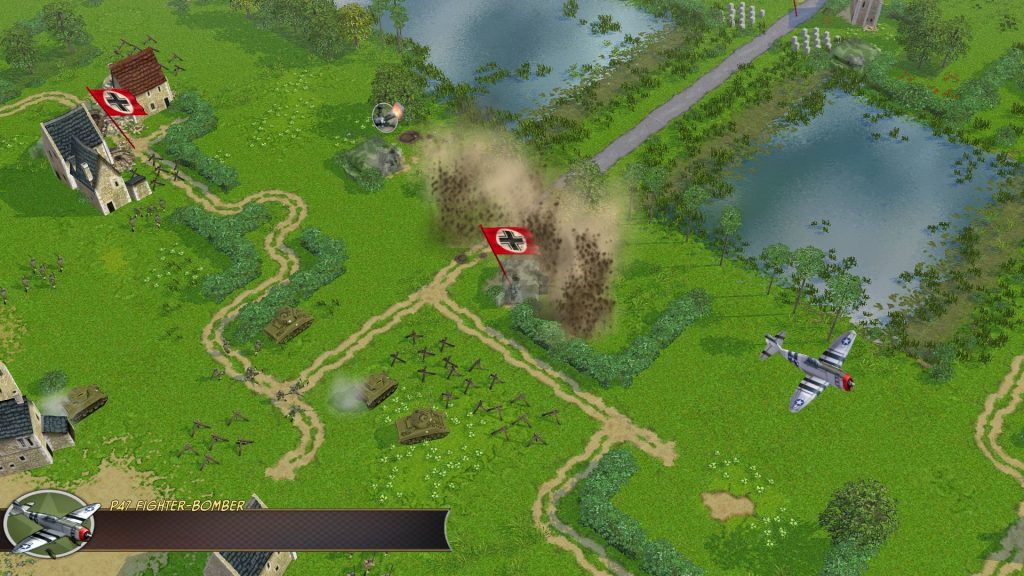
Battle Academy is the most direct historical starting point here. You command a selected group of WWII units in turn-based missions. Its official description emphasizes a clear interface and combined-arms decisions: ambushes, suppression, armor flanking, reconnaissance and morale.
That is a useful learning package because a bad move can be examined without the next five seconds demanding another click. Your first goal should be to understand where an enemy can see you and what support an infantry unit needs. Reading a mission objective and arranging a coordinated attack teaches more than moving every unit toward the closest target.
The drawback is presentation. This is an older game, and the interface and visual style will feel different from a recent cinematic RTS. Choose it for tactical clarity rather than spectacle. The base game lists three campaigns and more than 30 battles, so begin there instead of treating community scenarios or multiplayer as required homework.

Bad North keeps the battlefield small
Bad North: Jotunn Edition asks you to defend small islands from arriving Viking boats. You position and relocate groups while the soldiers handle movement and fighting within those orders. There is no sprawling industrial economy to learn before the first defense.
It fits someone who wants to see the relationship between a position and an outcome. The screenshot’s cliffs, shoreline and clustered houses show how little space you have to protect. Before an attack, look at possible landing points and decide which group can move without leaving another approach open. A short battle still offers a real tactical question.
Simple inputs do not make the campaign forgiving. Commanders can be lost permanently, and the official description specifically tells players to plan evacuations. Treat retreat as a decision rather than a failure to click quickly enough. Choose another game if you want to repeat every mistake with the same intact roster or if historical WWII equipment is your main interest.

Panzer Corps 2 teaches campaign planning
Panzer Corps 2 is a better first choice when the appeal is maintaining an army across a WWII campaign. Its turn-based battles model movement, spotting, encirclement, weather and equipment capture. Veteran units carry forward through a branching campaign.
The useful beginner habit here is to think beyond winning the current exchange. Ask whether an attack exposes a valuable unit, whether another unit can support it, and what the force will need for the next objective. A persistent roster makes preserving strength meaningful. You can study those choices without competing over mouse speed.
Its drawback is breadth. The large unit catalog and expansion campaigns can overwhelm a newcomer who tries to learn every vehicle immediately. Start with the base campaign and a few familiar unit roles. Hardware also matters: the official minimum lists 8 GB RAM and 2 GB VRAM. An approachable rule system is not a promise that an old laptop can run it.

Company of Heroes 3 bridges into real-time battles
Company of Heroes 3 is the pick for players who want squads, vehicles, destructible environments and continuous action. Its optional Full Tactical Pause lets you stop single-player combat, plan attacks and queue orders. That creates a gentler route into real-time coordination.
Use the pause to identify one problem at a time: a squad needs cover, a vehicle has an exposed flank, or another group needs to move. Resume and watch the result before adding more orders. The official store identifies campaign and skirmish play as places to learn at your own pace; multiplayer should come after you understand the controls and unit roles.
This is still the busiest option in the shortlist. Tactical pause does not remove the campaign map, supply decisions or the need to monitor multiple groups. It is also confined to the stated single-player context, so do not buy it expecting paused competitive matches. If that whole workload sounds tiring, begin with Battle Academy and return later.
A first-session plan that avoids overload
Install one game, complete its introduction and play one early scenario without additional mods. Focus on a single skill: reconnaissance in Battle Academy, defending an approach in Bad North, protecting a core unit in Panzer Corps 2, or coordinating squads in Company of Heroes 3. After a loss, identify the order you would change before raising the difficulty or switching games.
If your main obstacle is hardware rather than unfamiliar rules, use the low-end PC shortlist before deciding. Otherwise, Battle Academy is the safest historical starting point, while the other three suit a clearer preference for islands, campaign armies or real-time action.
Sources and scope
Official Steam descriptions support the listed features and requirements. Beginner fit is an editorial assessment of those features; no comparative playtest or measured learning-time claim is made.
Sources and further reading
Keep exploring

Hearts of Iron 4 occupation laws: control resistance without draining reserves
Match occupation policy to resistance, compliance and a garrison you can actually supply; use stronger control only when the situation justifies its cost.

wargame red dragon radar anti air management: coverage and weapon-state decisions
A source-backed guide to managing specific radar-related weapons within a complete Wargame Red Dragon air defense.
wargame red dragon sead aircraft: choose a mission that helps
A concise source-backed guide to choosing and reassessing a useful SEAD mission in Wargame Red Dragon.