The best war strategy games with air combat should match the level at which you want to command aircraft. Command: Modern Operations focuses on missions, sensors and doctrine, WARNO puts aviation inside a Cold War tactical battlegroup, and War on the Sea links aircraft to a WW2 naval campaign. These are command games rather than recommendations for cockpit flight simulation.
On this page
Command: Modern Operations handles the wider air operation
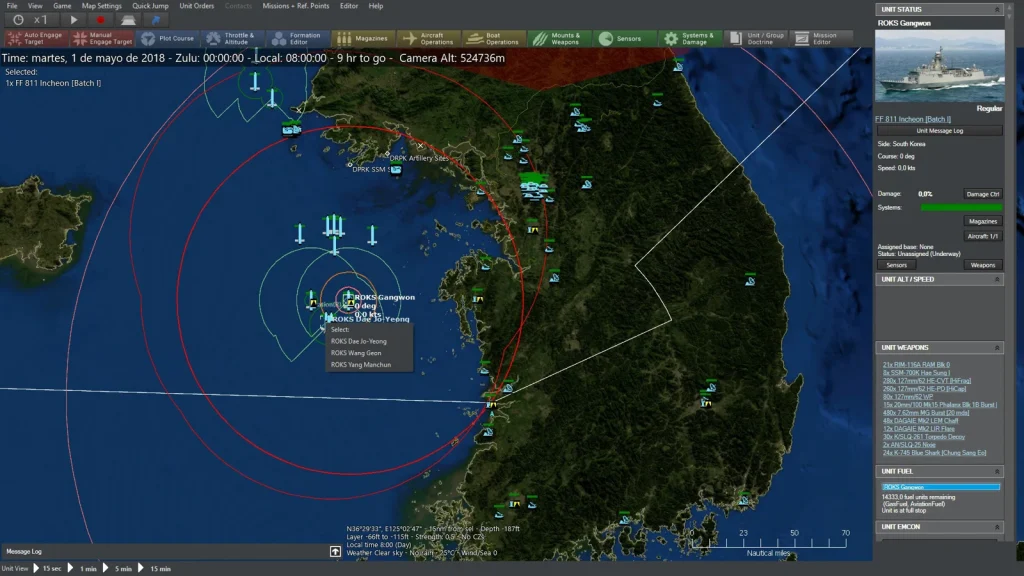
Command: Modern Operations combines air, naval and other domains on an operational map. Its official description includes sensors, electronic warfare, weapon-release authority, emission-control policies and automated patrol behavior.

Choose it when the interesting question is how a strike package, defensive patrol or supporting mission should operate. Aircraft belong to a plan involving information, range, threats and coordination with other platforms.
Doctrine and automation can govern lower-level behavior while you make theater or tactical command decisions. That gives a reason to inspect policies before the engagement rather than repeatedly intervene only after a platform is already in trouble.
The limitation is the amount of information. Its map and data-rich interface reward careful reading, and a scenario can involve many connected systems. Begin with a limited air task before treating the largest theater as the best introduction.

WARNO makes aviation part of a battlegroup
WARNO includes helicopters, strike aircraft, interceptors and air-defense units within its Cold War arsenal. Your division-based battlegroup determines the mix of capabilities available.
It suits the player who wants an air action to support a ground battle. Reconnaissance, armor, infantry and air defense all influence whether aviation can accomplish a useful task. A powerful aircraft is not a substitute for understanding where the threats are.
Use the armory to inspect the units and build a force around a clear purpose. Think about the aircraft’s job and the support needed for that job before filling every available option with impressive hardware.
The drawback is pace and tactical workload. Aviation is one part of a battlefield that can already demand attention on several fronts. Choose it when coordinating land and air is the attraction, not when you want an isolated air campaign without ground-unit management.

War on the Sea gives aircraft a naval purpose
War on the Sea sets its campaign in the South Pacific during 1942. Its official description names carrier air cover and tactical aircraft control alongside ships, submarines and the transport-supply problem.
Choose it when aviation should help the navy discover threats, support an engagement or protect an operation. The aircraft’s value is connected to the fleet and cargo that must survive, rather than only the number of targets destroyed.
The store expressly distinguishes tactical aircraft control from a flight simulator. You are managing their role in the campaign and battle, not buying a cockpit experience. The illustrated ships and aircraft are contextual game images, not a tested strike result.
The limitation is its specific theater and wider naval workload. If you only want modern air planning without ships or a WW2 transport campaign, Command: Modern Operations is the more relevant place to investigate.
Start with the mission you want to command
Pick a task such as patrol, strike support or carrier protection. Then ask which game makes that task its natural command problem: a data-rich operation, a combined-arms battle or a naval campaign.
Inspect a current mission walkthrough and the unit information you will need to read. That is more useful than comparing unsupported aircraft counts or claims of realism. This shortlist makes no firsthand simulation-accuracy or hardware benchmark claim.
Browse our strategy game lists when session length, command scale or the historical setting is another part of the decision. Air combat is most satisfying when the surrounding game asks for the kind of planning you enjoy.
Sources and further reading
Keep exploring

Hearts of Iron 4 occupation laws: control resistance without draining reserves
Match occupation policy to resistance, compliance and a garrison you can actually supply; use stronger control only when the situation justifies its cost.

wargame red dragon radar anti air management: coverage and weapon-state decisions
A source-backed guide to managing specific radar-related weapons within a complete Wargame Red Dragon air defense.
wargame red dragon sead aircraft: choose a mission that helps
A concise source-backed guide to choosing and reassessing a useful SEAD mission in Wargame Red Dragon.