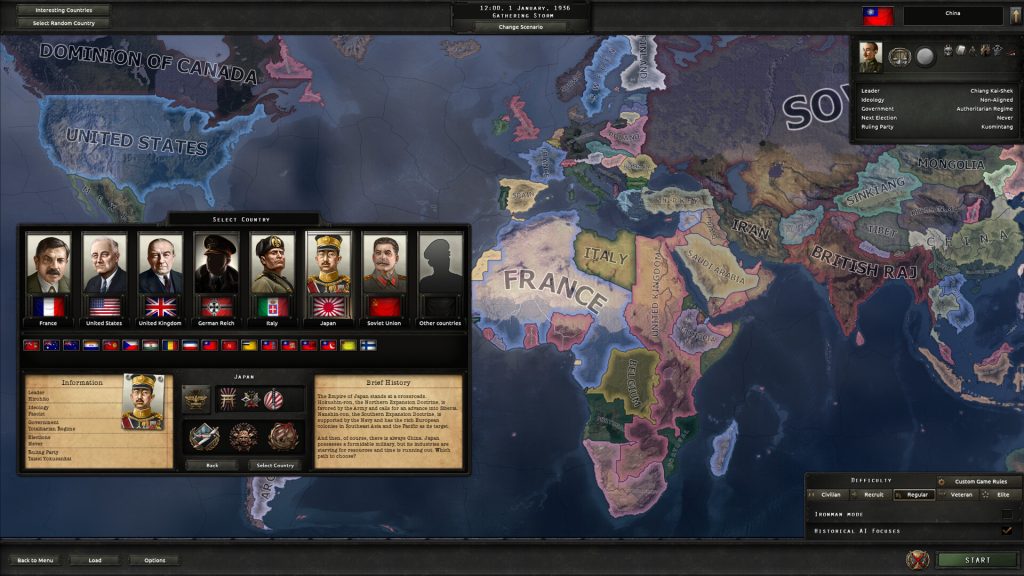
The best WW2 strategy games on PC depend on the job you want: run a nation in Hearts of Iron IV, command squads in Company of Heroes 3, build and deploy a division in Steel Division 2, or plan hex-based campaigns in Panzer Corps 2. These are four distinct recommendations, rather than a claim that one game wins at every scale.
Start with your preferred level of command. A player who wants to organize factories and alliances needs a different game from someone who wants to flank a tank on a village street. This selection uses official game descriptions to explain those differences; it does not invent personal playtime, performance results or ratings.

| Your priority | Start here | Main reservation |
|---|---|---|
| National production and military plans | Hearts of Iron IV | Much of the work happens outside individual battles |
| Immediate squad and vehicle tactics | Company of Heroes 3 | Battlefield control is the focus, rather than global national management |
| Division composition and larger tactical fronts | Steel Division 2 | You need to learn the units and deck system |
| Deliberate turn-based campaign decisions | Panzer Corps 2 | Its hex-and-turn structure changes the feel of warfare |
On this page
Best Ww2 Strategy Games Pc: Hearts of Iron IV puts the war economy under your control
Choose Hearts of Iron IV when your interesting question is how a country prepares for war. Its documented systems include factories, research, division templates, diplomatic alliances and political objectives. A military plan has to be supported by the nation producing its equipment.
That combination fits a player who enjoys tracing why an army is ready or unready. You are deciding what kind of force to build, what industry should supply it and which broader political direction serves the campaign. The official description also supports alternative historical paths, so it is not limited to replaying a predetermined national outcome.
The main limitation is the distance from individual battlefield tactics. This recommendation is about national command, not directing a handful of infantry through a building. If production menus and long-term preparation sound like obstacles to the battles you want, begin with Company of Heroes 3 instead.
Inspect the contents of the edition you are buying. The store description captured for this article lists several included expansions, but an older library and a different storefront offer can contain different content. Our Hearts of Iron IV beginner guide provides a starting point for the national-management route.

Company of Heroes 3 makes terrain and squads the immediate problem
Company of Heroes 3 is the recommendation for close tactical decisions in a Mediterranean setting. Its official description places campaigns in Italy and North Africa and highlights infantry breaching, flanking, elevation and destructible environments.
The fit is straightforward: choose it if you want to move squads and vehicles, use local terrain and react to the current engagement. A building or approach route is part of the immediate battle rather than an abstract region on a national map. The Italian Dynamic Campaign Map adds a wider layer, but the attraction remains the connection to tactical battles.
For single-player learning, the documented Full Tactical Pause can let you queue orders and consider the situation. That is a specific pacing option, not a promise that every online mode can be paused. Compare the mode you intend to play before treating it as a feature of all matches.
The limitation is scope. A campaign map does not turn this into Hearts of Iron IV’s national industrial simulation. Choose Company of Heroes 3 for active combined-arms engagements; choose the national game when you want the war effort beyond the battlefield to dominate your decisions.

Steel Division 2 connects deck building with larger battles
Steel Division 2 fits a player who wants to assemble a battlegroup and manage a broad tactical engagement. Its original setting centers on the Eastern Front in 1944 and Operation Bagration. The official description distinguishes turn-based strategic campaigns from real-time tactical battles.
The deck-building system is a reason to investigate it specifically. You choose a division and select the units you will bring into the battle, so the preparation stage shapes what tools are available later. That is a different question from recruiting an army through a national production system.
The strategic campaigns add battalion movement and supply decisions. The listing also describes autoresolve as an option for players who want to stay at the strategic level. Inspect the campaign included in the edition or DLC you are considering instead of assuming every advertised division and scenario is in one purchase.
The reservation is the amount to learn about the forces you select. A long roster is useful only if you enjoy understanding its roles. Watch a full battle and a deck-building segment before choosing it simply because a screenshot contains your favorite tank.

Panzer Corps 2 trades clicking speed for campaign planning
Panzer Corps 2 is the best fit here for players who want turn-based WW2 operations. Its documented mechanics include spotting, movement, encirclement, weather and capturing equipment. The campaign carries veterans between scenarios, giving preservation of your force a reason to matter beyond one map.
Choose it when you want time to compare a move with its consequences. Terrain, information and the sequence of attacks are the work, rather than reacting as a real-time battlefield changes. A branching campaign also makes the continuing army part of the purchase decision, not just the size of an isolated scenario.
The limitation is that the hex-and-turn structure is an abstraction. It will not satisfy every player seeking the visual and immediate feel of a squad RTS. Multiplayer options are documented, but investigate the exact mode your group wants instead of assuming one style of online play covers every use.
Pick the scale before the edition
For a first shortlist, choose one command level and investigate that game’s actual interface. Watch national production in Hearts of Iron IV, squad positioning in Company of Heroes 3, deck construction in Steel Division 2 or a complete turn in Panzer Corps 2. Those examples are more revealing than comparing vehicle counts.
Then check the current edition, system requirements and included campaigns. This article quotes no changing price or tested hardware result. Each game is linked to its official PC listing, which is also the factual source for its described systems. Browse our strategy game lists when you want to compare another historical period.
Sources and further reading
Keep exploring

Hearts of Iron 4 occupation laws: control resistance without draining reserves
Match occupation policy to resistance, compliance and a garrison you can actually supply; use stronger control only when the situation justifies its cost.

wargame red dragon radar anti air management: coverage and weapon-state decisions
A source-backed guide to managing specific radar-related weapons within a complete Wargame Red Dragon air defense.
wargame red dragon sead aircraft: choose a mission that helps
A concise source-backed guide to choosing and reassessing a useful SEAD mission in Wargame Red Dragon.