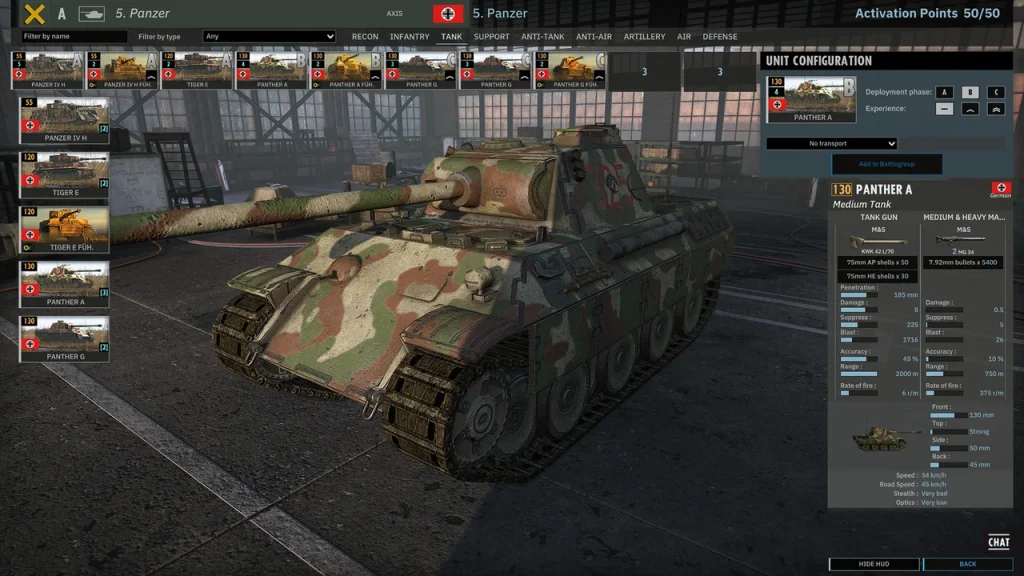
TL;DR: Steel Division 2 multiplayer team roles work when every contested sector has a holding force, observation and a defined support response. Agree on sectors before specializing the decks, compare phase schedules, and tell teammates what your next purchase will actually do. A support role needs a useful front to support.
Start with responsibility for ground, then assign specialist work around it. If one player buys support while another assumes that player will hold the adjacent approach, the team can leave a gap despite having plenty of units. Name the position and the shared task before deployment.

This guide turns Eugen’s deck, Conquest and Smart Orders explanations into hypothetical team-planning examples. It does not claim tested multiplayer builds or universal current income values. Your division options, match setup and teammates’ available cards determine the exact arrangement.
On this page
Assign sectors before Steel Division 2 multiplayer team roles
Agree who maintains each important approach and who can assist when the threat changes. A sector assignment is a responsibility, not a reason to ignore nearby objectives or a teammate’s request.
For a hypothetical team map, one player might hold a village approach while another maintains the adjoining open road. Both need a workable opening force. The village player should not assume the road player supplies every observation or support job without discussing it.
Eugen’s deck-builder explanation makes the parent division responsible for roster and slots. Compare those options before promising a specialized role. A division with a useful strength can still have a weakness the adjacent force must understand.
Keep the assignment concrete: “I hold the village edge; you watch the road approach; tell me before you move the covering force.” That is more useful than calling one player aggressive and another defensive without specifying the ground involved.
Identify the overlap too. The boundary between sectors can need shared observation or a reinforcement route. If both players assume the other owns that narrow area, it can become the least supported part of the line.
Coordinate observation and relevant support
Tell the adjacent player what a sighting means for the planned response. Information needs a unit or decision that can act on it.
For the village-road example, a scout watching the open approach might reveal the threat before either holding force can engage it. Tell the teammate the location, direction and significance rather than reporting only that an enemy exists somewhere ahead.
Ask which weapon or formation can answer the threat from a useful position. A teammate’s suitable unit can still be behind terrain, moving on another order or unavailable until a later phase. Do not count support as present until the arrangement actually works.
Keep holding influence separate from observation. Eugen’s original Conquest explanation describes recon as probing without moving the frontline, while combat influence captures objectives. Check current unit exceptions, but avoid assigning the whole holding job to a scout.
Do not duplicate purchases automatically. If one teammate already covers the relevant approach, the next purchase may need to restore infantry, observe another lane or protect the route behind it. Compare the missing task before both players buy the same category.

Match phase schedules across teammates
Discuss what each opening can do before relying on later specialization. A team with extensive C reserves still needs useful A forces and B continuity.
The deck-builder explanation links card availability to phase and veterancy and treats income as a separate selection. Read your current cards and economy, then tell teammates when the promised support becomes available.
For a hypothetical arrangement, one player might hold the village through A while another plans a defined B reinforcement along the road. The first player needs enough early capability to remain useful while the B unit is purchased and travels. The promise of later support is not the same as support already in position.
Tell teammates when losses change that schedule. If replacement purchases consume the points intended for the B reinforcement, revise the commitment. A clear delay lets the team adapt before an adjacent player advances expecting support that will not arrive.
Keep card quantity and purchasing power distinct in the conversation. “I can afford the unit” does not prove its card is unlocked or has units left. “The card is available” does not mean the purchase fits the current points.
Give support a useful front and a defined handoff
Specialist support should serve a known position or task. It is less useful when the supported force has withdrawn or when nobody has explained the current target and route.
For the village sector, identify where infantry holds, what approach needs coverage and where a reinforcement can stage. The support player can then compare the task with available equipment rather than selecting a purchase in isolation.
Confirm the handoff when the reinforcement arrives. Tell the teammate what the unit covers and what it still needs. A unit at the map edge with a long route remaining should not be reported as if the position already has its help.
Leader support also needs inspection. Eugen’s commander explanation describes local auras and links that can break. This guide does not assume cross-player support behavior or a universal current radius; verify the indicators for the actual arrangement rather than extending a teammate’s command promise without evidence.
Use delegated orders only for suitable groups. Eugen’s Smart Orders article describes Seize and Hold Position as adaptive tasks. Assigning the order does not remove the player’s responsibility to check the group’s composition and result.
Reassign work when the threat changes
Update the role when the old arrangement no longer serves the frontline. A threatened flank, lost observer or changed phase can make another player’s next purchase more useful elsewhere.
If the village force withdraws, inform the road player before that movement leaves shared support isolated. If the open approach stabilizes while another sector struggles, compare whether a reserve can assist without abandoning the current position.
Avoid reacting to a lost flag by sending every available unit there. Conquest objectives are linked to frontline influence, and the useful recovery needs defended ground. Choose the force that can restore the relevant position and leave responsibility for the other approaches clear.
After the match, review one failed handoff. Was support promised before its phase, observation lost without notice, or a sector boundary unassigned? Fix that coordination gap before inventing a complicated permanent team hierarchy.
Use the Steel Division 2 hub for individual deck and phase checks. Before the next deployment, agree on the holding positions, shared approaches and the first reinforcement each player can actually supply.
FAQ
Should one player buy only specialist support?
Choose specialization after assigning the ground and confirming who holds it. The support role needs a useful front, current information and a clear response task.
Is a later-phase promise enough for an early advance?
No. The opening force needs to function until support is available, affordable and in position. Confirm the actual arrival before relying on it.
Do teammates need identical income curves?
Compare curves with each player’s jobs and timing. The useful requirement is a coordinated schedule, not automatic uniformity.
What should a reinforcement handoff include?
State where the unit is, what approach it covers and what support it still needs. Separate a purchased unit from one already doing its job.
Sources and further reading
- https://steamstore-a.akamaihd.net/news/externalpost/steam_community_announcements/3702426087238377874
- https://steamstore-a.akamaihd.net/news/externalpost/steam_community_announcements/2417771014048533539
- https://steamstore-a.akamaihd.net/news/externalpost/steam_community_announcements/2426802221715528052
- https://steamstore-a.akamaihd.net/news/externalpost/steam_community_announcements/2530366080595791757
Keep exploring
Steel Division 2 anti tank positioning: match the lane, target and ammunition
Choose an observed lane that matches the gun’s actual ammunition range, set its engagement behavior, and reassess after the target or observation changes.
Steel Division 2 artillery correction: connect the observer area to the target
Identify the radio-equipped observer and eligible artillery, place the intended target inside the correction area, then check the shot and move the observer when the task changes.
Gates of Hell Ostfront vs Steel Division 2: Conquest or Army General?
Pick Ostfront for researching and developing a Conquest army with switchable unit control; pick Steel Division 2 for battalion-map planning and battlegroup decks.