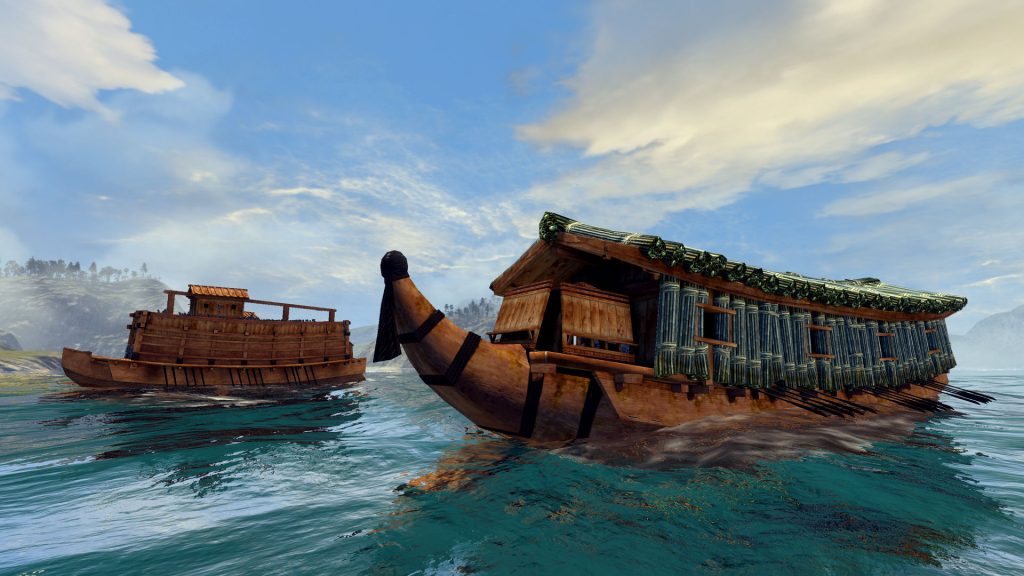
TL;DR: Total War Shogun 2 naval trade nodes generate useful goods when suitable trade vessels occupy them and the clan maintains a working commercial connection. Most base-game nodes lie west of Kyushu, with others to the north and northeast. Build the appropriate port and trading vessels, secure a reachable node, and protect both the ships and the port. A warship can occupy a node without producing goods, and an exposed trade network can fail despite looking profitable.

The trade-node reference distinguishes resource production from occupation. The dedicated Shogun 2 Trade Ship page describes the commercial vessel as unarmed and vulnerable. Treat the node as an economic route requiring protection, rather than a free-income marker.
On this page
Total War Shogun 2 naval trade nodes: secure the first route
- Compare nearby nodes, their occupants and the route from your coast.
- Develop a port that can recruit the required trade vessels.
- Budget the vessels and realistic protection together.
- Place producing ships at an available, defensible node.
- Maintain usable port access and appropriate trade relationships.
- Recheck income and threats before extending to another node.
Starting with one supported route makes it easier to understand the costs and vulnerabilities. Buying ships for several distant nodes at once can commit more money than the clan can recover if an opponent interrupts the network.
1. Choose location before buying the fleet
The base-game node reference places most nodes off the western side of Kyushu, with additional northern and northeastern positions. That gives western coastal clans a useful proximity advantage, while a distant clan has a longer access problem to solve.
Compare the route from the coast you actually control. A node can be geographically attractive yet occupied by another faction or exposed to hostile fleets. The closest symbol is not automatically the easiest commercial commitment to retain.
Consider whether the army’s current campaign will provide a better naval base soon. A future coastline can change the route, but do not buy an entire fleet on the assumption that an unfinished conquest is already secure. Plan from holdings you can presently support.
Use the map’s anchor symbols to identify the nodes. The reference describes a node as a circular maritime position, distinct from a coastal settlement or port. Capturing land near it and controlling the commercial position are related but separate tasks.
2. Distinguish occupation from producing goods
Any ship can occupy a trade node according to the node reference, but only suitable trade vessels produce its goods. Sending a fighting ship ahead can claim or guard a position; it does not turn that warship into a resource-producing trader.
The dedicated Trade Ship page describes ordinary trading vessels generating goods while placed at nodes. It also identifies stronger commercial alternatives such as Red Seal and Nanban ships, which are more expensive. Their presence in the roster does not make them available without the relevant campaign access.
Use an ordinary trade vessel for a supported commercial job, then add protection appropriate to the threat. Do not count an unarmed trader as a useful substitute for a fighting fleet merely because its unit card belongs to the same naval group.
The node reference allows one faction to occupy a node at a time. A rival’s presence therefore matters before dispatching the traders. Decide whether you have an available route or whether taking that position would require a conflict the clan can afford.
3. Build the commercial gateway
The Trading Port reference identifies it as the lowest port tier able to build ordinary Trade Ships. It follows Harbour development and also expands sea-trade opportunities. A basic coastal presence should not be treated as identical recruitment access.
Give the project a specific fleet and route. A port upgrade has economic value when the clan can use its added capacity and produce the ships it needs. It competes with army recruitment, farms and repairs for the same early treasury.
Retain a usable, unblocked trade port. The node reference ties commercial income to that connection, so protecting only the node fleet leaves another part of the system exposed. A hostile fleet approaching the home port can threaten the income without first taking the distant node.
Check the actual trade arrangements too. The ship reference connects generated goods with trade relationships and profit. Production, port access and partners contribute to the network; owning a trader does not independently guarantee a particular income figure.

4. Budget protection with the trading ships
Ordinary Trade Ships are unarmed and have a small crew in their dedicated reference. They are vulnerable to boarding and disruption by pirates or hostile clan fleets. Avoid using them to contest a defended commercial position by themselves.
Choose protection for the route you intend to keep. A fighting force near the node and a response near the port solve different problems. If one fleet must cover both, compare the travel distance with the places an opponent can threaten.
Do not send traders beyond the protection the clan can sustain solely because the source calls them inexpensive. The vessels’ purchase price is only part of the commitment. Recurring naval costs and lost replacements can make a distant route expensive.
Retain a way to recover from disruption. A nearby shipbuilding port, replacement money and a supported response fleet can help restore a route. An isolated node group may be harder to rebuild even if its initial trading returns were attractive.
5. Compare net value instead of gross income
Judge the route after the costs of traders and necessary defense. For a hypothetical example, suppose added income is 1,200 per turn, while the ships and supporting fleet add 700 in upkeep. The remaining 500 is the relevant recurring contribution before further losses or disruption.
If the same defense fleet protects several useful routes, its value can be shared across those commitments. If it exists only to support one remote node, charge that cost to the decision. Do not call the route profitable by counting its income while ignoring the fleet purchased for it.
Include resource access where relevant. The base node reference notes that imported resources can fulfill construction requirements as well as produce money. A useful resource can justify an otherwise modest route, but the intended building still needs the remaining requirements and funding.
Reassess after adding more vessels or taking another node. A wider network can increase exposure as well as production. The next expansion should have a clear benefit and protection plan, rather than follow automatically from success at the first position.
6. Diagnose interruption in the whole route
If trade changes unexpectedly, begin with the producing position. Is your faction still occupying the intended node, and are suitable trade vessels still there? A surviving warship without the producing vessels can preserve occupation without preserving the same goods.
Then check the port and route. A blockade is a different problem from losing the node itself. Direct the response toward the actual interruption instead of sending every naval unit toward the distant anchor symbol.
Finally, review relationships and the income breakdown. A lost agreement changes the commercial network even when ships remain afloat. Treat the treasury result as evidence to investigate rather than assuming the node’s location is broken.
Choose whether restoring the route is worth the required expense. If the opponent’s naval commitment makes recovery costly, redirecting ships toward a supported position may be more useful. A previously profitable route need not remain the best current investment.
7. Prepare the network for Realm Divide
The Realm Divide reference describes broad hostility and declining relationships in the base campaign. That creates risk for trade partners and naval routes. Do not let every army depend on an agreement you have no plan to replace.
Compare continuing costs with income from holdings you expect to retain. A cash reserve helps handle a temporary disruption, while a workable domestic balance supports a longer war. Protected trade can remain useful without becoming the only foundation of the army budget.
Prioritize defensible routes as the diplomatic situation changes. Keeping a useful home port and a nearby producing fleet can be more practical than attempting to hold every remote node simultaneously. Match the naval commitment to the land campaign’s needs.
8. Compare two conditional expansion choices
A nearby open node with a working port
Recruit the producing vessels, provide protection and establish the route. Check the resulting income before buying the next fleet. The modest distance lets you assess the first commitment without assuming every later node will be equally easy.
A remote node held by a rival
Budget the conflict, route and replacements before dispatching unarmed traders. If the clan cannot fund that operation while maintaining its land front, develop domestic income or use a more accessible maritime position first.
The official manual places naval movement, trade and the economy inside the broader campaign. Choose the route that helps the supported clan plan, rather than treating node acquisition as an independent contest for the most map symbols.
Frequently asked questions
Will a warship produce a node’s goods?
Occupation alone is insufficient. The reference requires suitable trading vessels for production.
Are ordinary Trade Ships combat escorts?
No. Their dedicated page describes them as unarmed and vulnerable to boarding.
Can a port blockade matter if I still hold the node?
Yes. The working port is part of the commercial connection.
Should every clan race for the western nodes?
Compare distance, occupants, available ports and affordable protection before committing.
Sources and further reading
Keep exploring
Total War Shogun 2 Naval Bombardment: check the campaign first
The queried coastal bombardment and land-battle naval support belong to Fall of the Samurai, rather than base SHOGUN 2 naval combat.
Total War Attila vs Total War Shogun 2: survive or reunite?
ATTILA offers late-antique survival and destructive warfare; SHOGUN 2 centers a clan campaign on reunifying Japan.
Total War Rome 2 vs Total War Shogun 2: empire or clan?
ROME II suits classical empire building; SHOGUN 2 suits a focused Japanese clan campaign with growing generals and agents.