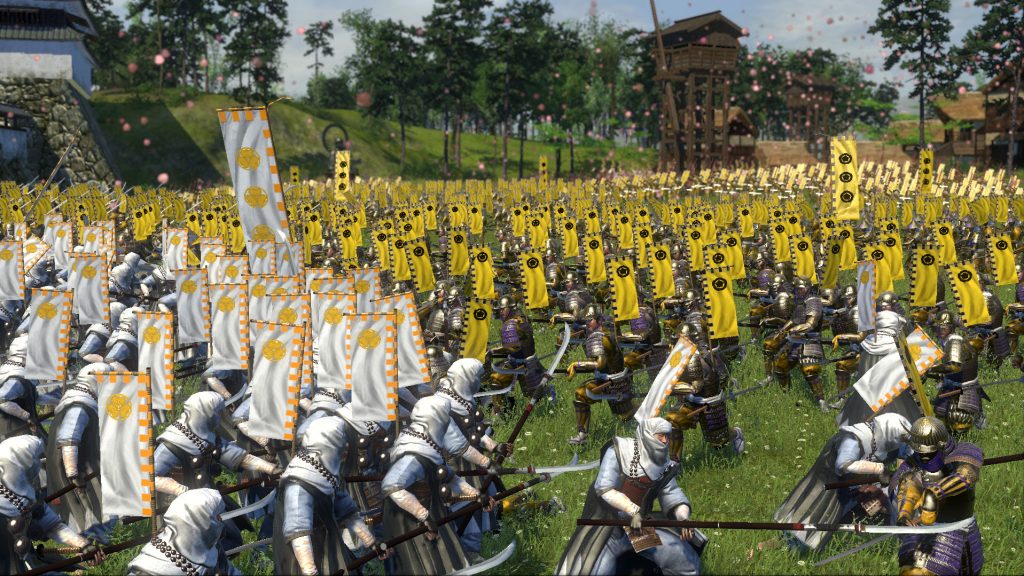
TL;DR: A useful Total War Shogun 2 samurai army composition covers several battlefield jobs: a holding line, anti-infantry attackers, ranged support, protection against cavalry and a reserve. Katana Samurai supply melee pressure, Naginata Samurai offer an armored mixed role, Yari Samurai provide mobile spear support, and Bow Samurai need protected firing positions. Add affordable ashigaru where they do the required job. Choose the balance for the opponent, terrain and treasury rather than replacing every cheap unit automatically.

This guide covers the base Sengoku campaign and uses the dedicated Shogun 2 unit references. Training buildings, clan traits and available money constrain recruitment. The sample forces below are planning examples, not a tested universal roster or a claim that every clan can recruit all the units on its first turn.
On this page
Total War Shogun 2 samurai army composition: build by role
- Identify the enemy’s infantry, ranged and cavalry threats.
- Choose units that hold the main line under those conditions.
- Add attackers that can exploit a supported engagement.
- Provide ranged pressure and protect its firing positions.
- Keep spear coverage and a reserve for an unexpected approach.
- Check upkeep, recruitment access and replacement distance.
A force with many strong melee units can still struggle if it cannot reach enemy archers safely or protect its commander. Give each purchase a battlefield purpose and decide where it belongs in the deployment before increasing the army’s expense.
1. Use Katana Samurai for infantry pressure
The Katana Samurai reference describes strong melee performance and morale, together with vulnerability to missiles and cavalry. They provide a useful attacking or main-line infantry role, but their swords do not replace spear protection.
The page also warns about frontal attacks into Yari Wall and favors supported flank or rear engagements. Let a holding unit engage the opponent while the katana unit looks for a usable side. Keep the route clear of enemy cavalry and other uncommitted troops.
Choose additional katana units when the army needs more anti-infantry strength. If it already wins that engagement but loses its archers to cavalry, another sword unit may leave the important weakness unresolved. Recruit or reposition the protection that the existing attackers need.
2. Use Naginata Samurai for a resilient mixed line
The dedicated Naginata Samurai page describes an armored, versatile infantry unit with both infantry and cavalry applications. Its stronger armor helps against arrows, while matchlocks and specialist anti-infantry opponents remain threats.
That makes naginata useful when the main line must handle varied contact and some ranged pressure. Their versatility does not mean they outperform every specialist at its own job. Keep support for the opponent that can challenge the holding unit.
Compare the cost of the role with what the rest of the army needs. A few resilient units in important positions may help more than an entire expensive line that leaves no money for ranged support or reinforcement. The chosen deployment should explain why those particular positions need the upgrade.
3. Keep a mobile spear response
Yari Samurai have an anti-cavalry role and Rapid Advance. Their mobility can help them reach a threatened side or protect a ranged group, provided the route and timing work.
They do not use Yari Wall. The dedicated page explicitly distinguishes the samurai from the ashigaru formation. Treat them as mobile spear support rather than an automatic upgrade for a stationary wall that has a specific defensive job.
Keep the unit available until the cavalry direction is clear. Committing every spear formation against the main infantry line can leave the archers and commander exposed when a mounted unit circles around. A reserve spear unit has value through the threat it can answer.
Do not use mobility as a reason to run unsupported into a sword unit. The reference identifies limitations against specialized melee infantry and ranged attacks. Reach the useful defensive position or support a favorable attack, then reassess the local opponent.

4. Give Bow Samurai a protected firing job
The Bow Samurai reference describes improved accuracy and reloading compared with Bow Ashigaru, at greater expense and with fewer soldiers per regiment. Their better quality does not remove weak melee performance or cavalry vulnerability.
Place the archers where the main line allows useful shots and a nearby unit can meet an approaching attacker. Buying more bows cannot repair a formation that lets cavalry reach them unopposed. Cover the shooting position before extending the ranged investment.
Choose targets with the tactical objective in mind. Pressure on an exposed enemy ranged unit may help the holding line, while a poor shot into a protected formation can consume ammunition without resolving the key threat. Reposition when the battlefield gives the bows a better supported angle.
Check abilities and their availability on the actual unit. Do not assume every listed special shot is unlocked in every campaign state. Plan the army around its ordinary roles first, then use the capabilities presently available.
5. Retain cheap units with a useful job
Yari Ashigaru remain relevant for a protected frontal defense, reserves and garrison work. Their Yari Wall can hold a position while a samurai unit supplies the supported attack.
They need protected ends, morale support and an answer to missiles. Keeping them because they are inexpensive makes sense when the battlefield job fits. Keeping damaged ashigaru in an exposed position solely to avoid spending can undermine the more expensive units behind them.
Replace selectively. Upgrade the part of the formation that repeatedly fails under the conditions you expect, and keep the inexpensive unit where it still works. This preserves money for a second army, repairs or the supporting role that an all-samurai force might lack.
6. Example: a samurai-centered field force
Consider a hypothetical sixteen-card force: one general, four Katana Samurai, three Naginata Samurai, two Yari Samurai, four Bow Samurai and two Yari Ashigaru. The numbers illustrate role allocation; they are not an optimized multiplayer build or a promise of campaign availability.
The naginata and ashigaru provide holding positions, with the latter using a supported wall where appropriate. The katana formations can reinforce infantry contact or threaten an exposed side. Bow Samurai supply ranged pressure, while the Yari Samurai retain a response to a mounted approach.
Before adopting it, compare the opponent. More cavalry pressure may require stronger spear coverage and safer bow placement. A formation dominated by arrows may justify protecting the route and improving the resilient line rather than adding another sword unit.
Also check the treasury. If this force prevents you from repairing a threatened province or replacing losses, reduce the expensive portions while preserving the jobs. A smaller sustainable commitment can support a campaign better than a roster that works only for one battle.
7. Example: defense with reinforcement in mind
For a hypothetical twelve-card defensive force, consider one general, three Naginata Samurai, two Katana Samurai, one Yari Samurai, three Bow Samurai and two Yari Ashigaru. The reduced roster leaves more of the campaign budget for other holdings, but its adequacy depends on the actual threat.
Assign the holding units to relevant approaches and keep some melee strength available for a second contact. The bows cover useful firing positions rather than becoming isolated targets. Place the mobile spears where they can answer the most plausible cavalry route.
The official manual describes castles with several killing areas and an important central objective. Use the actual defensive layout to decide deployment. A force for a broad field battle may need different positioning inside a layered siege.
If the castle needs help, identify when another army can arrive. Do not assume this example holds every siege simply because it contains samurai. Compare the approaching enemy and retain a reinforcement plan for a threat beyond the garrison’s reasonable role.
8. Recruit where the campaign can support the army
Inspect the relevant training infrastructure before planning a replacement. Katana, yari, naginata and bow units use different facilities in their cited base references. An army composition is practical only when the required units can be recruited and delivered.
Clan variations can change the attractive investment. Shimazu has a katana advantage; Chosokabe improves bows. Use those documented strengths where they solve the campaign’s current problem, while keeping the supporting roles present.
Review the composition after significant casualties or a change in opponents. Replenish the damaged holding role, retain a protected commander and fund the replacement route. The manual’s morale and general guidance remains relevant even when the unit cards are expensive.
If the next enemy is dominated by melee infantry, review whether the army can establish a stable contact and deliver its katana attackers to a useful side. If ranged pressure is the greater problem, review the holding line’s exposure and the bows’ protected firing positions. These are different changes to the same roster. Buying the same additional unit after every victory ignores why the next battle might be harder. Use the opponent and the route to choose the replacement, then check whether the recruiting province can deliver it before the army moves again.
Frequently asked questions
Is an army made entirely of samurai always better?
No universal rule supports that purchase. Useful ashigaru can retain a defensive role and reduce recurring costs.
Can katana units replace anti-cavalry support?
Do not assume so. Their cited vulnerabilities make spear coverage an important separate job.
Do Yari Samurai provide Yari Wall?
No. They provide a different, more mobile spear role with Rapid Advance.
Are the sample card counts mandatory?
No. Adjust them to the enemy, available buildings, terrain, upkeep and reinforcement needs.
Sources and further reading
- https://totalwar.fandom.com/wiki/Katana_Samurai
- https://totalwar.fandom.com/wiki/Yari_Samurai_(Total_War:_Shogun_2)
- https://totalwar.fandom.com/wiki/Naginata_Samurai_(Total_War:_Shogun_2)
- https://totalwar.fandom.com/wiki/Bow_Samurai
- https://totalwar.fandom.com/wiki/Yari_Ashigaru_(Total_War:_Shogun_2)
- https://www.feralinteractive.com/en/manuals/shogun2tw/latest/linux/
Keep exploring
Total War Shogun 2 Naval Bombardment: check the campaign first
The queried coastal bombardment and land-battle naval support belong to Fall of the Samurai, rather than base SHOGUN 2 naval combat.
Total War Attila vs Total War Shogun 2: survive or reunite?
ATTILA offers late-antique survival and destructive warfare; SHOGUN 2 centers a clan campaign on reunifying Japan.
Total War Rome 2 vs Total War Shogun 2: empire or clan?
ROME II suits classical empire building; SHOGUN 2 suits a focused Japanese clan campaign with growing generals and agents.