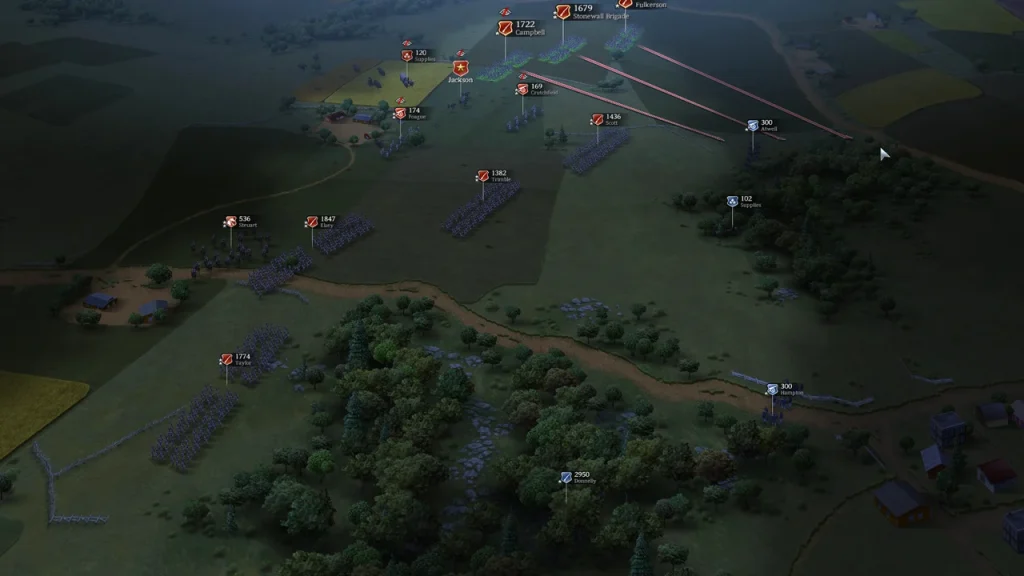
Ultimate General Civil War supply wagons keep units supplied with ammunition when those units are inside the wagon’s resupply radius. The ammunition carried is finite, so allocate supply in camp, protect the wagon and move it with the useful firing line. The official manual warns that artillery consumes more supply and that a captured wagon loses its carried ammunition. Low ammunition also reduces firing efficiency; it does not simply mean a unit can never shoot again.
Quick plan: buy an appropriate supply allocation, choose a protected route, watch unit and wagon indicators, and conserve fire that does not serve the objective. This guide uses the official UGCW manual and the developer’s game overview. It does not prescribe a fixed purchase amount or invent a measured resupply-radius formula.

On this page
Ultimate General Civil War supply wagons: keep ammunition reachable
A stocked wagon helps only when it can reach the formations that need ammunition safely. Plan the wagon’s position alongside the infantry and gun positions. The route should remain behind friendly protection rather than following an attacking brigade into an exposed gap.
Check which units actually start the mission and which arrive later. Supply arrangements must fit the force and scenario on the map, not the whole camp roster assumed to appear at once. When the opening is special or constrained, inspect the available units before relying on a wagon that is not present.
Assign protection and movement as separate parts of the plan. Nearby infantry can defend the area, while you supervise whether the resupply radius still covers the units carrying out the main task.
Allocate corps supply before deployment
The manual describes one supply wagon per corps and a supply allocation in camp. Inspect what remains and what the current purchase costs. Its historical interface screenshot shows the allocation control; the displayed number is not an optimum for every army or mission.
Choose the amount with the expected engagement in mind. A force preparing for prolonged artillery and infantry fire asks a different budgeting question from one whose immediate task involves limited contact. Compare the ammunition plan with equipment, officer and replacement expenses before committing.
The manual states that unused supply is saved for the next battle. Account for what is already available rather than treating every mission as a fresh empty-wagon purchase. Use the current camp display to confirm the allocation.
Place the wagon within reach behind protection
Move the wagon near the formations it should support and inspect the visible radius. The manual describes resupply for units inside that area. Do not assume that being somewhere behind the army is close enough to supply every brigade.
Keep it away from exposed flanks and routes an enemy can cross. Wagons cannot return fire, though the manual describes automatic evasion. That behavior is not a complete protection plan. A unit attacking around your line can threaten the supply position even while the main infantry fight appears stable.
If reaching a depleted brigade would require crossing enemy fire, consider bringing that formation toward a safer position or changing the protected line. Do not sacrifice the wagon for one exposed unit without considering the ammunition the rest of the force still needs.
Check supply separately from reload morale and condition
The unit card displays separate indicators for supply, reloading, morale, cover and condition. The official manual illustration highlights the Supply bar so you can identify it. A slow or weak contribution may come from more than one field.
Check ammunition when a firing unit becomes less effective, then inspect the wagon’s stock and radius. If supply is available but performance remains poor, read morale, condition, command and the selected unit’s situation as well. Do not assume that moving a wagon solves an exhausted or badly exposed formation.
Watch the warnings that appear as a unit or wagon runs low. Pause when necessary to inspect several units and decide which position requires attention first. A supply decision is easier before the whole line is depleted.

Prioritize the units whose fire serves the objective
Finite supply requires choosing which engagements deserve continued ammunition. Identify the formation holding required ground, the battery supporting it and any unit stopping a direct threat. Keep the wagon in a position where it can support those tasks safely.
Inspect firing that no longer contributes to the plan. A unit shooting at a poor target while the main threat changes may consume ammunition without helping the objective. Adjust the order or position before treating every low-supply indicator as a reason to move the wagon farther forward.
This guide does not invent a per-unit priority setting on the wagon. Prioritization comes from the firing orders, protected placement and units you choose to keep within useful reach.
Control artillery consumption with useful engagements
The manual says artillery shots cost more supply. It also describes Hold Fire as useful for saving artillery ammunition. Use that named button when a battery should stop a barrage, and verify the indication on the unit’s flag.
Inspect the target and visibility before resuming. Artillery relies on scouting for distant targets, and its ammunition type changes automatically with distance according to the manual. The useful question is whether the current engagement supports the objective, not whether the battery can continue firing indefinitely.
Protect the guns and wagon together without exposing both to the same approaching threat. If the infantry line moves, reassess which position lets the guns contribute and which safe supply location supports them.
Move the protected supply position when the line changes
After an advance, withdrawal or phase change, inspect the radius again. A wagon that supported the original line may no longer reach its firing formations. Choose the new position and safe route before issuing the move.
Check the units guarding the destination. If they are moving away or losing morale, the area may no longer be protected. Hold the wagon farther back while another unit establishes the position, or adjust the firing line to a place the army can support.
Keep an exit available. Supplies should follow the army’s secured position, with enough supervision to leave when a flank collapses. Automatic evasion does not replace that assessment.
Understand low ammunition and capture consequences
The manual states that units without ammunition supply can still fire, with much slower reload and reduced efficiency to represent scavenging. That is a penalty to sustained combat, so do not interpret the remaining shots as evidence that ammunition management is unnecessary.
Wagon supply itself is finite. This guide does not promise an unlimited battlefield refill or an automatic restoration after depletion. Inspect what is available and change the firing or position plan when the remaining supply cannot sustain it.
If a wagon is captured, the manual says all supply it carries is lost. Consider that consequence before sending it through an unsafe route. The loss can affect several units that depended on its ammunition.
Review the remaining supply after battle
Inspect the next camp allocation and the remaining resources. Compare the engagement you planned with the ammunition actually needed. If the force ran short, determine whether the cause was the purchased amount, poor radius coverage, an exposed wagon or unnecessary firing.
Logistics is a separate career function: the manual describes it as increasing each unit’s default ammunition, and career changes apply on the next campaign turn. Compare that long-term option with the immediate wagon allocation without treating one as an unlimited substitute for the other.
Use the Ultimate General Civil War guide hub for related artillery and campaign topics. Record the next supply plan as allocation, protected position, priority engagements and the route to use when the line moves.
FAQ
Do units stop shooting completely when ammunition is low?
The manual describes continued fire with much reduced reload speed and efficiency when units lack ammunition supply. That limited scavenging does not preserve normal firing performance.
Can a wagon defend itself?
It cannot return fire. The manual describes automatic evasion, but you still need nearby protection and a safe route.
Should every corps buy the same supply amount?
Check remaining stock, expected firing, deployment and the camp budget. This guide does not establish a fixed amount for every corps or battle.
Does unused ammunition disappear after the battle?
The manual states that unused wagon supply is saved for the next battle. Inspect the current allocation before purchasing more.
Sources and further reading
Keep exploring

Hearts of Iron 4 vs Ultimate General Civil War: nation or army command?
Pick HOI4 for national industrial and political war planning; pick Ultimate General: Civil War for tactical formation command and an army that carries battle consequences forward.
Gates of Hell Ostfront vs Ultimate General Civil War: which army campaign?
Choose Ostfront for a researched WWII force and direct control; choose Ultimate General: Civil War for brigade command and a campaign shaped by surviving soldiers and officers.
Games like Ultimate General Civil War: 3 clear choices
Criterion-based alternative selection for UGCW players: same-franchise focused battlefield, same-war national strategy, or different-period gunpowder regional campaign; explicit scope and evidence limits.