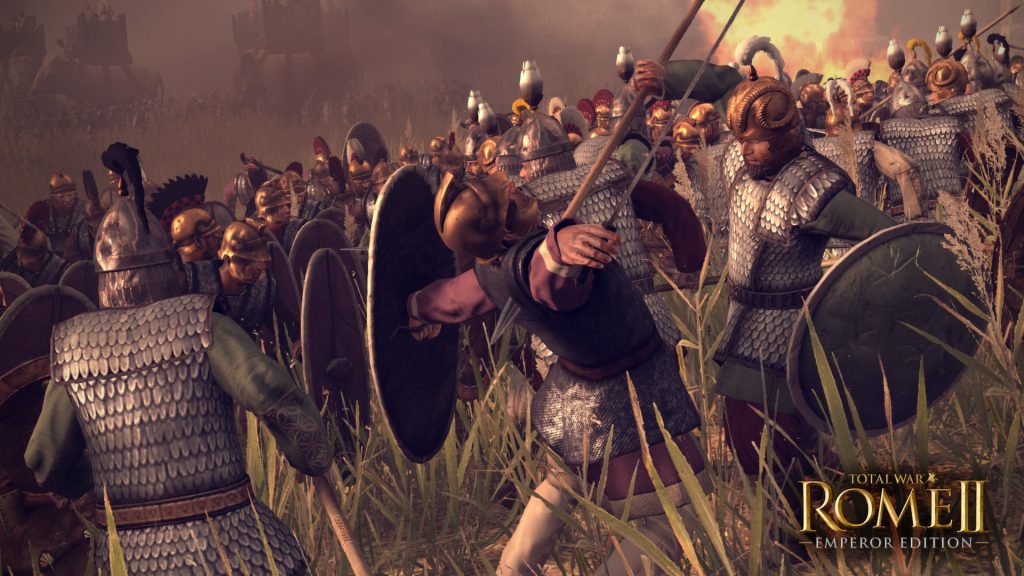
Verdict: This Total War Rome 2 review recommends Emperor Edition as a strong candidate for players who want an ancient Mediterranean campaign connected to large real-time battles. Its documented appeal is the combination of province management, army development, diplomacy and varied land and naval engagements.
It is a less obvious choice if you only want a small tactical game or a campaign without provincial and political administration. This assessment is based on the official product description, manuals and dated update evidence. It does not claim hands-on testing, measured performance or a numerical review score.

Review method: Official documentation establishes features and included content. The encyclopedia explains campaign and battle systems; later publisher announcements and a dated community guide distinguish modern politics from the older manual. Reviewed November 9, 2026. Judgment below concerns how those systems fit different players, with current prices, multiplayer activity, hardware performance and mod compatibility left unmeasured.
On this page
Total War Rome 2 review: what experience are you buying?
Rome II joins a turn-based strategic map to battles fought in real time. The campaign handles the movement of armies, development of provinces, recruitment and relationships among factions. Battles let you direct the units whose availability and condition were shaped by those campaign decisions.
That connection is the main reason to consider it. A successful battle creates opportunities on the map, while the map determines which force can reach the next objective and recover afterward. You are choosing a game about maintaining a campaign as well as winning individual engagements.
The official product presents a large ancient-world sandbox with several civilizations and military styles. It is not limited to following Roman history through a fixed sequence of missions. The attraction is choosing a faction, setting priorities and adapting the campaign to the resulting political and military situation.
The best-fit player enjoys both layers
If you like deciding where an army should go and then controlling how it fights, the design is directly relevant. The strategy layer gives the tactical decisions context; the tactical layer lets you respond to a situation that an abstract campaign result would otherwise resolve.
If only one layer interests you, consider that before committing. Custom battles can provide another way to engage with combat, but the main campaign’s value relies on the connection between management and battlefield play. The documentation does not justify promising that every player can ignore half the design without losing much of its appeal.
1. Emperor Edition has a defined content boundary
The official listing describes Emperor Edition as an improved version with changes to politics, building chains, battle balance and visuals. It also identifies the Imperator Augustus campaign as included free content. That campaign covers the aftermath of Caesar’s death and the contest among successor leaders.
Included updates are different from ownership of every paid campaign or faction package. Do not assume the word definitive means all later DLC is included in every purchase. Check the actual package and the campaign you want to play before deciding on an expansion.
For a new player, the sensible starting point is a campaign and faction available in the chosen package. Learn whether you enjoy the linked campaign and battle systems before buying another setting. An expansion adds value when its period or mechanics serve your preferences, not simply because it increases the library’s size.
2. The campaign rewards logistical decisions
Recruitment is tied to the general and the regional options available to the force in the official manual. That makes army location part of the development plan. Moving a damaged army away from useful recruitment and recovery conditions can complicate the next operation even after a battlefield win.
Provinces also compete for attention. Buildings can provide economic, food, military and control functions, with costs and prerequisites that matter to the wider faction. A settlement upgrade is not automatically a good purchase if its food burden or local effects create another problem.
This gives the campaign a useful tension: expand now, consolidate first or improve the force needed for a later objective. Players who enjoy preparing an operation can find that structure appealing. Players who regard every construction and public-order decision as an interruption should expect the management layer to be part of the commitment.
A hypothetical choice shows the connection
Assume your army wins a border battle but takes substantial losses, while the captured settlement needs control and repairs. Continuing directly toward another city may preserve momentum. Waiting can give the army time to recover and the province time to support the next advance.
Neither choice is inherently correct. The relief threat, food situation, recruitment route and available reserve determine the answer. This example illustrates the documented systems’ relationship; it is not a claimed campaign test or a prediction of the AI’s response.
3. Battles are about formation and support
The manual documents infantry, missiles, cavalry, siege equipment and fleets as parts of varied engagements. Formations arrange the force for particular tactical purposes, while unit attributes and morale affect how the fight develops. The appeal is coordinating those roles rather than merely selecting the largest army.
The true line-of-sight system adds another consideration. Terrain and visibility can affect what units detect, creating reasons to scout or approach from another angle. A force’s position matters alongside its roster, which connects tactical planning to the terrain selected for the engagement.
This should suit players who enjoy organizing a line, supporting vulnerable troops and adapting after contact. It does not establish that every battlefield outcome is perfectly predictable. The documentation supports the available systems; evaluating their precise balance or AI execution would require separate playtesting.
Morale makes preservation part of the fight
The morale guide describes routing pressures and the importance of the general. A unit’s remaining numbers do not tell the whole story if its confidence is deteriorating. Protecting command support and avoiding an isolated engagement can matter to whether the line remains functional.
For a campaign player, that encourages thinking beyond the immediate enemy losses. A costly victory can leave your force unable to exploit the result. The design connects battle preservation to the next map decision, which is a more substantial commitment than playing disconnected tactical encounters.
4. Sieges offer a different planning problem
Fortified assaults require attention to access, defenses and the objective inside the settlement. The official guide distinguishes recruited artillery from engines built at the siege site. Waiting for preparation and attacking immediately therefore have different campaign costs.
Once the army enters, the fight continues through wall positions and interior routes. The manual also distinguishes major victory objectives from minor settlement capture points. This creates another reason to study the battle’s actual rules rather than applying one universal field-battle plan.
The siege layer is a benefit if you enjoy planning a sequence from approach to occupation. It is a tradeoff if you want every engagement to deliver the same open-field maneuvering space. The documentation establishes that the game deliberately includes different battle contexts.

5. Diplomacy expands the campaign choices
The diplomacy manual includes trade, access, defensive and military alliances, clients or satrapies, peace and other agreements. These options can support a campaign objective without requiring immediate direct conquest. Access through a neighbor and ownership of that neighbor’s land are different outcomes.
Agreements also create obligations. A full alliance is not simply a larger version of a trade relationship, and a dependent state may need protection. Players who enjoy comparing commitments can use diplomacy as part of the operational plan.
This review does not claim that every negotiation can be manipulated into acceptance or that allied forces always arrive when requested. Those would require evidence about actual behavior. The documented value is the range of agreements and their strategic implications, with uncertainty remaining part of the campaign.
6. Modern politics needs the right source
Rome II’s political systems changed across updates. The dated community Power & Politics guide uses rival-party loyalty and risk as separate considerations from influence. Later official Ancestral announcements establish the family-tree addition. Applying an old influence-balancing explanation to that later system can produce misleading expectations.
Politics adds character development and internal support to military planning. A useful promotion can have relationship consequences; an inactive statesman can have a political or provincial role. A capable rival commander can be valuable while also requiring attention to party affiliation and support.
That is appealing if you want the faction to feel like more than an army-production machine. It adds work for players who prefer external conquest without internal relationships. The appropriate question is whether that extra management serves your preferred campaign style.
Character development and army identity are distinct
The official manual also describes army legacies and traditions. Army development is not identical to the general’s personal skill progress or the experience of its units. Those layers let a force acquire an identity beyond whichever leader currently commands it.
For a player who enjoys building a campaign force over time, this is a meaningful feature. It creates reasons to preserve and develop the army rather than treating every roster as a temporary collection. Exact optimal traditions remain a separate guide question, dependent on the composition and task.
7. Naval support broadens the operational map
The PC manual documents combined land and naval battles, including troops going ashore and shipborne artillery. Fleets also serve campaign roles such as blockading ports. The navy can therefore affect both an individual battle and the supply or access surrounding a coastal operation.
That can be attractive if you enjoy coordinating an army and fleet rather than handling land movement alone. It also means another force with its own positioning, upkeep and tactical requirements. A naval component is not automatically valuable merely because you can recruit it.
Choose fleet investment for a concrete route or objective. Supporting a coastal assault, maintaining a blockade and fighting a hostile fleet are different jobs. The documented variety is a strength for players who want those choices and an added layer for those who do not.
Who should consider Rome II, and who should compare alternatives?
| Preference | Fit assessment | Reason |
|---|---|---|
| Ancient Mediterranean sandbox | Strong candidate | Faction variety and a connected campaign map |
| Real-time army control | Strong candidate | Direct land, siege and naval engagements |
| Pure state-management grand strategy | Compare alternatives | Battle control is a central part of the design |
| Small tactical encounters only | Compare the available modes | Main campaign involves substantial management |
| Minimal political or provincial work | Potential mismatch | Food, buildings, control and internal support matter |
| Verified performance on a particular PC | Needs separate evidence | No hardware test was conducted for this review |
Mods can change the experience, but are another configuration
Official Workshop and Mod Manager support provides a documented route for user modifications. Those can alter graphics, interface, units or campaign systems. A modded campaign should be treated as a particular package with its own requirements, not as a guaranteed fix for every preference.
Learn the base systems and read the mod author’s requirements before combining several packages. A large overhaul can change the mechanics that the official manual explains. This review’s assessment concerns the documented game and update boundaries rather than any untested collection.
Frequently asked questions
Is Rome II worth considering for a new historical strategy player?
Yes, if the ancient setting and connection between map management and real-time battles appeal to you. Expect to learn both layers. The recommendation is about documented fit, not a guarantee that its complexity matches every beginner’s preference.
Does Emperor Edition include every campaign?
The official listing confirms included updates and the free Imperator Augustus campaign. It does not justify assuming every paid DLC is included. Check the package and the desired campaign separately.
Is this a hands-on performance review?
No. It is a transparent assessment of documented features and their practical tradeoffs. Hardware performance, current player activity, precise AI behavior and a numerical review score would require additional testing or current data.
What should decide my purchase?
Prioritize the setting and the two-layer structure. If you want to manage an ancient faction and command its battles, Rome II is a relevant candidate. If you mainly want one of those activities, compare games built more directly around that preference.
Sources and further reading
- https://store.steampowered.com/app/214950/
- https://cdn.cloudflare.steamstatic.com/steam/apps/214950/manuals/RTW2EE_PC_MANUAL_EN.pdf
- https://r2enc.totalwar.com/en/manual/single-player/0038_enc_page_campaign_play_faction_diplomacy/
- https://r2enc.totalwar.com/en/manual/single-player/0045_enc_page_campaign_play_province_construction/
- https://steamcommunity.com/sharedfiles/filedetails/?id=1237207803
- https://steamstore-a.akamaihd.net/news/externalpost/steam_community_announcements/2454911758737041344
Keep exploring
Total War Rome 2 Diplomatic Expansion: protect your next conquest
Use diplomacy to support an expansion plan through reputation, understood treaty obligations and bounded allied war coordination.
Total War Rome 2 vs Total War Three Kingdoms: territory or characters?
Choose ROME II for classical civilizations and empire development; choose THREE KINGDOMS for Chinese warlords and relationships that connect statecraft with battle.

Total War Rome 2 vs Total War Attila: build an empire or survive?
Choose ROME II for classical empire growth; choose ATTILA for late-antique survival, a vulnerable Western Roman Empire and destruction mechanics.