Quick picks: The best games like Total War Rome 2 depend on what you want to keep. Choose Total War: ATTILA for the familiar campaign-and-battle structure with a late Roman survival setting, or THREE KINGDOMS for that structure with a stronger documented emphasis on characters and relationships.
Choose Imperator: Rome for classical state management, or Field of Glory: Empires for an ancient empire campaign with simultaneous-turn planning and cultural decline. Those last two offer different battle experiences. This comparison uses official feature descriptions rather than claimed hands-on rankings.

Research scope: Each recommendation links to its official product page. Reviewed November 9, 2026. Prices, hardware performance, current multiplayer activity and expansion ownership are not assumed. The shortlist compares campaign and battle design so you can select by preference rather than treating every historical strategy game as interchangeable.
On this page
Games like Total War Rome 2: choose the similarity first
Rome II combines an ancient-world turn-based campaign with real-time land and naval battles. That creates several possible reasons to look for an alternative: the period, direct unit control, provincial management, diplomacy or development of a faction over a long campaign.
Decide which part is essential. If you mainly want to command armies directly, a state-management game with abstract battles may not meet the need. If you mainly enjoy the classical empire map, another setting with the same battle engine may be a less relevant replacement.
The following four games preserve different parts of that experience. Two stay within Total War’s linked campaign and battle structure. Two offer classical empire management through another strategic design. The distinctions are the point of the list, not drawbacks hidden behind a single best-game label.
| Game | Best similarity to Rome II | Main change |
|---|---|---|
| Total War: ATTILA | Campaign tied to real-time battles | Late Roman survival and destruction pressures |
| Total War: THREE KINGDOMS | Empire campaign and direct battle control | Ancient China and character relationships |
| Imperator: Rome | Classical populations, politics and territory | Grand strategy rather than Rome II-style direct battles |
| Field of Glory: Empires | Classical empire development | WEGO campaign and optional separate tactical integration |

1. Total War: ATTILA — for a familiar structure with survival pressure
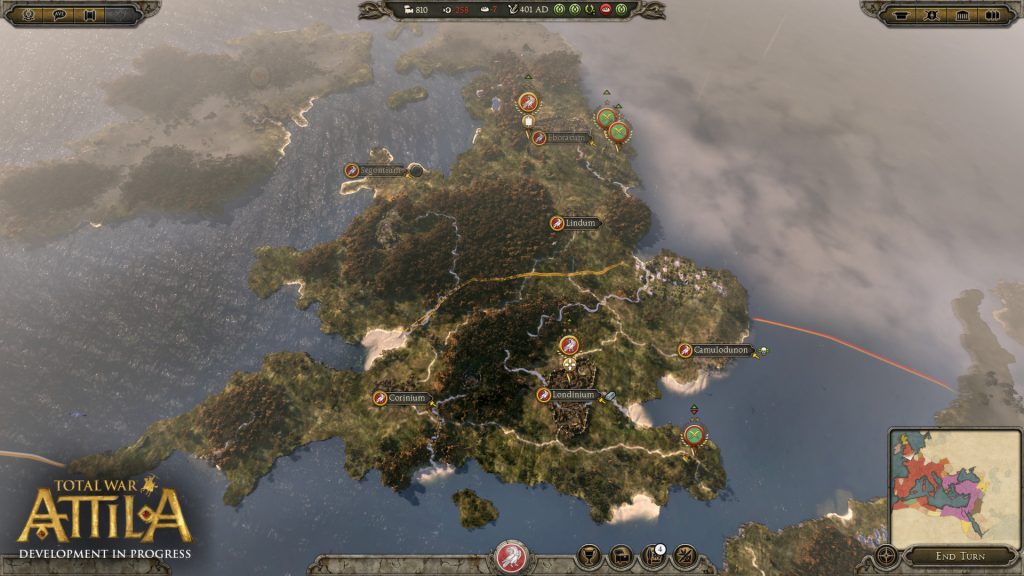
Total War: ATTILA is the closest structural choice on this shortlist for someone who wants another Total War campaign connected to real-time combat. Its official description sets the main campaign in 395 AD and emphasizes famine, disease, war and the threat to the remaining Roman powers.
The Western Roman Empire is presented as a large but weakened starting position facing external threats and internal political conflict. That changes the campaign question from straightforward expansion to deciding what the faction can preserve and support. A large starting map is not the same thing as an easy campaign.
The product also documents fire and razing mechanics, as well as family-tree, political, civic and technological systems. Those features make it relevant if Rome II’s empire map appeals to you but you want more pressure around maintaining the state.
Choose it for operations that include consolidation
Attila is a good candidate if you enjoy planning how a force survives between battles. The setting and documented destruction systems encourage attention to what remains after an engagement or conquest. Military success and a sustainable campaign position are related but distinct.
Compare it carefully if you primarily want a comfortable ancient expansion sandbox. Its advertised survival setting is a meaningful design emphasis, not simply a visual change from Rome II. This recommendation does not claim measured difficulty across every faction or guarantee a particular campaign outcome.
2. Total War: THREE KINGDOMS — for characters and statecraft
Total War: THREE KINGDOMS keeps the connection between turn-based empire development and real-time battles while moving the setting to China in 190 CE. The official product describes warlords, statecraft, conquest and characters who command armies or govern the growing faction.
Its documented Guanxi system emphasizes relationships among characters: personalities, motivations, friendships and rivalries affect the campaign story. This makes it particularly relevant if you enjoy Rome II’s political and character layer and want an alternative that places those people near the center of the experience.
The official description also connects battle actions to character relationships. The attraction is not just another roster of historical troops, but a campaign in which military and personal decisions are presented as interdependent.
Choose it when the commander matters to the story
If you like following a leader’s development and the relationships around that leader, THREE KINGDOMS is a strong candidate. The official features support an emphasis on people as part of the faction’s operation, rather than only on provinces and anonymous armies.
The tradeoff is the setting and presentation. If Roman legions, Mediterranean geography and classical cultural groups are the main reason you like Rome II, ancient China is a substantial change. Read the available modes and package contents before assuming that every representation or campaign start is included.
This comparison does not rank its diplomacy against Rome II through unmeasured claims about AI intelligence. It identifies the documented character and relationship focus, which is the more useful basis for deciding whether it fits your preferences.

3. Imperator: Rome — for classical state management
Imperator: Rome keeps the classical Mediterranean setting while shifting toward grand strategy. The official description emphasizes character management, populations with cultures and religions, different governments, trade goods and provincial improvement.
That makes it relevant if the most interesting part of Rome II is building a durable ancient state. The campaign concerns who governs, how populations contribute and whether internal groups remain satisfied. It offers a different route to the empire-management interest that brings many players to the ancient setting.
Military traditions and pre-battle tactical choices appear in the official feature list, but they do not establish Rome II-style direct real-time command over battlefield units. Treat that difference as a primary buying decision. Keeping the historical period does not mean keeping the same tactical layer.
Choose it if administration is the main attraction
Imperator is a useful candidate for someone who wants populations, government and trade to be central campaign concerns. It can be a better thematic match than a Total War game in another era when classical political geography matters more than direct combat control.
Compare it elsewhere if you mostly want to place infantry, cavalry and missiles on a 3D battlefield and issue movement orders during the fight. This list does not hide that design change behind the phrase historical strategy.
The source is a product-level description rather than a patch-by-patch guide. Current detailed mechanics, expansions and any overhaul package need separate verification. The recommendation rests on its documented state-management identity, without assuming that an older feature summary lists every present population category or system.

4. Field of Glory: Empires — for a classical empire with WEGO planning
Field of Glory: Empires is another classical grand-strategy option. Its official description emphasizes cultures, regions, provinces, construction, trade and the danger of decadence as an empire develops. Expansion needs to be considered alongside the form and stability of the state.
The game uses simultaneous turn resolution, commonly described as WEGO. That changes the movement problem: plans resolve with the opposing side’s actions rather than simply reproducing the same campaign rhythm as Rome II. The official listing highlights interception and escape as reasons to think ahead.
Army composition, terrain and general selection also matter in its documented battle system. It should suit players who want military campaigns to remain consequential while spending more attention on the strategic map and the development of a classical state.
Tactical integration has a separate ownership requirement
The official listing states that players who own Field of Glory II can export battles from Empires, play them in that game and return the results. This is an optional connection to a separate tactical title. It is not proof that purchasing Empires alone includes the other game or reproduces Rome II’s real-time battles.
Choose Empires if the campaign’s culture, decadence and simultaneous planning appeal to you. Evaluate the additional tactical title separately if you want that integration. The distinction avoids buying a strategic game under the mistaken assumption that another product’s battle system is built into the base purchase.
How to choose between the four alternatives
If direct real-time unit control is essential, start with ATTILA and THREE KINGDOMS. Then choose the setting and emphasis: late Roman survival versus ancient Chinese characters and statecraft. Both preserve the broad two-layer structure that distinguishes Total War.
If the classical empire map is more important than direct battle control, compare Imperator and Empires. The former’s official description foregrounds populations, characters and government; the latter foregrounds cultural development, decadence and simultaneous-turn planning.
Do not buy solely because the candidate has more systems on a feature list. A system adds value when you want to make its decisions. Someone who dislikes provincial management in Rome II may not benefit from moving to a game whose administration is an even more central part of its identity.
Use a concrete preference test
Ask which decision you most enjoy: choosing the empire’s policy, arranging an army for battle, maintaining a threatened realm or following characters through political change. Match that preference to the strongest documented fit rather than selecting the game that is newest or most frequently mentioned.
Then check the specific package, mode and campaign you intend to use. This shortlist does not supply live prices, hardware results or current multiplayer population. Those questions need present evidence for the actual purchase and setup.
Frequently asked questions
Which alternative is closest to Rome II’s overall structure?
ATTILA is the clearest nearby choice on this shortlist for a campaign linked to real-time battles in a related late Roman setting. THREE KINGDOMS keeps the structure while changing the period, geography and character emphasis.
Which option keeps the ancient Mediterranean theme?
Imperator: Rome and Field of Glory: Empires directly fit classical empire management. Their tactical experiences differ from Rome II, so prioritize whether the map or battlefield is the essential part of the theme for you.
Does Field of Glory: Empires include Field of Glory II?
The official description makes battle export conditional on owning Field of Glory II. Check the actual purchase package. The integration is a separate ownership question, not a reason to assume the tactical title comes with every Empires purchase.
Are these recommendations based on playtest scores?
No. They compare verified official features and explain the resulting fit. They do not claim personal campaign results, measured performance, live prices or a universal ranking for every historical strategy player.
Sources and further reading
Keep exploring
Total War Rome 2 Diplomatic Expansion: protect your next conquest
Use diplomacy to support an expansion plan through reputation, understood treaty obligations and bounded allied war coordination.
Total War Rome 2 vs Total War Three Kingdoms: territory or characters?
Choose ROME II for classical civilizations and empire development; choose THREE KINGDOMS for Chinese warlords and relationships that connect statecraft with battle.
Total War Rome 2 vs Total War Attila: build an empire or survive?
Choose ROME II for classical empire growth; choose ATTILA for late-antique survival, a vulnerable Western Roman Empire and destruction mechanics.