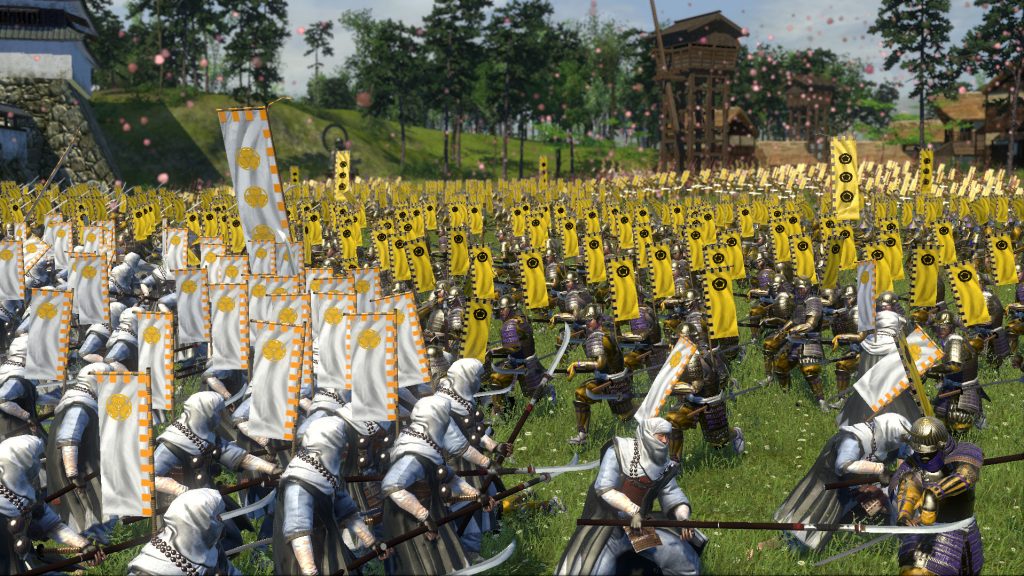
TL;DR: Choose games like Total War Three Kingdoms according to the part you want to keep:
- Total War: Shogun 2 for historical clan warfare with a turn-based campaign and real-time battles.
- Total War: Rome II for a broader ancient-world campaign and varied historical armies.
- Crusader Kings III for dynasties, heirs, court relationships and political schemes.
- Romance of the Three Kingdoms XIV for Chinese officers, territorial control and supply-line strategy.
- Total War: Warhammer III for fantasy armies and supernatural battlefield spectacle.

Shogun 2 is the first option to examine if you want to preserve the historical campaign-and-battle combination. Crusader Kings III is more relevant if the people and succession mattered most. Romance of the Three Kingdoms XIV keeps the Chinese setting while changing how you manage war, rather than trying to duplicate Total War’s separate battle presentation.
Selection method: These recommendations match documented features in the games’ official product descriptions. They are preference-based suggestions, with an explicit difference for each game. No playtime comparison, popularity ranking or measured superiority is claimed.
On this page
Games like Total War Three Kingdoms: compare the experience
| Game | Best reason to choose it | Tradeoff to accept |
|---|---|---|
| Shogun 2 | Historical clans and direct land or naval battles | A different era and character framework |
| Rome II | Ancient civilizations and large historical armies | Its own political and development systems |
| Crusader Kings III | Family, inheritance and personal politics | A different warfare presentation |
| Romance of the Three Kingdoms XIV | Chinese officers and a connected territorial front | Map-centered military planning |
| Warhammer III | Fantasy factions and spectacular real-time combat | Leave the historical Chinese setting |

1. Total War: Shogun 2 for historical clan warfare
Shogun 2 keeps the familiar combination of a turn-based campaign and real-time battles, but moves to sixteenth-century Japan. Its official description centers on a daimyo using military power, economics and diplomacy to become shogun. That makes it an appropriate next step for someone who enjoyed managing territory and then leading the resulting army personally.
The campaign offers clan competition, agents, generals, research and land or naval battles. The official manual also describes castle development and its food demands. If the appeal of Three Kingdoms was deciding whether the economy could support the next campaign, that relationship between development and warfare remains relevant.
The main difference is the setting and structure around its people. Choose it for Japanese clan warfare rather than expecting Cao Cao’s Schemes, Liu Bei’s Unity or the same retinue system. General and agent progression exist, but those facts do not mean the games share an identical character framework.
Choose it when: you want another historical Total War campaign with direct battlefield command. If your interest is specifically the Chinese novel’s characters and political situation, the change in era may be a more significant compromise than the similar overall campaign format.

2. Total War: Rome II for ancient civilizations and armies
Rome II moves the campaign to the ancient Mediterranean and surrounding world. The official Emperor Edition page describes turn-based conquest, military and political decisions, and direct real-time land and sea battles. It also emphasizes a variety of rival civilizations with different armies.
This is the selection for a player who wants to keep historical battlefield command while exploring legionaries, cavalry, siege forces and other regional military traditions. The appeal is choosing how an army and empire work in an ancient-world setting, rather than continuing the same Chinese warlord story.
The Emperor Edition description distinguishes its updated politics and building chains from the original release and includes the Imperator Augustus campaign. That matters when comparing campaign scope: its extra Roman civil-war setting is a specific scenario, not a reason to assume every separate Rome II expansion comes with the same purchase.
The tradeoff is relearning its government and development systems. Relationships and political risks still matter, but a familiar Total War interface does not make Three Kingdoms’ court roles, resources or diplomatic assumptions portable. Judge Rome II on its own campaign rules.
Choose it when: varied historical civilizations and a broad ancient empire matter more than staying with Three Kingdoms’ named Chinese heroes.
3. Crusader Kings III for dynasties and personal politics
Crusader Kings III follows a noble house across generations. Its official description emphasizes heirs, titles, vassals, traits, schemes and a medieval realm. If the most memorable decisions in Three Kingdoms concerned which characters to trust and how to handle succession, this is the strongest thematic match in the selection.
The dynasty survives through new playable heirs, so the person ruling today is part of a longer family strategy. Marriage, education, character traits and intrigue provide political tools alongside war. This creates a different reason to care about a character’s future: the next generation can inherit the position you prepared or the problems you left unresolved.
The military description includes men-at-arms, knights, mercenaries and Holy Orders. Choose it for how warfare supports a realm and dynasty rather than expecting to control Total War-style formations in a separate three-dimensional battle. Its political roleplaying is the central attraction here.
The drawback is that a player seeking the sensation of directing a cavalry charge can find a family-focused campaign insufficient as a replacement. Conversely, someone who preferred court maneuvering to battle micromanagement can see that change as a benefit.
Choose it when: you want heirs, rivalries, traits and political schemes to drive the campaign more strongly than direct tactical combat.

4. Romance of the Three Kingdoms XIV for officers and territorial supply
Romance of the Three Kingdoms XIV keeps the Chinese setting and centers strategy on a territorial map. The official description explains how forces depend on a connection between their marching army and its origin city through controlled land. Cutting that connection weakens and disrupts the force.
That makes the shape of the frontier a military concern. A march is more than moving troops toward the nearest enemy city: the territory connecting the force to its base must remain useful. Choose this game if you want supply routes and territorial control to carry more of the decision-making.
Officers also matter outside battle. The product page describes an administrative organization in which assigned officers create commands and effects, together with traits useful in military or government roles. Matching people to positions is a clear point of connection with Three Kingdoms, although the surrounding systems differ.
The compromise is the map-centered presentation of conquest. Sharing a period and famous figures does not make it another version of Total War’s campaign-plus-battle structure. Its value is exploring the setting through a different territorial and administrative model.
Choose it when: China, officers, connected territory and army supply matter more than controlling a separate cinematic battlefield. Compare the exact edition and additional content before purchasing rather than assuming every package has identical scenarios.

5. Total War: Warhammer III for fantasy battlefield variety
Warhammer III keeps the Total War interest in armies, conquest and real-time battles while moving into a fantasy world. The official description names Kislev, Grand Cathay, the Chaos powers and a customizable Daemon Prince. This is a recommendation for the battlefield spectacle and supernatural faction identities.
The setting creates reasons to try different lords and armies. If Three Kingdoms left you wanting more dramatic changes between the types of forces you command, the fantasy premise is a relevant difference to investigate. You are choosing those faction identities rather than another interpretation of historical Chinese warfare.
The tradeoff is the loss of that historical frame. Familiar campaign concepts do not make demons, transforming dragons and Chaos a continuation of the Three Kingdoms period. Grand Cathay is a fantasy faction, not a substitute for an account of Cao Cao or the Han court.
The linked product description primarily describes the game’s advertised campaign and factions. Check current campaign availability and ownership requirements for any additional content you intend to use. This recommendation does not assume that every lord or expansion is included in the base purchase.
Choose it when: the attraction is fantasy armies and direct real-time combat, and you are comfortable changing the setting completely.
How to select one next game
Start with the activity you want to repeat. For a historical army and territory campaign, compare Shogun 2’s Japanese clans with Rome II’s ancient civilizations. Choose the era that makes its political and military decisions interesting to you.
If people and inheritance are the priority, inspect Crusader Kings III. If the Chinese setting and army supply are the priority, inspect Romance of the Three Kingdoms XIV. If battlefield spectacle matters most and historical accuracy is secondary to the fantasy premise, inspect Warhammer III.
For example, a player who enjoyed assigning capable officers but disliked managing individual cavalry maneuvers has a different requirement from someone who skipped diplomacy to fight another battle. The first should examine the officer or dynasty systems; the second should begin with the Total War choices. Use that preference to narrow the list before comparing editions.
Then check the specific purchase: base game, campaign pack or collection. Similarity to Three Kingdoms does not guarantee the same control scheme, pace, hardware performance or included content. The useful comparison is the documented activity you want and the tradeoff you accept.
Frequently asked questions
Which option keeps the historical Total War format?
Shogun 2 and Rome II both combine historical turn-based campaigns with direct real-time battles. Choose between their settings and armies.
Which option keeps China and famous officers?
Romance of the Three Kingdoms XIV, with its own territorial, officer and supply-line systems.
Which option best fits an interest in heirs and court politics?
Crusader Kings III is the clearest fit for dynasties, succession and character-driven political strategy in this selection.
Sources and further reading
Keep exploring
Total War Rome 2 vs Total War Three Kingdoms: territory or characters?
Choose ROME II for classical civilizations and empire development; choose THREE KINGDOMS for Chinese warlords and relationships that connect statecraft with battle.
Total War Three Kingdoms vs Crusader Kings 3: battles or heirs?
THREE KINGDOMS fits direct tactical battle command; Crusader Kings III fits a ruling house whose playable heirs carry its story forward.
Total War Three Kingdoms vs Total War Shogun 2: heroes or clans?
THREE KINGDOMS emphasizes heroic characters and Guanxi; SHOGUN 2 puts generals and agents inside a Japanese clan-unification campaign.