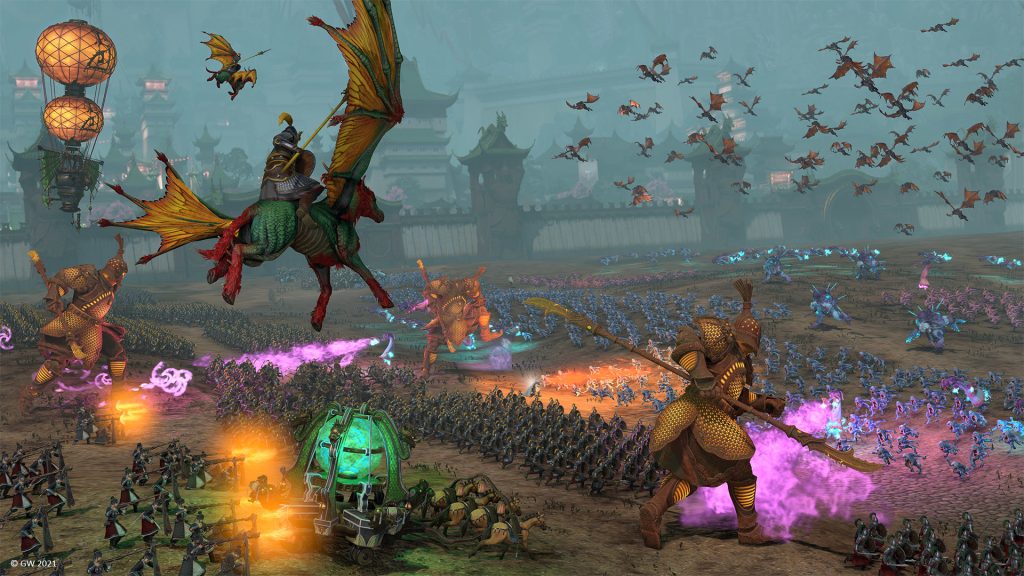
Effective Total War Warhammer 3 single entity counters combine a way to control the target with damage suited to its defenses. A monster, foot lord and flying caster are all single entities, but they do not need the same answer. Inspect the target’s size, armor, resistances and abilities before committing your best damage dealers.
Treat the counter as a small operation: keep the target from reaching vulnerable troops, apply focused damage, and decide whether pursuing it is worth the disruption. Sending the whole army after one powerful character can lose the wider battle.

On this page
Total War Warhammer 3 Single Entity Counters: Large target or small character?
Check the unit card rather than judging from the character’s name. A mounted lord can present a different size and movement problem from the same lord on foot. A large monster is a natural reason to consider weapons with a bonus against large targets; a small foot character does not become a large target merely because it is dangerous.
The official Champions of Chaos roster article describes the Severed Claw’s magical halberds as suited to hunting larger targets. Use that as a role example, then inspect the actual weapon statistics and defenses in your own roster.
Do not treat the anti-large label as a complete matchup verdict. The unit still needs to survive contact, reach the enemy and apply its attacks. An unsupported regiment can lose to several threats even when its weapon is suitable for one of them.
Use a holding unit to create shooting time
Place durable troops where the entity must engage them before reaching your missiles or caster. Give the holding force a job it can sustain, such as blocking a route or absorbing the initial contact while nearby damage dealers work.
Keep the damage dealers out of the same crowded melee. Separate the unit that holds from the units that shoot or support. When the target is surrounded by friendly models, a firing line can become blocked even though the enemy’s health bar remains easy to see.
Watch for a large entity pushing through or disengaging. Reinforce the route it is using rather than repeatedly ordering every unit to attack its current location. The aim is useful contact time, not the largest possible pile around the target.
Match damage to armor and resistances
Inspect the weapon’s armor-piercing contribution when the target has substantial armor. Also read the enemy’s resistances and your attacks’ attributes. Raw weapon strength alone does not explain how well the chosen attack fits those defenses.
Official Update 5.0 separated Passive Abilities, Unit Attributes and Resistances in the unit information panel. Use those categories deliberately. A resistance, a temporary defensive ability and a barrier are different problems to evaluate, even when all three make the target appear hard to kill.
If ranged damage is your answer, maintain a clear line of fire and focus suitable units on the same priority target. Check that they are firing rather than moving, blocked or changing targets. Do not burn limited ammunition into an enemy whose defensive ability is visibly active if a better firing opportunity is about to appear.

Deal with a flyer when it commits
A flying entity can avoid ground troops while airborne. Protect likely landing targets and make a plan for the moment it attacks. Keep ranged support positioned to answer the approach without leaving the rest of the army exposed.
Use a suitable flying interceptor only when it can fight or hold the target with support. A fast unit is not automatically a good duelist. If the opponent is stronger in the air, keeping pressure from missiles and protecting ground assets can be the better approach.
Once it lands, coordinate the holding force and focused damage. Watch the entity’s movement and stop an unnecessary chase when it takes off or leaves your effective engagement area. Preserving the shooting line can matter more than following it across the map.
Budget for healing and defensive abilities
Check the health-bar tooltip when damage seems to disappear. Update 5.0 expanded it to show regeneration, healing cap, healing power and barrier information. That display helps explain whether the entity is recovering health, replenishing protection or simply taking little damage.
Concentrate pressure at a time when the target cannot easily reset the engagement. Applying a few scattered attacks while it withdraws can be much less useful than committing several suitable sources during a stable window.
Healing is not unlimited simply because the enemy has a healing spell. Patch 9.0.4 fixed Invocation of Nehek targeting units already at their healing cap. Inspect the current target and interface; this guide does not promise one fixed cap or healing amount for every character.
Know when to stop the pursuit
Finish a vulnerable target when doing so removes a meaningful threat and the pursuit is safe. Otherwise, keep the army’s formation and answer the remaining enemy forces. An opposing lord pulling your best units away from the main fight can still have achieved something useful for its side.
After the battle, review which part failed. If the entity reached your missiles, improve protection. If it remained pinned but took little damage, reconsider the damage type and firing lane. If your army lost while chasing it, reduce the resources committed to the hunt.
See the Total War Warhammer 3 hub for army-planning guides. Start your next matchup with one holding tool and one suitable damage source, then add support for the target’s particular mobility or defenses.
Sources and scope
The official Champions of Chaos article supplies a large-target weapon-role example. Update 5.0 supplies the resistance and health-tooltip categories. Patch 9.0.4 supplies the healing-cap correction. The pin-and-damage method is tactical advice; no universal monster duel ranking, kill-time benchmark or current balance superiority is asserted.
Sources and further reading
Keep exploring

Total War Warhammer 3 vs Stellaris: battles or a galaxy to discover?
Choose WARHAMMER III for commanding fantasy armies; choose Stellaris for exploring a galaxy and shaping the society, technology and fleets of an empire.
Total War Warhammer 3 vs Total War Rome 2: fantasy or empire?
Choose WARHAMMER III for fantasy races and Legendary Lords; choose ROME II for classical empire building, politics and historical battles.
Total War Warhammer 3 vs Total War Attila: fantasy or survival?
Choose WARHAMMER III for fantasy races and Legendary Lords; choose ATTILA for late-antique survival, vulnerable territory and destructive warfare.