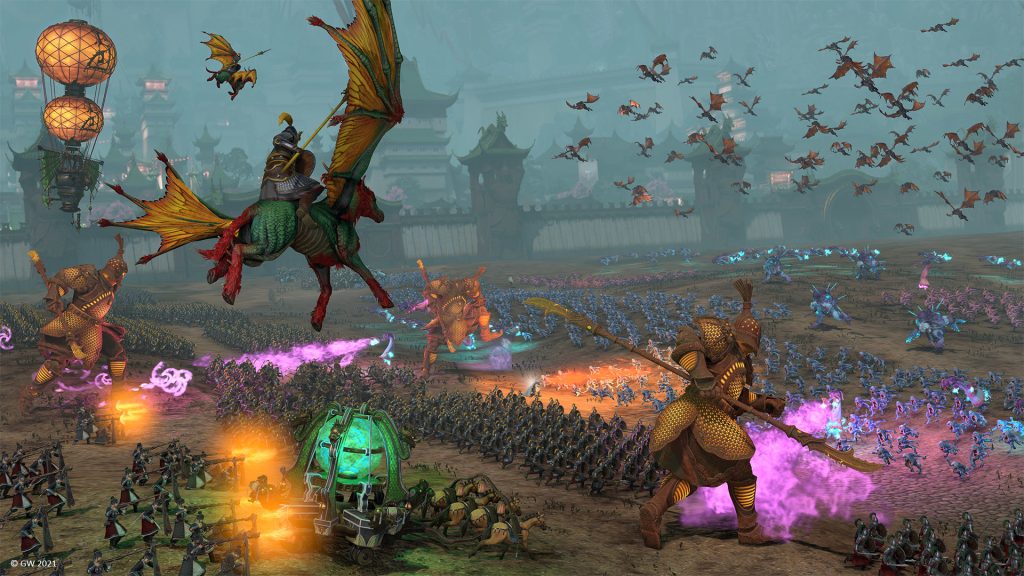
Choose Total War: WARHAMMER III for fantasy races, Legendary Lords and armies built around supernatural identities. Choose Total War: ROME II for classical empire building, political ambition and historical battles. Total War Warhammer 3 vs Total War Rome 2 comes down to which world makes you want to plan another campaign.
Both connect empire strategy with real-time armies. Their strongest attractions differ: WARHAMMER III asks which fantasy power you want to command, while ROME II offers a Roman-era struggle over territory and political authority. Start with that preference before comparing packages or downloadable content.

| Your main interest | Better starting choice | Documented reason |
|---|---|---|
| Distinct fantasy armies and named rulers | WARHAMMER III | Races, Legendary Lords and Daemon Prince customization |
| Classical conquest and political competition | ROME II | Empire campaign, politics and building chains |
| Rome after Caesar’s death | ROME II Emperor Edition | The described Imperator Augustus campaign |
On this page
WARHAMMER III: choose the lord and army identity first
WARHAMMER III is the stronger fit if choosing your leader and fantasy race is part of the excitement. Its official description introduces Kislev, Grand Cathay and the Chaos powers, then connects their conflict to the Realm of Chaos. That is a setting built around supernatural powers and sharply different identities.
The Legendary Lord choice gives that preference a specific focus. The description offers examples such as Kislev’s Ice Queen, a transforming dragon from Grand Cathay and the Daemon Prince. The Daemon Prince can also be customized with body parts and powers. Choose this game if developing a particular fantasy ruler sounds more appealing than imagining yourself at the head of a classical state.
That recommendation is about the documented design, rather than a claim that one lord is strongest or every race plays equally well. A roster that excites you is useful because it gives your army choices a purpose. If daemons and transforming dragons weaken your interest in warfare, the same feature that attracts another player may make ROME II a better fit for you.
See the official WARHAMMER III product page for the current game description and available content.
ROME II: choose the empire you want to govern
ROME II suits players who want military expansion to sit inside a classical political story. Its official description documents a turn-based sandbox campaign, real-time land and sea battles, and conquest through military, economic and political means. Rome is a major attraction, but the description also presents rival civilizations as playable choices.
Emperor Edition specifically names an improved politics system and overhauled building chains. Those are useful reasons to prefer it if you want campaign interest beyond assembling an army. Political authority and the development of your settlements help frame what conquest is for. This comparison does not prescribe a particular building order or promise that political problems have one universal solution.
The described Imperator Augustus campaign provides a more concrete historical hook. Set in 42 BC after Caesar’s death, it places the divided Roman Republic and the members of the Second Triumvirate at the center of the struggle. Choose that angle if competing bids for Roman leadership sound more interesting than the Realm of Chaos. Emperor Edition’s archived description includes this campaign; check the current listing when choosing a package.
Read the official ROME II Emperor Edition listing. For a closer look at the first campaign decisions, continue with the ROME II beginner guide.

The campaign-and-battle rhythm: what would you want to return to?
Imagine ending a session after a battle and deciding what your next objective should be. In WARHAMMER III, the documented lord and race choices suggest asking whether this is the fantasy army and character you want to keep developing. In ROME II, the campaign description suggests asking how your next conquest fits your economic and political ambitions. These are planning examples, not reports from a playtest.
A preference for historical battles does not mean you must ignore the campaign. A preference for fantasy spectacle does not mean you only care about battle visuals. The useful choice is the combination that holds your attention: a supernatural ruler and army identity, or classical warfare within an empire you want to govern.
Check the campaign you want before buying
Choose the base game whose central attraction already interests you. Then verify the exact campaign, faction or lord you intend to use on the current product and DLC pages. The archived WARHAMMER III passage describes Realm of Chaos; it does not establish today’s Immortal Empires access rules. ROME II’s Emperor Edition description also should not be read as a promise that every separate DLC is included.
If the decision remains close, write down the first campaign you would start in each game. Pick the one you can describe with enthusiasm, then check that its required content is in your intended purchase. That produces a clearer choice than declaring either game the universal winner.
Sources and scope
This comparison uses archived official Steam descriptions and personally inspected official game screenshots. It does not report hands-on play, frame-rate tests, current prices or multiplayer population. Current editions, campaign access and DLC requirements should be checked on the linked product pages.
Sources and further reading
Keep exploring
Total War Rome 2 Diplomatic Expansion: protect your next conquest
Use diplomacy to support an expansion plan through reputation, understood treaty obligations and bounded allied war coordination.
Total War Rome 2 vs Total War Three Kingdoms: territory or characters?
Choose ROME II for classical civilizations and empire development; choose THREE KINGDOMS for Chinese warlords and relationships that connect statecraft with battle.
Total War Rome 2 vs Total War Attila: build an empire or survive?
Choose ROME II for classical empire growth; choose ATTILA for late-antique survival, a vulnerable Western Roman Empire and destruction mechanics.