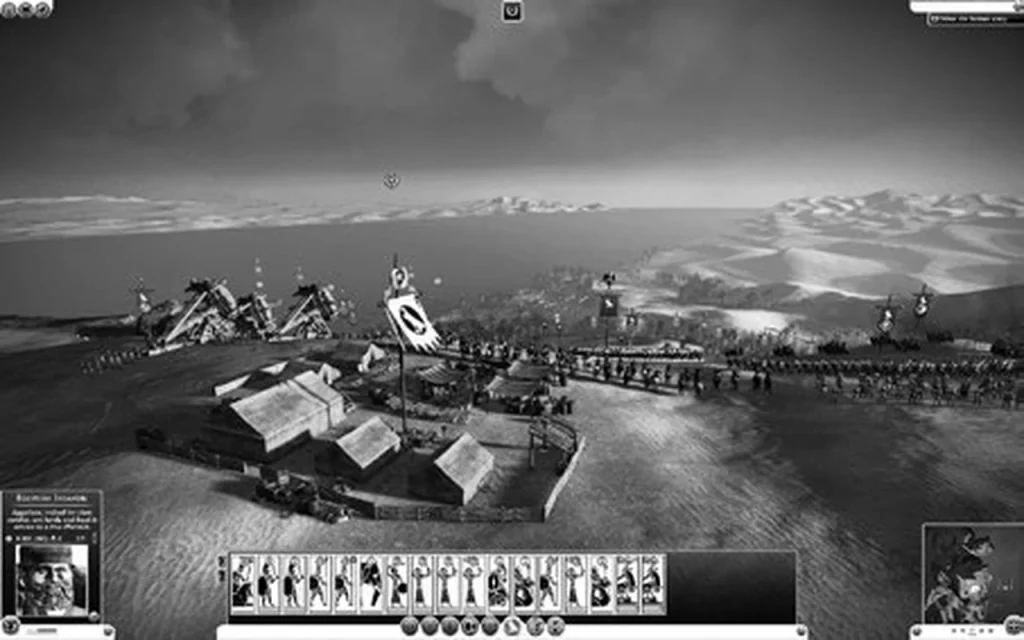
TL;DR: This Total War Rome 2 beginner guide uses a simple campaign loop: read the next objective, stabilize food and public order, recruit a force you can maintain, fight one supported war and recover the captured province before expanding again. Treat treasury, projected income and army upkeep as different numbers.
In battles, form a usable infantry line, protect its flanks, keep a reserve and use missiles and cavalry for specific jobs. Winning a field battle is useful only if the campaign can afford the surviving army and control the territory afterward.

Sources and scope: The publisher manual supports the prologue, provinces, objectives and army framework. The official encyclopedia explains recruitment, public order, construction and morale. Reviewed November 9, 2026; examples are suggested stock-campaign decisions, not a tested first-turn save or a current numerical balance guide.
On this page
Total War Rome 2 beginner guide: organize the first turn
If the controls are unfamiliar, use the prologue before a full campaign. The publisher describes it as a compact introduction to the turn-based campaign and real-time battles. Its purpose is to teach the basic relationship between territory, armies and battlefield orders.
For a Grand Campaign opening, select one immediate objective and identify the province or enemy connected to it. Then inspect the available army, settlement buildings, food position and projected income. Decide what the present force needs before adding an expensive second army.
Queue an economic or recovery building for a named reason, recruit units that fill missing battlefield roles and review nearby diplomatic options. End the turn only after those choices form one plan. An unrelated construction queue, recruitment queue and war declaration can each look useful while collectively exceeding your resources.
| First-turn check | Action | Reason |
|---|---|---|
| Objective | Select one achievable next step | Avoid several unprepared fronts |
| Province | Check food and order contributors | Keep the economy operating |
| Army | Fill missing roles within upkeep | Create a sustainable force |
| Diplomacy | Consider trade or a safer border | Support the chosen war |
| Movement | Use a stance appropriate to the route | Preserve options if threatened |
1. Separate treasury from a sustainable income
Treasury is the amount available now. Projected income tells you more about what the next turn can support, including recurring army and fleet upkeep. A large starting balance can hide a recruitment plan that loses money every subsequent turn.
The official recruitment entry explains that supplies and wages continue after the purchase. Therefore, assess a unit twice: whether you can hire it and whether you can maintain it. Do the same for a fleet, rather than treating ships as a separate expense that does not affect the same campaign budget.
In a hypothetical budget, assume 4,000 treasury, 1,000 projected net income and planned purchases consuming 3,000 now. If new upkeep reduces that net income by 900, the remaining turn income is only 100. These are illustrative numbers, not live faction costs. They show why an affordable recruitment button can still create a fragile campaign.
Keep a recovery reserve
After a battle, you may need building repairs, replacement units or a short-term defensive response. Spending the entire treasury before invading leaves no reserve for those consequences. Keep a buffer appropriate to the risks you have created rather than assuming the first capture immediately pays for everything.
Trade agreements can help support the economy when the route and diplomatic partner are available. The trade and finance entry explains projected income and trade wealth. Treat trade as a useful contributor, not a guaranteed source that every neighbor must accept.
2. Understand provinces before upgrading everything
A province contains several regions, and its regions can initially belong to different factions. The manual describes provincial contributions to wealth, growth and public order. Capturing one settlement therefore changes part of the province, not necessarily its complete ownership or management options.
Growth creates population surplus that can expand settlements. Construction also has direct cost, time and prerequisites. A province with an available slot does not require the most expensive available building immediately. Choose the structure that supplies food, income, control or the unit access the current plan needs.
Right-click a building to read its effects and requirements before committing. The official construction entry distinguishes production, economy and government functions. Two buildings with similar pictures can contribute differently, and an upgraded chain can carry costs that matter across the province.
Prioritize the deficit that blocks the next step
If food supply is the immediate problem, expanding recruitment infrastructure elsewhere does not solve it. If the army lacks a specific recruit type, another income building may help later while failing to provide that role now. Name the deficit and choose the construction that addresses it.
Repair useful captured buildings and replace unsuitable chains deliberately. The encyclopedia explains both repair and demolition, including slow automatic repair for damaged structures and a required repair action for ruined ones. Do not leave a needed production function unavailable while assuming the capture has already restored it.
3. Read public order as a trend with causes
Public order accumulates over time. Food shortages, taxation, culture and garrisons contribute to the situation described by the official source. A province that looks manageable this turn can become unstable if the same negative contributors continue after your army leaves.
Read the contributing factors before choosing a remedy. A temporary tax reduction or additional repression can help a particular situation, while buildings or sufficient food may address a more persistent cause. The remedy should follow what is actually driving the decline.
Do not treat the field army as a permanent substitute for provincial recovery. It may stabilize the area while present, but moving it toward the next objective changes that support. Evaluate the province again before marching away, especially after a capture with cultural unrest or damaged buildings.
Avoid an expansion chain with no recovery stage
Taking several settlements in quick succession can add repair costs and control problems faster than the economy can absorb them. Pause where necessary to restore usable structures and address food and order. That pause is part of the campaign plan, not automatically a lost opportunity.
The practical question is whether the next advance creates a stronger frontier or exposes more unstable regions. One recovered province can support continued operations more reliably than several acquisitions requiring the same army to remain everywhere at once.

4. Recruit to the general and fill battlefield roles
Units muster directly into the selected general’s army. The regional recruitment options depend on available local production, as the official recruitment entry explains. Moving to a region with different access can change the available units; a building elsewhere does not mean every general can recruit its roster anywhere.
Start with a workable role mix: infantry to hold the engagement, missiles to apply pressure, units to guard the flanks and a reserve able to react. The exact roster depends on faction and local access. Avoid presenting one Roman list as an opening for every culture on the map.
Mercenaries offer immediate recruitment for urgent situations, but their ongoing cost still matters. Hire them when a specific short-term role justifies the expense, then review whether they remain necessary. Do not assume a mercenary will become cheap merely because the battle that prompted the hire has ended.
5. Fight with a line, a reserve and a clear support job
During deployment, arrange the force before starting the battle. Keep the frontline broad enough to contest the enemy without stretching it beyond support. Place vulnerable missiles where they can fire while receiving protection, and retain units able to respond if a flank becomes threatened.
Use cavalry for an appropriate maneuver, such as contesting vulnerable missiles or exploiting an exposed side. Do not send it blindly into a defended formation because it is faster than infantry. The enemy unit’s role and the approach determine whether the maneuver is credible.
Missile troops need a useful target and firing opportunity. If the main line changes, adjust the support position instead of leaving every ranged unit where it was first deployed. A formation is a starting arrangement, not an instruction to ignore the battle once contact begins.
Watch morale and fatigue as well as casualties
The official morale entry explains that casualties, fatigue and overwhelming opposition can contribute to routing. A unit does not need to lose every soldier before it stops holding the line. React when the force begins wavering, using support and the reserve before a local collapse spreads the tactical problem.
Keep the general useful without exposing it unnecessarily. The documented presence and abilities can support morale, while losing that command support creates serious consequences. Charging the general into a dangerous engagement can trade a campaign leader for a short-lived local advantage.
6. Use diplomacy to narrow the war you are fighting
The official diplomacy entry describes trade, access, peace and alliance options. Use these to support the immediate campaign objective. A treaty should help establish a manageable frontier or resource relationship rather than simply adding another icon to the diplomacy screen.
Consider the obligations of an alliance before accepting it. A defensive alliance has a different trigger from unrestricted support in offensive wars. Also consider existing relations and treaty history, because breaking agreements can affect later negotiations.
Choose one supported conflict before declaring several. Armies, garrisons and upkeep have to cover the resulting fronts. A neighboring faction being vulnerable is not enough reason to attack if your existing army is recovering and the captured province remains unstable.
7. Review the result after every capture
After a battle or conquest, assess surviving units, recruitment access, damaged buildings and public order. Decide whether the field army should recover, defend or advance. The next movement should follow those conditions rather than the original plan written before the fight.
Use the objective panel to keep the campaign direction visible. The manual distinguishes military, cultural and economic victory requirements, with faction-specific objectives. A territorial gain may help one path while leaving another requirement untouched.
Also keep the faction’s internal political situation in the campaign review. Detailed political systems have changed across updates, so this beginner plan does not copy an old numerical formula. The useful habit is to include internal threats alongside the external frontier before committing the entire force to another war.
Frequently asked questions
Should a new player begin with the prologue?
Yes, when the controls and campaign-to-battle relationship are unfamiliar. The publisher presents it as the introduction to the game’s main systems. Follow it with a manageable campaign objective rather than immediately opening several fronts.
Why can I afford a unit but still lose money next turn?
Recruitment cost and upkeep are separate. The purchase uses treasury immediately, while supplies and wages continue each turn. Review projected income after adding the intended force.
Why can one general recruit units another cannot?
The available recruitment options depend on the region where the general musters and its production access. Use the local roster and required buildings instead of assuming faction ownership unlocks every troop everywhere.
What should happen between two invasions?
Recover the army, repair necessary buildings, address food and order and check the next objective and diplomatic consequences. Advance when the province and surviving force can support the new commitment.
Sources and further reading
- https://store.steampowered.com/manual/214950
- https://r2enc.totalwar.com/en/manual/single-player/0017_enc_page_campaign_play_military_recruit/
- https://r2enc.totalwar.com/en/manual/single-player/0044b_enc_page_campaign_play_province_public_order/
- https://r2enc.totalwar.com/en/manual/single-player/0045_enc_page_campaign_play_province_construction/
- https://r2enc.totalwar.com/en/manual/single-player/0039a_enc_page_campaign_play_province_trade_finance/
- https://r2enc.totalwar.com/en/manual/single-player/0038_enc_page_campaign_play_faction_diplomacy/
- https://r2enc.totalwar.com/en/manual/single-player/0087_enc_page_battle_play_phase_conflict_morale/
Keep exploring
Total War Rome 2 Diplomatic Expansion: protect your next conquest
Use diplomacy to support an expansion plan through reputation, understood treaty obligations and bounded allied war coordination.
Total War Rome 2 vs Total War Three Kingdoms: territory or characters?
Choose ROME II for classical civilizations and empire development; choose THREE KINGDOMS for Chinese warlords and relationships that connect statecraft with battle.

Total War Warhammer 3 vs Total War Rome 2: fantasy or empire?
Choose WARHAMMER III for fantasy races and Legendary Lords; choose ROME II for classical empire building, politics and historical battles.