Choose Total War: WARHAMMER III if you want fantasy races, unusual armies and Legendary Lords to define your campaign. Choose Total War: THREE KINGDOMS if building a Chinese empire through heroic characters, statecraft and personal relationships sounds more rewarding. Total War Warhammer 3 vs Total War Three Kingdoms comes down to which kind of leader makes you care about the next turn.
Both games combine campaign strategy with real-time army battles. This comparison judges setting, leadership, campaign decisions and the motivation to return, using their official product descriptions. Those criteria matter more here than a unit-count contest: two armies can offer plenty to command while giving you very different reasons to fight.

| Your priority | WARHAMMER III | THREE KINGDOMS |
|---|---|---|
| Campaign theme | Fantasy races and the Realm of Chaos narrative | Conquest and statecraft in China |
| Leader appeal | Legendary Lords and supernatural identity | Warlords and a supporting cast of heroic characters |
| People management | Choose a fantasy ruler and army identity | Characters command, govern and form relationships |
On this page
Fantasy identity gives WARHAMMER III its hook
WARHAMMER III’s official description introduces the Chaos powers, Kislev and Grand Cathay before describing its armies. Its named leaders include Kislev’s Ice Queen, a transforming dragon from Grand Cathay and the Daemon Prince. That is a clear buying signal if choosing a supernatural champion is part of the pleasure you want from strategy.
The Daemon Prince makes the appeal concrete. The documented customization lets you change body parts and powers to shape that character around a preferred playstyle. Rather than selecting a ruler mainly because you like the political situation around them, you can be drawn to the fantasy being itself and the army it represents.
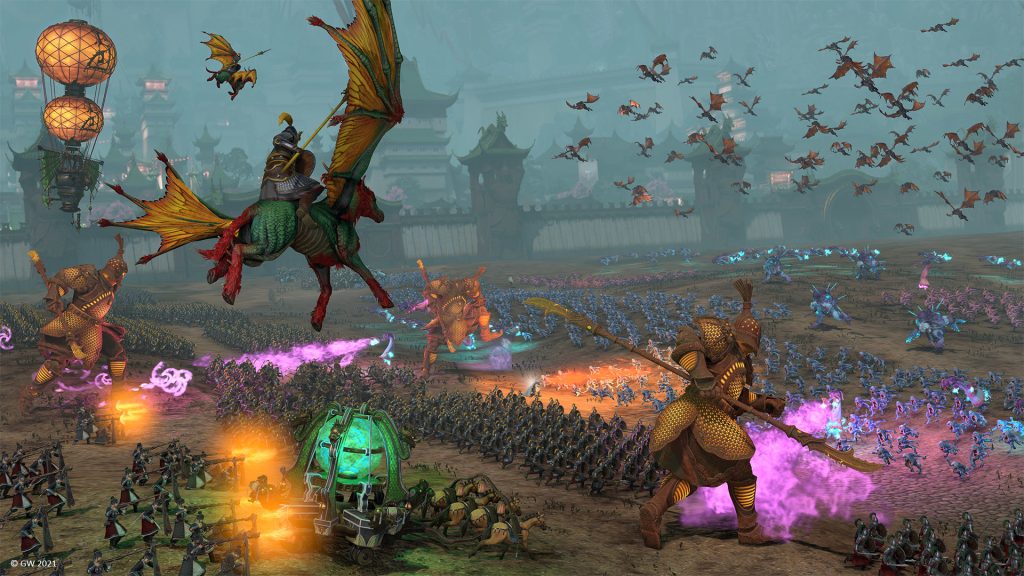
Distinct races and real-time armies support the same recommendation. If your imagined campaign begins with flying creatures, enormous warriors and a faction with a striking visual identity, WARHAMMER III gives that preference a home. The image shows the fantasy setting; it does not establish which units you should recruit or what their current statistics are.
The drawback for a historically motivated buyer is specific: supernatural race identity may provide less satisfaction than recognizable Chinese warlords and their political relationships. More spectacle will not fix a setting you do not want to spend a campaign thinking about. Use the official listing to verify the particular lord and campaign that attracted you.
THREE KINGDOMS makes the people part of the state
THREE KINGDOMS describes a turn-based campaign of empire-building, statecraft and conquest in China, paired with real-time battles. Its heroic characters have jobs beyond appearing at the front of an army: the official description says they can command armies, govern provinces and strengthen the growing empire. Choosing people therefore connects military ambitions with administration.
Guanxi is the clearest distinction. The description presents dynamic relationships among characters with their own personalities, motivations and likes or dislikes. Friendships, alliances and betrayals are part of the campaign’s advertised appeal. Choose this game if following those connections is something you want to do alongside expanding territory.
A useful way to evaluate that choice is to imagine recruiting a hero. Are you interested only in what that person brings to an army, or also in how they fit the people around your ruler and the provinces you govern? The second question points toward THREE KINGDOMS. This is a buyer scenario based on documented roles, not a tested rule about a particular recruitment decision.
Its tradeoff is the attention those people invite. A player looking primarily for radically different fantasy creatures may find relationship-focused statecraft less compelling. The game still offers battlefield command, but the strongest reason to choose it in this comparison is caring about the Chinese characters and the political story they create.

Keep the shared battles in perspective
You do not have to give up real-time army battles to choose THREE KINGDOMS. The shared Total War format makes campaign motivation the more useful separator. Someone who enjoys both settings should ask what they want to remember after a session: the fantasy force they assembled, or the warlords and relationships that shaped their expanding state.
For an evening focused on a battle, either game fits the broad desire to command armies. For a campaign you intend to keep returning to, choose the surrounding decisions you would enjoy even between battles. WARHAMMER III favors an appetite for fantasy race and lord identity; THREE KINGDOMS favors an appetite for character relationships and Chinese statecraft.
Before buying, name the campaign you want
Write down one leader, one campaign idea and one reason the setting interests you. If those answers revolve around a fantasy race or customizable champion, start with WARHAMMER III. If they revolve around a Chinese warlord, governing through heroes and navigating alliances, start with THREE KINGDOMS. Check the exact content included in the purchase you are considering, then buy for that campaign rather than assuming either title wins every part of Total War.
Sources and scope
Researched on November 10, 2026 from archived official product descriptions: Total War: WARHAMMER III official Steam description; Total War: THREE KINGDOMS official Steam description. This comparison explains documented systems and buyer fit, without claiming hands-on testing. Check current purchase contents on the official listings. Archived screenshots illustrate their games; they do not establish current interface rules or balance.
Sources and further reading
Keep exploring
Total War Three Kingdoms vs Crusader Kings 3: battles or heirs?
THREE KINGDOMS fits direct tactical battle command; Crusader Kings III fits a ruling house whose playable heirs carry its story forward.
Total War Three Kingdoms vs Total War Shogun 2: heroes or clans?
THREE KINGDOMS emphasizes heroic characters and Guanxi; SHOGUN 2 puts generals and agents inside a Japanese clan-unification campaign.
Total War Rome 2 vs Total War Three Kingdoms: territory or characters?
Choose ROME II for classical civilizations and empire development; choose THREE KINGDOMS for Chinese warlords and relationships that connect statecraft with battle.