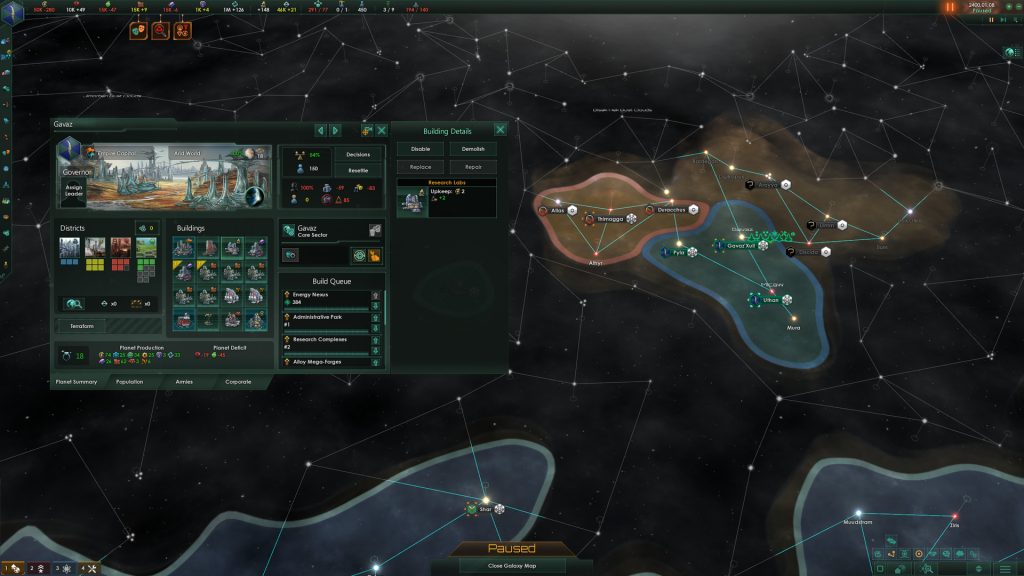
TL;DR: These games like Stellaris fit three different reasons to change your next campaign: Endless Space 2 for turn-based civilization building and faction stories; Distant Worlds 2 for a pausable galaxy with adjustable automation; and Sins of a Solar Empire II for real-time fleets and direct tactical decisions.
The best alternative depends on which part of Stellaris you want to keep. Choose Endless Space 2 if you want empire decisions organized into turns. Choose Distant Worlds 2 if you want to delegate parts of a large empire. Choose Sins of a Solar Empire II if fleet warfare is the main attraction.

This is a research-based shortlist using the games’ official Steam descriptions. It is not a ranking based on personal playtime, measured performance or fabricated review scores. The comparisons explain structural differences so you can investigate the best match before buying.
On this page
How these games like Stellaris were selected
All three choices combine space expansion with an empire or fleet-management framework. Each also makes a meaningful change to the kind of work a Stellaris player does. The list avoids treating every game with spaceships as a close substitute.
The comparison uses documented pacing, colony and population systems, fleet control and automation. It does not assume that a publisher’s description proves the quality of every campaign. Where a feature sounds attractive, inspect actual gameplay of that system and check the current edition’s contents. Prices and bundles change, so no fixed price or discount is claimed here.
Endless Space 2: choose it for turns and faction identity
Endless Space 2 is the clearest match here for a player who likes building a civilization but wants a turn-based campaign. Its official description includes star-system exploration, colonies, trade routes, technology and contact with other civilizations.
Population and politics provide another connection to Stellaris. The description explains populations responding to decisions and their environment through political parties that influence Senate laws. Factions have distinct affinities and story quests, while heroes can serve as fleet admirals, system governors or senators. Choose it if you want your civilization’s identity to guide a campaign rather than selecting a largely interchangeable starting color.
The main change is pacing. You make decisions within a turn structure, which gives the empire a different rhythm from a pausable real-time galaxy. That is a benefit if you want time to compare options before advancing. It is a drawback if you like watching a continuously running empire develop while several processes finish together.
Fleet design and battle plans are part of the documented system, and the official listing describes watching battles with after-action reports. Do not interpret the phrase “real-time space battles” as proof of an RTS-style campaign where you manually command every ship. Inspect combat footage if tactical control is your reason to switch.
Best fit: a Stellaris player who enjoys exploration, population politics and faction stories, and wants to manage those decisions in turns. Biggest reservation: it changes the campaign’s pacing and battle-control expectations rather than reproducing Stellaris with a new setting.

Distant Worlds 2: choose it for adjustable management
Distant Worlds 2 keeps a pausable real-time 4X framework while making adjustable automation a major part of its official pitch. The developer describes letting players control a narrow area or expand their responsibility across the empire, with advisors and automation handling the remainder.
This is a useful alternative to investigate when your frustration with Stellaris is the amount of simultaneous management. Decide which responsibilities you actually enjoy: exploring, designing ships, directing fleets or managing the wider economy. Then look at Distant Worlds 2’s controls for delegating the other areas. Delegation is more valuable when you know which decisions you want to retain.
The official description also includes mining, diplomacy, independent colonies, traders, pirates and space monsters in a generated galaxy. Campaigns can use storylines, victory conditions or an open-ended sandbox. That fits a player who wants a populated space setting with activity beyond the borders of their own empire.
The reservation is that automation does not automatically make a complex simulation easy to understand. You still need to know which systems are delegated and how to interpret the empire’s results. A large galaxy also remains a substantial commitment. The advertised maximum number of systems is a setup option, not a benchmark guaranteeing smooth performance on your computer.
Best fit: a player who wants to keep real-time empire development but choose how much of it to manage personally. Biggest reservation: delegating decisions creates a different kind of learning work; verify that you like overseeing the simulation instead of making every choice yourself.
Sins of a Solar Empire II: choose it for fleets and tactics
Sins of a Solar Empire II is the strongest fit in this shortlist when direct fleet combat is the reason to leave Stellaris. Its official description puts tactical engagements and empire management in the same real-time mode, with players zooming between the battle and the wider system.
The documented combat simulation includes turret tracking, missiles, point defense and ships that can obstruct missiles. These are concrete reasons to inspect the game if you want positioning and fleet roles to matter during an engagement. Colony and fleet construction still support the war effort, so it is not simply a detached battle simulator.
The changing strategic landscape is another distinguishing feature. The description explains orbiting planets that can create new fronts and opportunities. It also includes faction-specific systems, capital-ship customization, minor factions and timed alliance arrangements. Choose it if those decisions sound more appealing than managing the species rights and long political transformations of a civilization.
The tradeoff is emphasis. A combat-centered real-time campaign is a different experience from the exploration and society-building premise that draws many players to Stellaris. Sins II does include diplomacy and empire decisions, but do not buy it expecting the same kind of detailed population and ascension management.
Best fit: a player who wants empire growth to lead into active tactical fleet battles. Biggest reservation: it changes the center of the experience toward combat; inspect a full match before choosing it for civilization roleplay.

Choose by the problem you want to solve
If you keep pausing Stellaris to compare economic decisions, start by investigating Endless Space 2’s turn structure. If you like a busy galaxy but want help managing it, inspect the automation controls in Distant Worlds 2. If you mainly want to control the fleets you spend the campaign building, watch Sins of a Solar Empire II’s tactical engagements.
Keep Stellaris on the list if exploration, species identity and long-term social transformation are the actual attractions. None of these alternatives should be presented as an automatic upgrade. They each change what the player controls and the rhythm of the campaign. Use our Stellaris review and Stellaris hub to decide whether you want a different game or a different Stellaris campaign.
FAQ
What is a turn-based game like Stellaris?
Endless Space 2 is this shortlist’s turn-based choice. It combines exploration, colonies, political populations and distinct faction stories.
Which alternative lets me automate empire management?
Distant Worlds 2 explicitly offers adjustable automation and advisors. Inspect which responsibilities you can delegate and which ones you want to retain.
Which game emphasizes direct space combat?
Sins of a Solar Empire II combines empire management with real-time tactical engagements. Its documented combat includes missile interception and turret tracking.
Are these games identical substitutes for Stellaris?
No. They differ in pacing, automation and the emphasis of fleet control. Choose based on the part of Stellaris you want to preserve or change.
Sources and comparison boundaries
The factual comparisons use the official Endless Space 2, Distant Worlds 2, Sins of a Solar Empire II and Stellaris descriptions. Each recommended game has its own official screenshot. The shortlist makes no personal-playtime, tested-performance or price claims.
Sources and further reading
Keep exploring
Stellaris vs Crusader Kings 3: build a society or guide a dynasty?
Pick Stellaris when your campaign idea starts with a civilization and unknown stars; pick Crusader Kings III when rulers, relationships and the next heir are the central attraction.

Total War Warhammer 3 vs Stellaris: battles or a galaxy to discover?
Choose WARHAMMER III for commanding fantasy armies; choose Stellaris for exploring a galaxy and shaping the society, technology and fleets of an empire.
Stellaris vs Hearts of Iron 4: discovery or industrial war planning?
Choose Stellaris for discovering a galaxy and shaping a space society; choose Hearts of Iron IV for coordinating industry, army design and politics around a WWII nation.