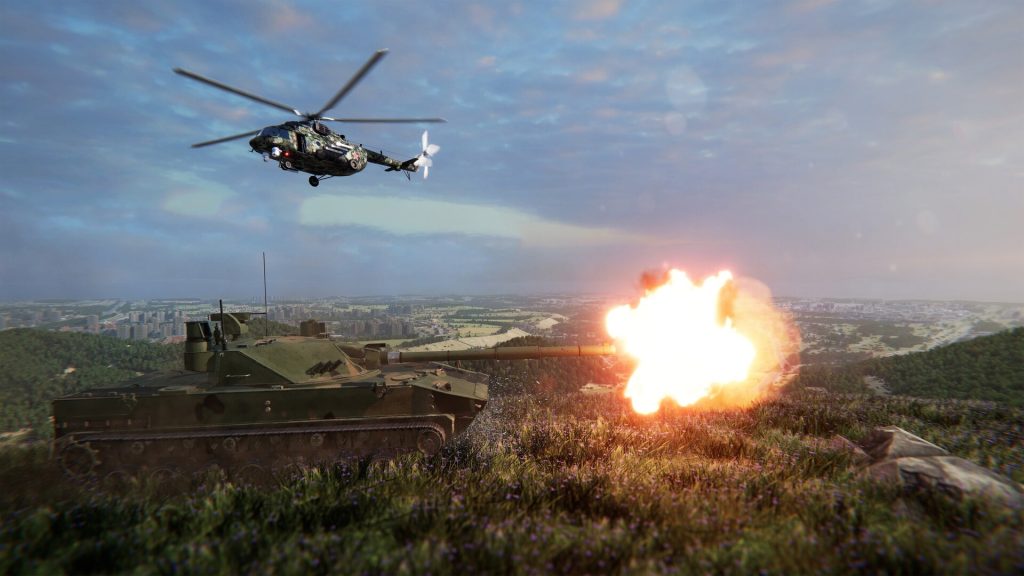
The best modern warfare strategy games on PC offer two quite different forms of command. Choose Broken Arrow for broad combined-arms battles, customizable forces and a Baltic campaign. Choose Combat Mission Shock Force 2 for detailed squad-and-vehicle orders in a hypothetical Syrian conflict, including simultaneous sixty-second turns that you can replay.
This focused shortlist uses modern military equipment and settings. It does not add World War II games simply because they contain tanks. Cold War battlegroup games have their own period-specific selection; the choices here concentrate on a later style of warfare and the command tasks it creates.

On this page
Broken Arrow: plan a force, then command the combined-arms battle
Broken Arrow is a large-scale real-time tactics game with American and Russian forces. The official description lists a narrative campaign of nineteen handcrafted Baltic-region missions played from both perspectives, alongside skirmish, multiplayer and a scenario editor.
The force-building system is a major reason to choose it. You select units and customize weapons, armor packages and support systems. A vehicle’s name is therefore only the starting point: the configuration determines what role you intend it to perform and how it fits into the rest of the force.
The advertised categories include reconnaissance, infantry, fighting vehicles, support, helicopters and airplanes. That mix favors a player who wants to coordinate several domains at once. Reconnaissance finds and marks positions, air defenses protect valuable units, and transport or air deployment brings troops to objectives. Buying only the most impressive tanks leaves those other jobs unanswered.
Its listed deployment options include land, sea and air approaches. Paratroopers or helicopters can seize positions, heavier armor can reinforce them, and artillery or tactical missile strikes can support the operation. Special forces can disrupt logistics and provide laser designation. Those are distinct command tools, not evidence that any one approach wins every map.
What kind of session should you preview?
Watch the force-selection phase and an entire objective fight. The question is whether you enjoy configuring a combined-arms roster and then managing it under real-time pressure. A highlight reel of aircraft and explosions does not show the work of spotting targets, protecting support and rebuilding a damaged front.
The official page advertises human multiplayer up to 5v5. It also describes skirmish against AI and notes a release-time limitation on using AI as cooperative team allies. Because that wording is tied to release and later updates can change modes, check the current lobby if a particular human-plus-AI arrangement is your buying requirement. The advertised existence of skirmish should not be expanded into every possible team configuration.
The scenario editor uses visual scripting and can create missions with dialogue and cutscenes. That is useful for players who want to make a particular tactical problem instead of waiting for another official mission. Community scenarios remain separate from the nineteen handcrafted campaign missions, and their quality or current availability is not ranked here.
The compromise: broad real-time command demands attention across several unit roles. It is the stronger fit for managing an evolving combined-arms contest than for studying every individual soldier’s spotting and morale. If a tank engagement interests you mainly as a sequence of detailed, revisitable orders, consider Combat Mission.

Combat Mission Shock Force 2: inspect the next minute of combat
Combat Mission Shock Force 2 portrays a hypothetical conflict in Syria between NATO and Syrian forces. The base description includes US Stryker and Heavy Brigade Combat Teams, Syrian conventional units, unconventional threats, a main campaign, training content, standalone scenarios and Quick Battles.
The distinguishing choice is how you issue orders. You can play in real time or use WEGO, planning sixty seconds of action before both sides’ orders execute together. You can rewatch the result. That makes it suitable for a player who wants to understand how an approach failed, rather than depend on correcting every problem immediately as it appears.
Its command scale is battalion and below, with individual vehicles, teams and squads. The official description emphasizes morale, leadership, experience and command-and-control relationships alongside weapons and vehicle damage. These are advertised simulation systems; their presence does not justify an untested claim that the game is the most accurate modern wargame.
Relative Spotting is a particularly useful distinction. Individual soldiers and units have their own view of the battlefield, instead of a spotted enemy automatically becoming equally known to everyone. The published description also separates line of sight and line of fire. Seeing a target and being able to shoot it are different questions.
Buildings have modeled doors, windows and floors, while lighting and ground conditions affect the tactical situation. In this setting, the approach to a building, the location of an observation team and the timing of armor movement can be the main puzzle. This is more attractive if you enjoy planning those relationships than if you want to control a very wide front quickly.
Quick Battles and head-to-head play
Quick Battles allow custom force purchases and a choice of battlefield. A map and scenario editor provides another route to repeatable tactical situations. Those tools make it possible to test a smaller command problem before taking on a campaign mission with more objectives and dependencies.
The official multiplayer options include play by email, hotseat and network head-to-head play. WEGO’s replayable turns give opponents a different rhythm from a live 5v5 match. Verify the current networking and account requirements for the mode you intend to use; the article does not promise a present supply of opponents.
The compromise: detailed orders, observation and reports add learning work. Preview a complete turn with the interface visible. Choosing it because the weapons look familiar is not enough if you dislike studying movement paths and reviewing the effects of your last minute of orders.
Choose the command scale before the equipment list
Broken Arrow fits the player who wants configurable modern forces and a broad real-time battle. Combat Mission Shock Force 2 fits the player who wants smaller tactical relationships, detailed observation and a replayable order cycle. Their settings and pacing differ enough that a universal rank would hide the useful decision.
Before buying, inspect a complete ordinary session in your preferred game, the current system requirements and the package contents. These recommendations are based on official advertised systems and personally inspected official screenshots. They do not claim a hands-on benchmark, a tested AI comparison or a present multiplayer population.
Sources and further reading
Keep exploring

Hearts of Iron 4 occupation laws: control resistance without draining reserves
Match occupation policy to resistance, compliance and a garrison you can actually supply; use stronger control only when the situation justifies its cost.
wargame red dragon radar anti air management: coverage and weapon-state decisions
A source-backed guide to managing specific radar-related weapons within a complete Wargame Red Dragon air defense.
wargame red dragon sead aircraft: choose a mission that helps
A concise source-backed guide to choosing and reassessing a useful SEAD mission in Wargame Red Dragon.