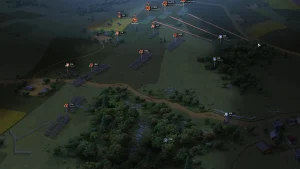
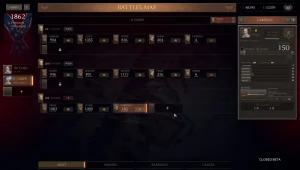
Allocate limited equipment by the next mission role and live inventory: compare infantry, skirmisher, cavalry and artillery needs, preview changes, preserve repair reserve and review recovered weapons.
Choose gun class for the intended engagement distance, then verify live tooltips, inventory, firing position, spotting, protection, crew and ammo before repairs.
Preserve the Confederate quality advantage under constrained resources: solve the first objective, repair command, retain core skills, stock usable weapons and choose optional missions by net campaign value.
Choose between carbine cavalry and shock cavalry by weapons, dismount ability and battlefield job; use movement for information and opportunity, then check condition, support and repair cost.
Practical skirmisher cycle: choose detachment or specialist, scout a specific route, exploit stealth and cover, delay without becoming a holding unit, protect withdrawal and review campaign cost.
Decide infantry brigade size as a role and command problem: larger headcount trades resilience against effective firepower, skill dilution, equipment cost and formation flexibility.
First-session workflow: setup, controls, objective checks, terrain and unit-card diagnosis, supply, then a prioritized camp repair before the next battle.
Convert the Union resource advantage into sustainable campaign strength: learn the opening objective, preserve young units, repair officers and assess rookie/veteran/equipment costs before side battles and the first grand battle.
Evaluate a solo Civil War campaign through its advertised continuity, army management, officer progression and separate historical battles.