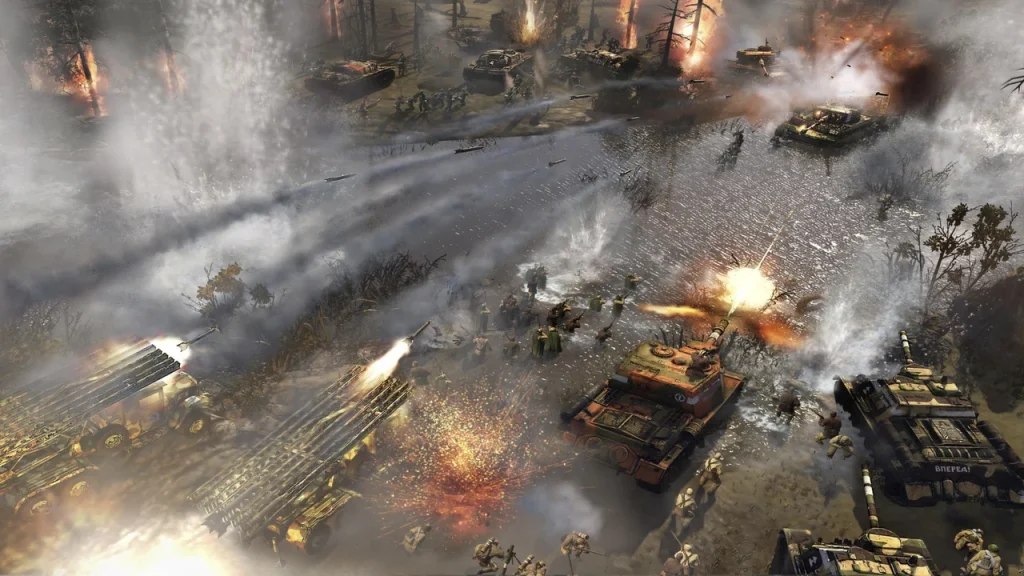
TL;DR: Company of Heroes 2 veterancy mechanics reward combat experience with unit-specific bonuses and sometimes new abilities. Preserve the surviving squad, reinforce its missing soldiers and return it to a role it can perform. Stars improve that unit; they do not replace cover, recovery or an appropriate counter.
Experience is not simply a kill count. Combat damage contributes to progression, and different units receive different benefits at their veterancy thresholds. A veteran rifle squad and a veteran anti-tank gun therefore represent different tools, even when both show the same number of stars.

Sources and scope: The publisher PC manual identifies the veterancy and squad controls. Tomy’s beginner guide explains experience and squad survival; the community veterancy guide supplies bonus categories. Its displayed update is from 2021, so this article does not present its percentage tables as current balance data. Checked November 9, 2026.
On this page
Company of Heroes 2 veterancy mechanics: experience is not kills
Units accumulate experience through combat, including dealing and receiving damage. Reaching the relevant threshold produces another veterancy level. The practical consequence is that a useful engagement can develop a unit even when another member of your army lands the final shot.
Do not judge progression only by the kill counter. An anti-tank gun that damages a vehicle contributes to the fight before that vehicle is destroyed. Keeping the gun firing from a supported position is more useful than exposing its crew solely to chase the finishing blow.
Receiving damage can also contribute to experience, but deliberately taking casualties is a poor training plan. Dead soldiers still create reinforcement bills, and a wiped squad loses its accumulated investment. Seek engagements in which the unit can contribute and survive, rather than paying manpower for a star you may immediately lose.
1. Check the bonus category before changing the unit’s job
Veterancy can improve accuracy, weapon timing, survivability, sight or other unit-specific functions. Some levels unlock an active ability or passive effect. These benefits do different jobs: better accuracy helps hit targets, while lower received accuracy makes enemy small-arms hits less likely against that unit.
Weapon cooldown and reload bonuses concern how a weapon cycles its fire; neither means every projectile now does more damage. Sight improves information or spotting, but it does not reveal every position on the map. Read a bonus as a change to one function, not a blanket increase to everything.
The number of stars alone cannot tell you which squad wins. Factions and units use different progressions, including expanded veterancy for OKW units. Compare the actual roles, remaining soldiers, weapons, positions and support. A star count is useful context within that comparison, not a substitute for it.
2. Preserve the squad that owns the experience
Reinforcing a surviving squad replaces missing soldiers while keeping the squad’s earned veterancy. If the entire squad is wiped, building a new squad does not recover the destroyed squad’s stars. This makes the final surviving models more valuable than their immediate firepower suggests.
Suppose a veteran infantry squad loses several soldiers near a contested sector. Retreating it leaves a unit that can heal, reinforce and return. Staying until the final model dies trades that future option for a few extra moments of fire, then adds the problem of rebuilding the unit.
There is no universal retreat threshold. A small squad facing concentrated fire needs a different decision from one protected behind useful cover with a clear escape. Judge incoming pressure and the route home. Make the preservation decision early enough that the unit still has a realistic way out.

3. Recover strength before spending the stars
A veteran squad with missing or injured soldiers is still understrength. Reinforcement restores absent models; healing restores damage on those that survived. Completing only one job can send the squad back with fewer weapons or little room to absorb another hit.
Use the faction’s available recovery setup, then give the restored squad a clear destination. Leaving it idle at headquarters wastes the value you preserved, but rushing it straight into the old losing position wastes the recovery bill. The reinforcement economy guide explains how to budget that return.
4. Choose infantry engagements that use the bonus
Improved combat performance matters most when the infantry can actually use its weapons. Place a veteran rifle squad in cover that faces the enemy, keep an appropriate engagement distance and watch for threats that bypass the plan. A bonus cannot make a wall behind the squad protect its exposed front.
Suppression can interrupt the squad’s movement and fighting regardless of how valuable it is. If an enemy machine gun controls the approach, prepare another direction or mortar smoke before committing. Sending veterans through the same stopped route does not address the weapon creating the problem.
Likewise, rifle veterancy is not an anti-armor purchase. When a vehicle is forcing retreats, bring the relevant anti-tank role and use the veteran infantry to observe, screen or contest nearby ground. This keeps its strength useful while another unit answers the target it cannot efficiently handle.

5. Keep veteran weapon teams supported
A machine gun, mortar and anti-tank gun gain value through different tasks. The machine gun controls an infantry approach, the mortar pressures a fixed position and the anti-tank gun threatens vehicles. Veterancy can improve their performance, but each still needs a position where that task makes sense.
Do not leave a valuable gun alone simply because its frontal attack is strong. An infantry flank can reach the crew while it faces another target. Use infantry or another covering role to watch the side, and move the team when the front shifts away from its useful firing area.
An experienced mortar under repeated indirect fire also needs movement. Its future barrage value is a reason to preserve it, not a reason to remain in the same targeted patch of ground. Relocate after the enemy identifies the position and establish another supported firing site.
6. Use vehicle veterancy without extending the chase
Vehicle bonuses can affect firing, movement, sight or abilities depending on the vehicle. They improve an existing role; they do not erase the opponent’s anti-tank weapons. Before advancing, know what spots the target and what covers the route back.
A damaged veteran vehicle should usually leave an unfavorable engagement while repair remains possible. Keep builders available for the repair task and use infantry or guns to hold useful ground during recovery. Losing the vehicle removes both the purchase and the experience it accumulated.
A retreating enemy squad can tempt you to drive farther than the rest of the army can support. Stop the chase when it crosses into unseen or hostile anti-tank positions. The immediate kill is less valuable if the pursuit gives away the veteran vehicle you needed for the next objective fight.

7. Turn an unlock into a planned action
When a veterancy level supplies an active ability, identify the problem it can solve before using it. Plan a target, timing and supporting move. An ability used after the target has left or without follow-up spends attention, and sometimes resources, without producing the intended advantage.
Passive benefits need a suitable situation too. A sight improvement helps observation only when the unit occupies a useful position. A support effect matters when the relevant units can benefit from it. Do not treat an icon as permission to abandon the positioning that allows the benefit to work.
Keep the army’s resource plan connected to those abilities. If the next engagement needs a munitions ability, avoid spending that reserve on an unrelated upgrade immediately beforehand. A veteran option that cannot be paid for at the needed moment does not help that particular fight.
Worked decision: save the veterans and fill the missing role
Imagine a recovered veteran infantry squad and a fresh rifle squad approaching a VP. An enemy infantry unit holds cover near the point, and an enemy vehicle has already been seen on the adjacent road. Your infantry has useful fighting strength but lacks a sufficient answer to that vehicle.
Place the veterans in suitable cover to contest the infantry approach. Give the fresh squad an observation or nearby capture task where it can remain supported. Bring the army’s anti-tank role into a position covering the vehicle route instead of sending either rifle squad to pursue the vehicle.
If the enemy machine gun suppresses the veterans before the attack develops, preserve them and change the approach. If the vehicle withdraws, capture the VP instead of chasing it with the rifles. The result you want is a surviving force controlling the objective, not experience acquired during an avoidable wipe.
For the broader match loop, use the CoH2 beginner guide, game hub and strategy guide archive. Practice one engagement in which the veteran unit keeps its role, receives support and returns after recovery. Repeat that decision before trying to preserve every unit through an increasingly complicated attack.
Veterancy questions
Do replacement soldiers reset a surviving squad’s veterancy?
Normal reinforcement of missing soldiers preserves the surviving squad and its earned veterancy. A complete wipe is different: the original squad no longer exists, and purchasing another unit does not restore its experience.
Is receiving damage a good way to level units?
Damage participation contributes to experience, but avoidable casualties create costs and wipe risk. Favor supported combat that lets the unit contribute and survive; do not trade away the army merely to increase a progression bar.
Are equal star counts equal strength?
No. Bonuses differ by unit and faction, and the engagement still depends on role, weapons, strength, cover and support. Compare those conditions before deciding whether the veteran unit should stay or withdraw.
What should I do immediately after earning a star?
Identify the benefit, check the unit’s remaining strength and continue a suitable task. Recover first when needed. Earning veterancy does not require an immediate assault to prove that the bonus works.
Sources and further reading
- https://store.steampowered.com/app/231430/
- https://store.steampowered.com/manual/231430
- https://www.coh2.org/guides/110897/tomy-s-beginner-guide
- https://www.coh2.org/guides/29892/the-company-of-heroes-2-veterancy-guide
- https://www.coh2.org/guides/2574/soviet-unit-guide
- https://www.coh2.org/guides/2573/german-unit-guide
Keep exploring
Company of Heroes 2 vs Men of War Assault Squad 2: squads or direct control?
Company of Heroes 2 vs Men of War Assault Squad 2: compare cover and combined arms with direct soldier control, skirmishes and the right game package.
Company of Heroes 2 vs Gates of Hell Ostfront: what should carry the battle?
Company of Heroes 2 vs Gates of Hell Ostfront: choose squad cover and counters or switchable direct control with a developing Conquest army.
Company of Heroes 2 Reinforcement Economy: 8 Manpower Choices
Plan squad recovery as part of the army budget, with a labeled manpower example and practical ways to reduce repeat casualties.