TL;DR: A practical Total War Rome 2 Carthage campaign opening separates three jobs: consolidate the Iberian army’s nearby objective, keep the African capital protected and prepare one supported maritime commitment. The documented Iberian route moves west toward Turdetani-controlled Kartuba and Baetica. Do not treat every distant colony as a reason to start a full new war immediately.
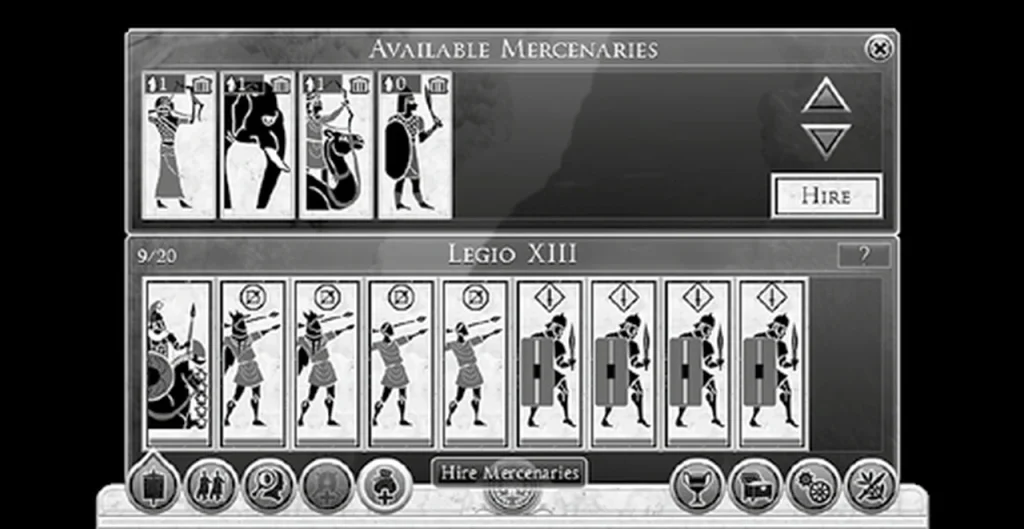
Use available regular troops as a sustainable core and hire mercenaries for a specific missing role or urgent engagement. Their immediate availability helps, but the recurring wages remain part of the same budget as fleets, construction and post-capture recovery.

Sources and scope: The opening direction comes from Gamepressure’s Carthage first-steps guide and faction overview. The official encyclopedia supports recruitment, recovery and finance. These are dated Grand Campaign sources reviewed November 9, 2026, not a newly tested save, guaranteed AI script or Hannibal at the Gates walkthrough.
On this page
Total War Rome 2 Carthage campaign opening: assign the first tasks
Carthage’s holdings are geographically divided. The faction overview identifies the African capital, island possessions in Sicily and Sardinia and Qart Hadasht in Iberia. One army cannot answer threats in all those places at the same time, so begin by assigning a practical job to each available force.
Give the Iberian army a connected local objective rather than ordering it back across the sea without a reason. Keep the capital force able to respond to the African frontier. Assess the island situation and naval threat separately, because defending a coastal possession and invading another island require different resources.
Select construction and recruitment that support those jobs. The economy must cover regular units, temporary hires and ships together. Spending the starting treasury independently in every region can create obligations that the projected turn income cannot support.
| Theater | Opening purpose | Commitment to avoid |
|---|---|---|
| Iberia | Take a local objective and recover | Several disconnected conquests at once |
| Africa | Protect Carthago and monitor the ally buffer | Moving the whole force away without replacement security |
| Islands | Identify the defendable position and maritime threat | Assuming a land army controls the sea |
| Economy | Fund army, fleet and provincial recovery | Permanent upkeep for every emergency hire |
1. Make Kartuba a focused Iberian objective
The first-steps source directs the Iberian army west toward Kartuba, held by the hostile Turdetani, as part of consolidating Baetica. This gives the opening a named local target. Assess the defending force and nearby armies before deciding whether the current force can attack or needs a specific reinforcement.
Recruit where the general can actually access the required units. The official recruitment entry describes mustering directly into an army from the available regional roster. A building or colony on the far side of the Mediterranean does not automatically supply the same troops to the Iberian force.
After the capture, recover and examine the surrounding frontier. The source later discusses Carthaginensis and Lusitania, but those are subsequent consolidation directions. Do not convert the whole list into simultaneous invasions while the first army still needs replenishment and the new province needs control.
Choose territory that the force can hold
In a hypothetical outcome, assume the Kartuba battle leaves the infantry line severely reduced while another hostile army remains nearby. That result makes recovery and defense the immediate task. A further march cannot replace the missing fighting strength merely because another settlement is within reach.
If the army remains healthy and the new position is secure, a follow-up local capture may be sensible. Judge it by the surviving force and the frontier it creates. Fixed turn-by-turn promises ignore both battle losses and AI movement.
2. Budget mercenaries as a role, not an entire solution
Carthage’s faction identity makes mercenaries relevant, but the useful decision is which role you need now. The official entry explains that mercenary units are available immediately rather than through the usual multi-turn recruitment. That can help an army facing an urgent gap before a battle.
Hire a suitable unit to fill that gap: another holding unit, a missile contribution or a maneuver role, according to the available pool. Do not hire everything simply because it can join at once. The army must still be able to maintain those troops after the first engagement.
The chosen dynasty and faction modifiers can change the economy, but this guide does not repeat old percentage bonuses as current universal values. Evaluate the costs shown for the army and campaign you are playing. The strategic role of mercenaries remains distinct from a promise that they are always inexpensive.
Review emergency hires after the emergency
Suppose a temporary hire helps capture Kartuba and the regular core can handle the next defense after recovery. Reassess whether the hired unit still provides enough value to justify its ongoing wages. Immediate recruitment convenience does not remove upkeep on later turns.
Keep a regular core that can operate without repeated emergency spending. Mercenaries can complement that force and provide regional options, while the stable core makes the campaign less dependent on repeatedly buying a new answer at the last moment.
3. Fight with a holding line and protected support
The faction overview identifies hoplite-style infantry, peltasts, sword infantry and cavalry among Carthage’s roles. Use the actual available units to create a force that holds contact, applies missile pressure and protects its sides. Do not assume the later elite roster belongs to the opening army.
A holding line gives missile units a protected firing opportunity. Cavalry can contest vulnerable skirmishers or a credible flank, but it should not collide blindly with a defended spear or pike arrangement. Read the enemy composition before assigning the faster unit the most dangerous job.
Keep a reserve available to reinforce a weakening part of the line. If every infantry unit begins in the first contact, a flank threat can force a disruptive withdrawal from the center. A reserve provides another response without exposing the entire army at once.
Treat elephants as a later supported option
The faction has elephant options, but this does not make an elephant rush a required first purchase. Recruitment access, budget and the intended fight determine whether the unit belongs in the plan. It still needs an army arrangement that protects and exploits its role.
The official attributes entry describes elephants running amok under pressure. That makes uncontrolled contact near friendly troops a relevant risk. Do not describe them as guaranteed line-breakers or a replacement for infantry support.

4. Keep Carthago’s African security separate from Iberian expansion
The faction overview describes allies around the African capital and warns that their defeat can expose the route toward Carthago. An ally buffer is a strategic condition, not permanent protection. Monitor whether neighboring allies still hold the territory that keeps hostile armies away.
Keep the capital army assigned to a defendable African job until you have a credible alternative. The first-steps guide lists expansion toward Mauritania or Garamantia as possibilities. Those are choices requiring preparation, not proof that attacking both improves security.
Before selecting an African invasion, consider the frontier it creates and the army needed to hold it. A new province can strengthen the position, but it can also move the field army away from the route threatening the capital. Choose the operation that the available force can support.
Use diplomacy to support the chosen frontier
The official diplomacy entry distinguishes trade, access and alliance obligations. A useful agreement can reduce a particular border problem or support the economy. Read the obligations before assuming every new alliance makes the campaign safer.
If you plan to preserve relations with an African neighbor and send a force to sea, the remaining capital defense must still be credible. A treaty helps establish the intended arrangement; it does not teleport the Iberian army home when an unrelated threat appears.
5. Prepare one maritime operation before approaching Rome
The source lists Corsica or Syracuse in Sicily as maritime possibilities before a later attack on Magna Graecia and Rome. Choose the island or coastal objective that serves the current campaign. Do not declare all of those wars simply because they appear in the same expansion paragraph.
An operation at sea needs the landing force, appropriate naval support and a recovery destination. A transport crossing is part of the military commitment, not a free shortcut joining every distant colony. Assess enemy fleets and the intended landing area before embarking a force you cannot replace easily.
Ships also add upkeep. The official replenishment entry describes damaged ships repairing at a friendly port with crew recovery. Keep a suitable port in the route so the navy can remain useful between engagements instead of becoming a damaged force stranded away from support.
Two assumed strategies for the next stage
Branch A: consolidate Iberia while Africa stays defensive
Assume the Iberian capture succeeds, the army can recover locally and the African allies still preserve a useful buffer. Continue a connected Iberian consolidation plan while keeping the capital force ready for defense. Fund provincial control and replacement needs before adding a distant maritime invasion.
This branch can support a later sea campaign from a stronger economic base. It does not mean island holdings stop needing attention. Review whether a developing naval threat requires a limited defensive investment while the main conquest remains in Iberia.
Branch B: prepare a central Mediterranean commitment
Assume the Iberian frontier is manageable, the capital has adequate security and the chosen objective lies on an island route. Prepare the naval and landing arrangement together. Use diplomacy and a defendable local force to avoid turning every other theater into an unsupported flank.
If the landing succeeds, recover the new position before treating Italy as the immediate next move. The sea route, army condition and province costs determine whether another attack is sustainable. A successful first landing does not automatically supply the force needed for the next war.
Keep trade, food and control in the opening budget
The finance source identifies projected income, trade and taxation as related campaign tools. Use profitable agreements where available, but keep a plan that can absorb interruptions. A trade-based economy becomes fragile if every new unit assumes income that an exposed route may stop providing.
Consider a hypothetical 4,000 treasury with 1,800 already allocated to required provincial work and recovery. The remaining 2,200 is the immediate discretionary amount before considering future army and fleet upkeep. These figures demonstrate accounting only; they are not current Carthaginian unit or building prices.
Food and public order also affect whether the conquests function. The official public-order explanation identifies food, culture, taxes and garrisons as contributors. Address the actual negative trend rather than leaving the field army to suppress every province indefinitely.
Frequently asked questions
What is the first Iberian target in this plan?
The dated faction route sends the local army toward Turdetani-controlled Kartuba and Baetica. Assess the actual defenders and recruitment needs before attacking. No fixed capture turn is guaranteed.
Should Carthage hire only mercenaries?
Use them for a specific role or urgent gap, while maintaining a sustainable regular core. Immediate availability is valuable, but ongoing wages still compete with the fleet, construction and recovery budget.
Should the capital army immediately sail to Sicily?
Only after the African security and intended maritime operation are credible. The geographically divided holdings require separate assignments. Removing the capital force without a replacement plan can expose the home position.
Does this apply to Hannibal at the Gates?
This guide addresses the stock Grand Campaign opening described by its sources. Hannibal at the Gates has a separate campaign setup and needs its own starting-position and objective evidence.
Sources and further reading
- https://www.gamepressure.com/totalwarromeii/victory-conditions-and-first-steps-factions-carthage/z157ad
- https://www.gamepressure.com/totalwarromeii/characteristic-factions-carthage/z057ac
- https://r2enc.totalwar.com/en/manual/single-player/0017_enc_page_campaign_play_military_recruit/
- https://r2enc.totalwar.com/en/manual/single-player/0026_enc_page_campaign_play_military_replenish/
- https://r2enc.totalwar.com/en/manual/single-player/0039a_enc_page_campaign_play_province_trade_finance/
- https://r2enc.totalwar.com/en/manual/single-player/0038_enc_page_campaign_play_faction_diplomacy/
- https://r2enc.totalwar.com/en/manual/single-player/0044b_enc_page_campaign_play_province_public_order/
- https://r2enc.totalwar.com/en/manual/single-player/0086_enc_page_battle_play_phase_conflict_attributes/
Keep exploring
Total War Rome 2 Diplomatic Expansion: protect your next conquest
Use diplomacy to support an expansion plan through reputation, understood treaty obligations and bounded allied war coordination.
Total War Rome 2 vs Total War Three Kingdoms: territory or characters?
Choose ROME II for classical civilizations and empire development; choose THREE KINGDOMS for Chinese warlords and relationships that connect statecraft with battle.

Total War Warhammer 3 vs Total War Rome 2: fantasy or empire?
Choose WARHAMMER III for fantasy races and Legendary Lords; choose ROME II for classical empire building, politics and historical battles.