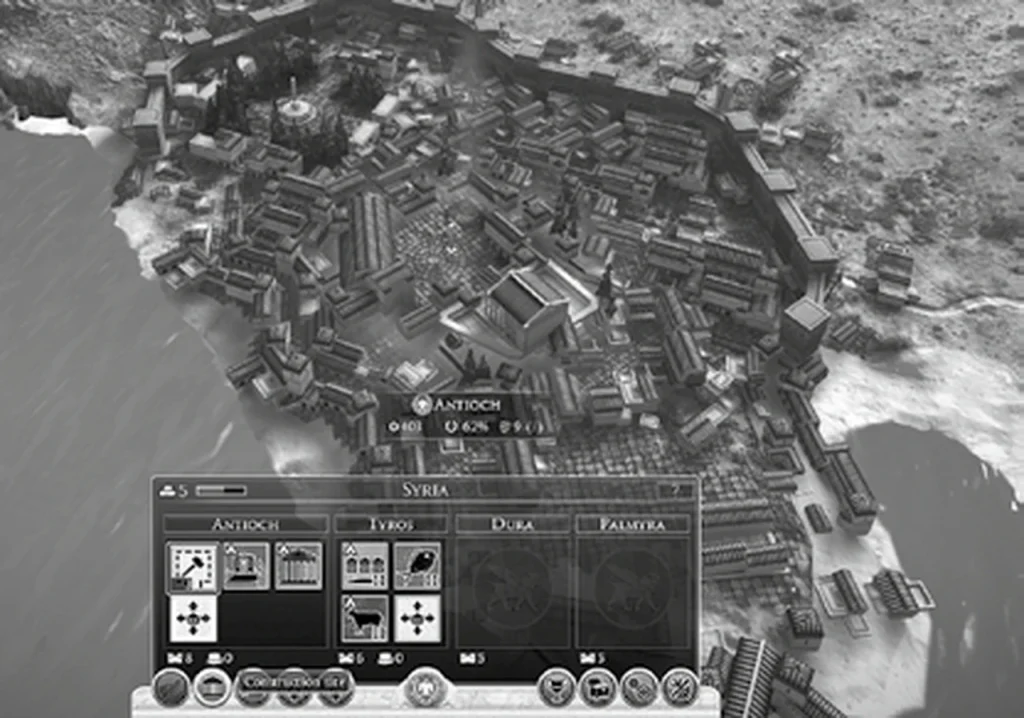
TL;DR: Total War Rome 2 province specialization works best when each province has a main job and enough support to keep doing it. Use accessible military provinces for recruitment, suitable agricultural regions for food and port-rich provinces for trade. Keep public order, food obligations and recovery in the plan rather than filling every slot with the headline building type.
A captured border province often needs a temporary recovery role before it becomes a mature recruitment or income center. Specialization can change as the frontier moves.

Sources and scope: The publisher’s manual explains province management. The official encyclopedia supports construction, recruitment and public order. Gamepressure’s province examples provide Roman military and trading illustrations. Reviewed November 9, 2026; those dated examples are not universal faction recipes or exact current profit forecasts.
On this page
Total War Rome 2 province specialization: choose one main role
Begin with location, existing buildings, available resources and the army’s route. A province close to the present recruiting army can be useful even if another region has more room for military buildings. Construction becomes valuable when the force can use its access without an unreasonable journey.
Inventory the capital and minor settlements together before allocating space. Record which existing chain already supplies the required function and which open slot can accept its replacement. This avoids paying to duplicate access while removing a needed food or control contribution.
Assign a main role, then identify the supporting obligations. A recruitment center still needs food and order. A trading province still needs protection and useful routes. A food-producing province does not have to ignore every income opportunity simply to preserve a label.
| Main role | Core task | Required support |
|---|---|---|
| Recruitment | Supply the army’s intended unit roles | Accessible route, food and control |
| Food | Provide agricultural support for the wider plan | Public order and protected territory |
| Trade | Use ports, goods and suitable economic effects | Relations, routes and stability |
| Border recovery | Restore usable captured territory | Repairs, control and nearby defense |
| Interior conversion | Adapt older military space as the frontier moves | Replacement recruitment access elsewhere |
1. Place military recruitment where the army can use it
The official recruitment entry explains that troops muster into the general from the available regional roster. Consequently, a military building does not unlock its units for every army regardless of location. Think about where the recruiting force stands and where the new troops need to go.
Build access for the intended army composition rather than collecting every military chain. If the force needs infantry and missile support for the next operation, an unrelated production option can wait. Upgrade the chain that provides the missing role, with the required technology and construction costs included.
Supporting buildings can matter when their effects apply to the troops you intend to recruit. Read the effect’s unit class and scope. A bonus for one weapon or troop category should not be treated as a universal improvement to every army raised in the area.
Roman example: Italia as an early recruitment center
The linked example uses Italia for Roman military production while reserving space for food and public order. The relevant principle is the combination: an accessible recruiting base with enough support to remain stable. It is not a demand to copy every old building level from the illustrated save.
After the frontier moves far away, reassess the travel time. A new forward production center may serve replacement needs better, while Italia retains enough access for emergency defense or changes toward another economic role. Build the replacement capacity before removing the old function.
2. Use food production to support expansion
Food is an operating need across the campaign, not just another income label. Farms provide food as well as income in the official construction description. A production plan should account for the food effects of the other buildings you want, including future upgrades.
Keep room to absorb conquest and construction changes. An expansion can bring a province with its own obligations, while an upgrade can alter the food position. A food plan that works only while every existing building remains unchanged is less useful than one with an appropriate reserve.
Avoid claiming one fixed surplus is correct for every faction and stage. The practical amount depends on the construction and territorial commitments you are about to make. Read the planned effects together instead of copying a number from a different campaign.
Food and income can share a province
The province examples use Magna Graecia for farms, herding and trading ports. That shows why a main food role can coexist with economic output. Choose a combination that supports the available terrain and building options while keeping the region stable.
Do not remove needed control buildings solely to create another farm or market. The province’s main job depends on continued operation. A nominally stronger output plan loses practical value if public-order problems repeatedly demand an army’s attention.

3. Match trade specialization to ports and actual routes
Port-rich provinces can be candidates for trade-focused construction. The linked examples identify Magna Graecia, Hellas and Corsica et Sardinia as places to consider that approach. Their geography supplies the reason to investigate; it does not guarantee the same result in every save.
The trade and finance entry explains trade wealth, goods and agreements. Choose the port and supporting effects that match the intended economic function. Also consider whether the relevant routes and partners are available.
Separate local wealth from modifiers that apply to a narrower source. A building improving one category should be paired with wealth of that category. Do not assume an effect labeled for agriculture automatically increases sea trade or industrial income by the same amount.
Treat a trade interruption as a budget risk
A fleet or hostile action can threaten the maritime arrangement the province depends on. Keep the army and construction budget able to absorb a reasonable disruption rather than funding every permanent expense from the most optimistic trade projection.
In a hypothetical example, assume a province-focused plan expects 1,200 income with 500 coming from a vulnerable contribution. If that contribution disappears, the remaining 700 must still be compared with upkeep and the next construction obligation. These figures illustrate sensitivity, not actual provincial revenue.
4. Give a newly captured province a recovery role first
After conquest, assess damaged buildings, usable production, food and public order before imposing the final specialization. A region with an unavailable military chain does not provide the same recruiting function as an intact one. Repair the needed structure or convert it deliberately.
Culture and the capture’s disruption can contribute to public-order pressure. The official explanation also identifies taxation, food and garrisons. Address the causes visible in the province rather than treating one building as an automatic cure for every captured region.
The temporary recovery role can include control buildings and a defensible military presence. Once the province functions without tying down the whole field army, additional output or recruitment investment becomes more credible. The timing follows its actual condition, not a universal number of turns.
Transition in stages instead of demolishing everything
Replace a redundant structure when another building serves a clear need. Keep enough functioning economy and control during the conversion. A wholesale demolition plan can remove the very support required to fund and stabilize the replacements.
For a hypothetical border capture, first restore a useful production structure and address a negative order trend. Then add the recruitment or income function needed by the current frontier. This sequence solves the active constraints before optimizing a mature layout.
5. Change interior provinces when the frontier moves
A military center can become less convenient after expansion. Its best role may change toward food or income, while a closer province supplies replacements. Plan that handover rather than permanently keeping every original military building in every province.
Retain a suitable emergency recruiting route where the campaign needs one. Removing all access because the area looks safe can make a later rebellion or invasion harder to answer. The useful amount of redundancy follows the defense plan and local distances.
Reassess growth-related space when settlements reach the expansion level you need. Buildings chosen to enable development may no longer serve the same purpose in a mature province. Compare their remaining effects with another food, economic or support function before converting them.
Keep supporting costs visible in every specialization
Construction consumes treasury immediately, while the army and fleet continue taking upkeep. A province plan must fit both the building queue and the campaign’s recurring military commitments. More available slots do not increase the amount of money available to fund them.
Choose the next building by the constraint it removes. A food structure can enable the intended upgrade, a control building can release the army for movement and a recruiting chain can supply a needed role. That is more useful than declaring a province finished because every slot shares the same category.
Frequently asked questions
Should every province contain all military buildings?
No. Concentrate useful access where armies can recruit and keep appropriate defense options elsewhere. The regional roster and travel route determine where a production investment serves the campaign.
Can a food province also generate trade income?
Yes. The sourced Magna Graecia example combines agricultural output with trading ports. Use the compatible effects available to the faction while preserving food and public order.
When should I specialize a captured province?
First restore usable buildings and address the immediate control and food obligations. Then establish the role required by the frontier. Recovery is a stage of the plan, not an unrelated task after the final layout.
Is one fixed province recipe optimal everywhere?
Location, resources, faction access and the army’s route change the useful layout. The Roman examples illustrate principles; they do not establish universal building levels, surplus targets or income guarantees.
Sources and further reading
- https://www.gamepressure.com/totalwarromeii/sample-provinces/z15714
- https://store.steampowered.com/manual/214950
- https://r2enc.totalwar.com/en/manual/single-player/0045_enc_page_campaign_play_province_construction/
- https://r2enc.totalwar.com/en/manual/single-player/0017_enc_page_campaign_play_military_recruit/
- https://r2enc.totalwar.com/en/manual/single-player/0044b_enc_page_campaign_play_province_public_order/
- https://r2enc.totalwar.com/en/manual/single-player/0039a_enc_page_campaign_play_province_trade_finance/
Keep exploring
Total War Rome 2 Diplomatic Expansion: protect your next conquest
Use diplomacy to support an expansion plan through reputation, understood treaty obligations and bounded allied war coordination.
Total War Rome 2 vs Total War Three Kingdoms: territory or characters?
Choose ROME II for classical civilizations and empire development; choose THREE KINGDOMS for Chinese warlords and relationships that connect statecraft with battle.
Total War Rome 2 vs Total War Attila: build an empire or survive?
Choose ROME II for classical empire growth; choose ATTILA for late-antique survival, a vulnerable Western Roman Empire and destruction mechanics.