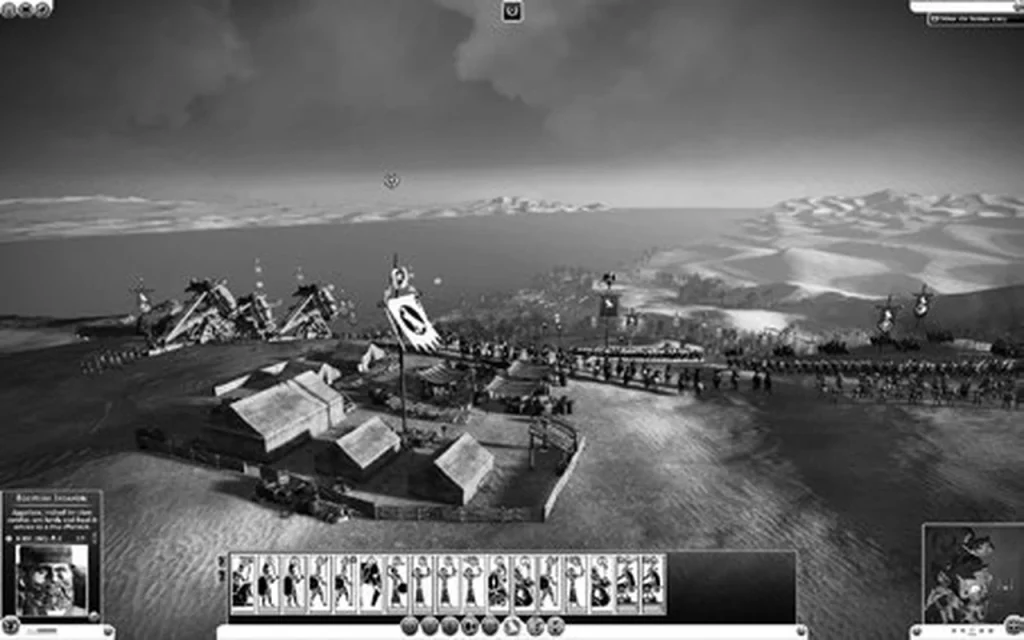
TL;DR: A practical Total War Rome 2 Rome campaign opening first resolves the Etruscan threat in Italy, then recovers the legion and consolidates Italia before choosing another theater. The documented route takes the army north toward Velathri, replenishes and continues to Ariminum. The remaining Etruscan possession on Corsica becomes a separate maritime problem.
Recruit around available Roman infantry, missile support and a useful cavalry role, but keep upkeep and post-capture recovery funded. Decide whether the next commitment is Mediterranean or continental before spending on the fleet or an additional army.

Sources and scope: The faction route comes from Gamepressure’s Rome first-steps guide, supported by its Roman unit overview. The official encyclopedia explains recruitment, replenishment and stances. The strategy assumes stock Grand Campaign conditions; the older route is not a promise of identical enemy movement in every save. Reviewed November 9, 2026.
On this page
Total War Rome 2 Rome campaign opening: connect the first decisions
Begin by organizing the existing war rather than declaring another immediately. The source identifies Rome’s initial conflict with the Etruscan League and a northern expansion route through Velathri and Ariminum. This provides a concrete first objective and keeps the early army focused on a connected theater.
Before moving, inspect the legion’s missing combat roles and the provincial costs of your recruitment plan. Add units that support the first engagement, select construction that solves a food, income or control need and leave a recovery reserve. The initial treasury must cover the aftermath as well as the attack.
Use an attack-capable movement arrangement when preparing to engage. The official stance entry explains that forced march improves movement but prevents initiating battle. Extra distance is not useful if it leaves the army unable to perform the action you moved it to carry out.
| Stage | Rome-specific task | Condition before proceeding |
|---|---|---|
| Opening preparation | Support the legion against the Etruscan front | Roles, upkeep and movement fit the attack |
| First capture | Take Velathri when the local threat allows | Preserve a recoverable army |
| Italian consolidation | Continue toward Ariminum and control Italia | Food, repairs and order support recovery |
| Next theater | Choose maritime or continental expansion | One funded strategic commitment |
| Further conquest | Advance from a stable frontier | The army and province can support it |
1. Build the early force around a useful Roman role mix
The faction overview identifies Hastati as early Roman infantry, Velites as javelin troops and Equites as early cavalry. Use those roles to form a supported army rather than imagining a later legionary roster is already available. Recruitment access depends on the general’s location and relevant regional production.
Make the infantry line capable of holding the main engagement. Put Velites where they can apply missile pressure while staying protected from enemy cavalry. Keep cavalry available for a credible flank or vulnerable missile target, rather than using it as the first unit to collide with a defended formation.
Retain some infantry as a reserve instead of placing every unit in the first contact. If one part of the line begins failing, the reserve gives you an option other than pulling the whole army apart. The exact number of units follows local recruitment and budget; this guide does not invent the starting army’s count.
Delay purchases that do not change the first fight
Additional infantry can be useful, but it should provide sustainable combat capacity. A second full army creates upkeep before the first front is resolved. If the existing force needs only another support role, expanding every military commitment can delay the construction and recovery the Italian campaign requires.
The later Roman roster is a separate development path. Avoid waiting for elite units while leaving the opening legion unsupported, and avoid assuming Hastati must remain unchanged forever. First win a manageable campaign step with the tools available, then invest in the production and technology that supports the next stage.
2. Take Velathri with recovery already planned
The documented opening sends the legion north toward Velathri. Evaluate the defending force and any nearby field army before committing. A faction guide provides direction, but the local army arrangement still determines whether an immediate assault, a supported field battle or preparation is the sensible action.
In the fight, keep missile support useful and avoid exposing cavalry in a role the infantry should handle. The purpose is to gain territory with a surviving force, because Ariminum follows in the source route. An army reduced to unusable fragments cannot carry out that next step simply because the first settlement is yours.
After the capture, review the surviving units and damaged structures. The official replenishment entry explains automatic recovery in friendly territory, with enemy territory or attrition conditions potentially preventing it. Use the recovered area as part of the advance, rather than rushing farther while expecting losses to replace themselves everywhere.
Do not turn the next target into an automatic march
Suppose the first battle leaves the infantry core badly reduced. This hypothetical result changes the plan even if Ariminum is still the next geographical objective. Recover, recruit an appropriate replacement or reassess the nearby threat before moving out.
If losses are limited and the route is secure, the advance can continue sooner. The meaningful condition is the army’s ability to win and hold the next position. A fixed turn count ignores the outcome of the first battle and the enemy movement around it.

3. Consolidate Italia before opening another distant front
The Rome guide follows Velathri with Ariminum and then provincial consolidation. It describes complete Italia control as enabling an edict. Use that additional provincial management option alongside the buildings and current problems in the recovered province.
Food, damaged structures and public order remain practical obligations. The official public-order entry identifies taxation, food, culture and garrisons as contributors. Read the causes of the current trend before treating one capture as a permanently stable province.
Repair a needed production or economic structure and choose the next construction for a particular role. Do not add every military chain just because the army has won its first war. The province must pay upkeep and support future recovery as well as provide stronger recruits.
Use the legion’s presence as a transition
A garrisoned army can support recovery and defense, but moving it away changes the province’s situation. Evaluate the area after accounting for that departure. If control relies entirely on the field army, leaving immediately can create a new internal problem behind the next invasion.
The goal is an Italian base that can support a wider campaign. A few additional turns of necessary recovery can be more useful than a distant attack that leaves the army understrength and the home economy unable to finance its return.
4. Decide how to handle the remaining Corsican problem
The first-steps source notes that the Etruscan League retains a Corsican possession after the Italian captures. That makes finishing the war a different logistical task from walking the legion north. Sea movement, naval protection and another landing must be considered before treating the remaining enemy as an immediate land objective.
The source suggests preparing a fleet at Neapolis for the Mediterranean stage. Fund that plan together with the army it supports. Ships add recurring upkeep and their usefulness depends on the maritime operation you intend to conduct, not merely their availability in a coastal settlement.
Do not assume an embarked army is an adequate replacement for a prepared naval force in every situation. Evaluate the enemy fleet and landing route before committing the legion at sea. Keep a usable recovery destination, and avoid putting the entire early military investment into a crossing without support.
5. Choose one next theater from the victory direction
The faction guide discusses Corsica, Sardinia and Sicily as Mediterranean objectives, followed by possible African or continental expansion. These are strategic alternatives, not a recruitment list requiring Rome to declare war on every neighboring faction at once.
The victory direction matters. A campaign prioritizing economic relations can preserve useful trade while preparing another theater; a conquest plan may choose a different frontier. Use the actual campaign objective panel instead of copying the old guide’s historical settlement totals as current requirements.
Hypothetical branch A: a Mediterranean commitment
Assume Italia is recovered, the army is usable and the next chosen objective is an island position. Prepare naval support, the landing force and enough resources for the conquered area’s recovery. Keep another frontier manageable through diplomacy rather than moving every army away with no plan for the exposed border.
If Carthage becomes the next opponent, treat that as a funded new war. Its holdings are spread across the region, so defeating one local force does not necessarily end the conflict. Select the position that improves Rome’s strategic situation and avoid pursuing every enemy settlement before securing the landing.
Hypothetical branch B: a continental commitment
Assume the next objective lies toward the Balkans or a connected northern route. Use the Italian base to support the field army and keep enough resources for frontier defense. A fleet intended for a postponed island invasion may be a lower priority than the force required on that land route.
This branch still needs a manageable diplomatic situation. Marching far from Italia while another unresolved enemy threatens the rear can create the same divided attention as an unsupported sea campaign. Choose the frontier you can hold and recover from before committing to a second theater.
Keep upkeep and replacements in the same budget
Consider a hypothetical 3,500 treasury with 1,500 reserved for repairs and the next required construction. Only 2,000 remains for immediate optional purchases before considering future upkeep. These are illustrative accounting amounts, not present Roman building or unit prices.
Recalculate after the first battles. Losses can increase replacement needs, while new territory can change both income and control costs. The amount that looked available before invading is not automatically the amount available after the army captures and repairs a settlement.
Mercenaries can supply an urgent role, but their convenience does not eliminate ongoing wages. Review whether the temporary hire is still needed after the immediate threat ends. Preserve the campaign’s ability to support the core army instead of leaving every emergency purchase on the payroll indefinitely.
Frequently asked questions
What is Rome’s first target in this plan?
The source-supported route prioritizes the existing Etruscan war, moving toward Velathri and then Ariminum. Actual enemy positions and army condition determine when to attack. The plan does not guarantee a specific capture turn.
Should I rush toward legionaries before finishing Italy?
Support the available early infantry and complete a manageable first campaign step. Later unit access belongs to the technology and building plan. Waiting for an imagined elite army does not solve the current front.
Why pause after taking Italia?
The legion needs recovery, useful buildings may need repair and provincial control must survive the army’s departure. Consolidation turns the conquest into a base for the next theater rather than another obligation requiring constant attention.
Must Rome invade Carthage immediately?
Choose the next war from the campaign objective and available resources. The Mediterranean route is an option requiring preparation. A supported continental plan or useful trading relationship can be relevant to a different victory direction.
Sources and further reading
- https://www.gamepressure.com/totalwarromeii/victory-conditions-and-first-steps-factions-rome/ze57a1
- https://www.gamepressure.com/totalwarromeii/characteristic-factions-rome/zd57a0
- https://r2enc.totalwar.com/en/manual/single-player/0017_enc_page_campaign_play_military_recruit/
- https://r2enc.totalwar.com/en/manual/single-player/0026_enc_page_campaign_play_military_replenish/
- https://r2enc.totalwar.com/en/manual/single-player/0018_enc_page_campaign_play_military_stances/
- https://r2enc.totalwar.com/en/manual/single-player/0044b_enc_page_campaign_play_province_public_order/
- https://r2enc.totalwar.com/en/manual/single-player/0039a_enc_page_campaign_play_province_trade_finance/
Keep exploring
Total War Rome 2 Diplomatic Expansion: protect your next conquest
Use diplomacy to support an expansion plan through reputation, understood treaty obligations and bounded allied war coordination.
Total War Rome 2 vs Total War Three Kingdoms: territory or characters?
Choose ROME II for classical civilizations and empire development; choose THREE KINGDOMS for Chinese warlords and relationships that connect statecraft with battle.

Total War Warhammer 3 vs Total War Rome 2: fantasy or empire?
Choose WARHAMMER III for fantasy races and Legendary Lords; choose ROME II for classical empire building, politics and historical battles.