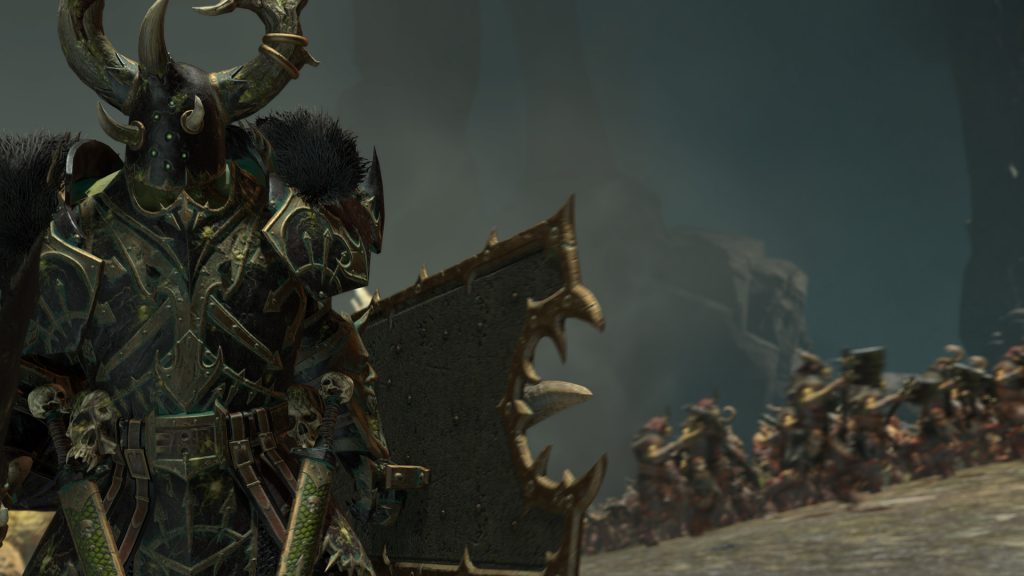
Total War Warhammer 3 legendary lord skill priorities should follow the next job your army must perform. Take a skill that removes a current weakness, unlocks a useful spell or strengthens troops you actually field. Then work toward the lord’s valuable unique effects. A fixed leveling order can waste early points when the campaign, army and available skill tree differ.
This is a way to choose points, rather than a universal rank-by-rank build. Read the current tree’s prerequisites and effect recipients before committing. The WARHAMMER III guide hub links to the campaign and combat systems those skills support.

On this page
Total War Warhammer 3 Legendary Lord Skill Priorities: Start with the next three battles
Look at the opponents you expect to fight and the losses your army has been taking. If the lord is your only reliable caster, a useful damage or support spell can change more than a small personal combat increase. If the lord must survive prolonged melee to hold the enemy in place, a defensive investment can make the rest of the army work.
For an army that already wins its battles comfortably, a campaign improvement can be more valuable. Movement, replenishment and other available operational effects can shorten the time between useful battles. Check the actual skill rather than assuming every lord has the same blue-line options or placement.
Plan a short sequence of points around that job. Keep the eventual unique unlock in view, but do not take several weak prerequisites without understanding when the payoff becomes available. Your next point should have a purpose you can explain in one sentence.
Match army skills to the roster you will keep
Red-line effects become attractive when several units in the army benefit. Read the named unit groups carefully. A bonus to a specific infantry category is wasted on an army that has already replaced those troops with monsters, cavalry or a different unit group.
Judge future recruits realistically. If you expect to keep inexpensive early infantry for many turns, improving them can be useful. If a recruitment upgrade is imminent, check whether the same skill covers the replacement units. Avoid building an entire skill plan around troops you cannot yet recruit or afford.
Patch notes show why recipient checks matter. Hotfix 6.2.1 corrected red-line coverage for Caskets of Souls and changed Azhag’s Insane Visions hero recruit-rank effect from provincewide to factionwide. Old descriptions and remembered scopes can produce the wrong decision.

Separate the lord’s combat job from faction bonuses
A personal melee skill, an army bonus and a factionwide effect solve different problems. Read the last part of the tooltip as closely as the number. A strong factionwide effect can be valuable even when your legendary lord spends a turn recruiting; a personal combat bonus needs the lord to use it in battle.
Caster lords need a casting plan. Choose the spells you can place reliably, consider their Winds costs, and compare the next unlock with improving an existing spell. A full collection of unused spells is less helpful than a small set that answers the army’s actual matchups.
A melee lord needs a realistic engagement. Improving charge damage does little if you continually leave the lord pinned in a long fight. A ranged or support lord benefits from the skills that preserve its intended position and contribution. Choose skills around how you control the character, not its portrait or reputation.
Read unique systems before copying another lord’s build
Legendary lord campaign mechanics can change the roster and the route. Tamurkhan’s Chieftains, for example, unlock units through Dominance and Fealty. Those rewards can alter which army buffs are useful later. They are separate campaign progression choices, not interchangeable skill points.
Use that system to forecast the army you will actually build. Once new unit access changes the composition, reassess the remaining red-line purchases. Do the same after acquiring a powerful hero or spell source: the lord no longer has to solve every battlefield problem alone.
Generic lords also illustrate why a universal tree is unreliable. Creative Assembly’s Cathay developer update described a Magistrate tree aimed at supporting the army, contrasting it with the Celestial General’s direct fighting role. Use the role comparison; check your selected legendary lord’s own current tree for the actual purchases.
Check unlocks and resets before spending
Mounts automatically unlock for mounted characters under the change documented in Update 1.2.0. An old guide that reserves a skill point to buy a mount is therefore a warning sign. Still check the mount’s current unlock conditions and whether changing it fits the battles you expect.
When reconsidering an existing build, inspect the reset confirmation and its consequences before accepting. Resetting should support a new army role or correct a meaningful mistake. It is unnecessary for a point whose benefit you still use.
After assigning points, open the affected unit, army or faction panel to confirm the intended effect. That last recipient check is more useful than finishing a copied build perfectly. Spend toward the lord’s next contribution, then reassess when the army changes.
Sources and scope
Official released notes support automatic mount unlocks and corrected skill recipients; developer articles support the distinct lord roles and Tamurkhan progression example. Exact skill costs, prerequisites and reset consequences are version dependent. No hands-on leveling test or universal optimal build is claimed.
Sources and further reading
Keep exploring

Total War Warhammer 3 vs Stellaris: battles or a galaxy to discover?
Choose WARHAMMER III for commanding fantasy armies; choose Stellaris for exploring a galaxy and shaping the society, technology and fleets of an empire.
Total War Warhammer 3 vs Total War Rome 2: fantasy or empire?
Choose WARHAMMER III for fantasy races and Legendary Lords; choose ROME II for classical empire building, politics and historical battles.
Total War Warhammer 3 vs Total War Attila: fantasy or survival?
Choose WARHAMMER III for fantasy races and Legendary Lords; choose ATTILA for late-antique survival, vulnerable territory and destructive warfare.