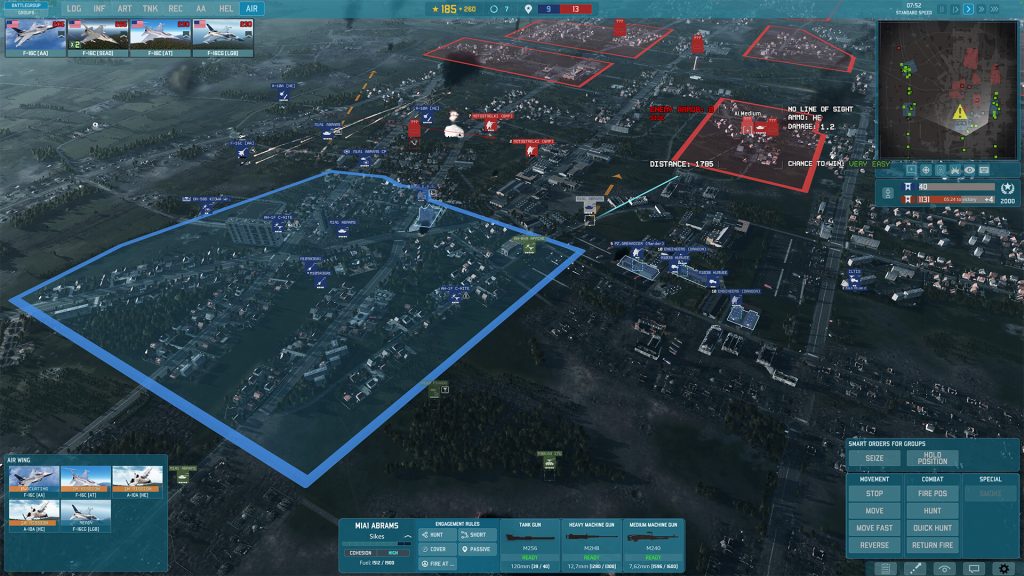
Good WARNO team game coordination gives each player a clear responsibility and makes requests specific. Agree on the selected mode, identify who is watching each important task, then communicate what changed and what help you need. A useful call names the location, the observed problem and the action you are asking a teammate to consider.
WARNO’s official description includes cooperative skirmishes and team multiplayer, with customized battlegroups drawn from divisions. The advice here is a communication workflow for those games. It does not assume that every mode has the same objectives, shared resources or command rules.

On this page
Agree on the mode and the first responsibility
Before deployment, confirm the actual game mode and how the selected match is won. Then divide responsibilities using locations and tasks everyone can identify on the current map. “I will watch the town-side objective” is easier to act on than “I will play aggressively.”
Make responsibility visible in your conversation, including who will notice a change and report it. Two players can unintentionally neglect the same area if each assumes the other is watching it. The first agreement should therefore say who owns the immediate decision, not simply which broad part of the map each player prefers.
Keep the arrangement provisional. If a player needs to cover a new task, state the change so the old task is not silently abandoned. This is particularly useful when several local engagements compete for attention: the team needs to know which responsibility has actually moved.
Describe your battlegroup as a contribution and a need
The official description says divisions supply the units available for a customized battlegroup and that units can be inspected in the Armory. Use your actual selection to explain what you can contribute. Name a role you have prepared, then identify any complementary help you expect to need.
For example, “I am concentrating on these infantry tasks; tell me if you need a different response to the observed vehicles” is a coordination statement, not a promise about a universal division build. Your teammates can assess the request against the units they actually brought.
Do this before the first crisis. A teammate cannot prepare useful assistance from “my deck is good” or from an unexplained division name. Say what you intend to do with the battlegroup, and update that description if the available units or local situation no longer support the original plan.

Report a change and the help it requires
Use a short three-part call: place, observed state, requested help. An example is “town-side approach: the enemy armor I can currently see has changed; can you inspect whether your selected force can cover that engagement?” This gives a teammate a location and a decision rather than a vague demand to rescue the entire sector.
Separate what you see from what you suspect. “That unit was last visible near the road” is different from “that unit is still there.” The developer’s tool explanation distinguishes observation and weapon-target feedback, making current information more useful than confidently repeating an old sighting.
Also confirm the response. “I can help after this task” tells the requester more than silence, while “I cannot provide that unit role” prevents a plan built on assistance that is not coming. A clear limitation can save more attention than a long discussion about who should have brought a different deck.
Review one shared sequence, then change one habit
Practice this workflow in a cooperative skirmish if that mode fits your group’s plans. Choose one objective-related task, agree on who watches it and use a specific call when the observed game state changes. Concentrate on the clarity of the handoff rather than treating the exercise as a tested competitive opening.
Afterward, identify the first communication failure: an unclear location, a stale observation, an unanswered request or an abandoned responsibility. Change that one habit for the next game. A general promise to “communicate more” is harder to apply than agreeing to acknowledge requests or explicitly hand off a task.
Keep the team plan short enough to remember: selected mode, current responsibilities, battlegroup contributions and the format for urgent calls. Update it when the match changes. Coordination is useful when it turns another player’s information into a decision you can actually make with your available units.
Sources and version scope
Sources read on November 10, 2026: WARNO official Steam description; WARNO developer introduction: Smart Target and line-of-sight tools (2021). Official product modes and dated developer tool explanations support the game context. Communication examples and practice decisions are editorial advice. No universal team formation, shared-resource rule, fixed cover bonus, current key binding or tested winning tactic is asserted.
Sources and further reading
Keep exploring
WARNO Recon Positioning: observe the fight before you join it
Put recon where it answers the force’s next movement question; preserve a useful view, cover the flank and move it when the front changes.
WARNO Command Unit Placement: capture safely, then use the leader
Bring command behind protection, complete the capture, then relocate or support nearby troops; WARNO does not require permanent parking after capture.
WARNO Division Deck Building: give every card a battlefield job
Build a division deck around an opening and reinforcement plan; cover battlefield jobs before spending cards on optional specialists.