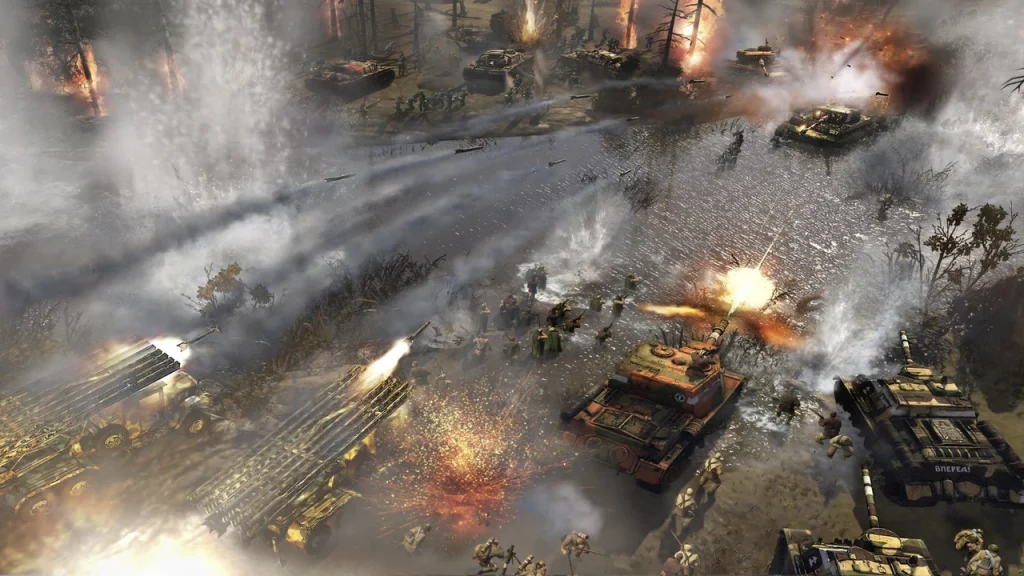
TL;DR: This Company of Heroes 2 OKW build order starts with three Volksgrenadiers as a practice capture core and the starting Sturmpioneer for a supported fight or engineering task. Choose Battlegroup Headquarters when recovery and indirect support solve the current problem, or Mechanized Regiment Headquarters for a funded mobile-vehicle plan. Deploy the truck where the existing army can protect it.
The 2021 Battlegroup arrangement separates construction, medics and the Battle Group upgrade. Deploying it provides le.IG access; medics are separate, and the Battle Group upgrade adds reinforcement and further unit/weapon access. Later Schwerer production also has a distinct Panzer Authorization step for its main tanks and Flak cannon.

Sources and scope: The OKW faction guide supplies unit roles, corrected with 2016, 2019 and 2021 patch records. General connections and recovery use Tomy’s beginner guide. This is a documented stock multiplayer plan, reviewed November 9, 2026, without personal match-test claims or a historical price schedule presented as current.
On this page
Company of Heroes 2 OKW build order: the first actions
Recruit the first Volksgrenadier and send it toward the connecting sector on your chosen resource route. Use the next Volks squad to approach useful cover near the forward contest. Add a third as the suggested practice core, giving it a supporting or adjacent capture job rather than stacking the entire army on the same point.
Move the starting Sturmpioneer toward a protected approach where it can support the fight. Its close-to-medium infantry role differs from the Volks capture core, and its construction and repair jobs remain valuable afterward. Do not expose it in an open crossing just to arrive a little sooner.
Reassess the first truck after contact. If injured infantry and a fixed enemy position prevent you from holding the connection, recovery and indirect support may be the relevant first branch. If your force holds the route and a light vehicle can exploit an opening, Mechanized may better serve the next action.
| Stage | Suggested action | Reason to change it |
|---|---|---|
| Opening | Three Volksgrenadiers and starting Sturmpioneer | Immediate vehicle pressure or a different capture need |
| First truck | Choose Battlegroup or Mechanized | Recovery/support versus a funded mobile role |
| Immediate counter | Add the missing support function | Suppression, indirect fire or anti-vehicle need |
| Recovery | Heal, reinforce and repair through appropriate tools | Current damage and exposed support positions |
| Later armor | Schwerer plus required authorization | A protected site and resources for the intended tank |
1. Give Volksgrenadiers and Sturmpioneers different jobs
Use Volksgrenadiers to capture and fight from cover while the Sturmpioneer supports a flank or shorter-range engagement. Their combination works when one force occupies the opponent and the other has a protected approach. Running both through the same exposed lane gives the opponent a concentrated target instead of a meaningful second threat.
Cover must protect against the actual firing direction. If the opponent moves around the obstacle, reposition rather than trusting the cover icon to solve every angle. Preserve squad health before the first recovery investment, because several damaged squads cannot maintain the same map pressure as a healthy capture core.
An optional Kübelwagen can provide capture and scouting utility, but its low armor makes the route important. Treat the vehicle as another unit needing repairs and attention. If the infantry already struggles to hold the connection, adding a fragile capture vehicle may enlarge the force without solving the fight that is losing income.
Separate the Volks weapon package from vehicle utility
The 2016 revision replaced the Volksgrenadier Panzerschreck package with StG44 rifles and added a truck-gated Panzerfaust. The rifle package improves a different combat role from a dedicated anti-tank weapon. Do not copy an older strategy that equips Volks as mass rocket-launcher infantry.
For the Battlegroup path, the 2021 Battle Group upgrade explicitly provides infantry weapon-upgrade access. Keep that tech investment separate from the munitions used on an individual squad. A package appearing after the required tech is an option to fund, not a free army-wide increase in firepower.
Keep anti-vehicle support able to use sight and a covered approach. A Panzerfaust is part of that response; it does not justify chasing a vehicle through hostile infantry or promise engine damage under every condition. The Raketenwerfer provides a distinct anti-vehicle gun role when the threat calls for it.
2. Deploy the first truck on a defendable route
The sWS Supply Half-track converts into a chosen tech structure in allied territory. Before deploying, identify the path your infantry will use to reach it, the route your vehicles will use to recover and the opponent’s likely approach. A convenient forward position can become a costly target when the frontline moves.
Avoid placing the truck where it must hold the sector by itself. The structure supplies access or support functions, while your combat units defend the surrounding area. A truck behind a sight blocker can reduce some direct exposure, but that placement does not remove indirect fire or attacks from another side.
In a hypothetical map layout, assume your fuel lies beyond one central connector. A first truck near the safe side of that connector can support your army without requiring it to defend a distant pocket. Placing it beside the far fuel may shorten one journey while lengthening every retreat or reinforcement route when the connector falls.
Use the arrangement your current units can preserve. If you need to buy another army just to defend the chosen truck location, the apparent forward convenience already carries an additional resource cost. Deployment is part of the build order’s budget, not an independent cosmetic choice.

3. Understand the Battlegroup upgrades separately
Battlegroup Headquarters suits an opening that needs infantry recovery or indirect support. Under the 2021 split, completing the base structure gives le.IG access. The medic upgrade adds nearby healing; the separate Battle Group upgrade provides reinforcement, Flak Half-track and Uhu Searchlight Half-track access, plus infantry weapon upgrades.
This changes the older guide’s statement that reinforcement needs no upgrade. A newly placed Battlegroup is not automatically a fully equipped forward recovery station. Budget for the specific support function you need and leave resources for the units expected to use it.
Healing and reinforcement solve different damage
Medics heal surviving infantry; reinforcement replaces missing models. Buying only one does not perform the other’s job. Check whether the returning core is injured, understrength or both before concluding that the recovery arrangement is complete.
A forward retreat point is another distinct upgrade and operating choice. If you activate it in an exposed area, several squads may arrive together at a location the enemy can pressure. Its shorter return distance is useful only while the recovery area remains safe enough to receive those units.
Add support to change a specific fight
The le.IG supplies indirect pressure against fixed positions and can support a screened infantry approach. Keep the gun guarded; using range does not protect it from enemy infantry reaching its position. Select targets that block the route your army actually needs.
The standard MG34 is recruited at HQ with the required first-tech access described in the patch record. The 2021 hotfix also corrects its availability after Battlegroup construction. Use the gun to cover a relevant infantry approach while Volks screen the sides, rather than expecting a suppression unit to capture and secure an entire sector alone.
4. Choose Mechanized for a vehicle plan you can fund
Mechanized Regiment Headquarters supplies Luchs, Puma and Walking Stuka roles. These are alternatives for different problems, not a requirement to produce the whole vehicle roster before later tech. The first purchase should follow the threat or opportunity you identified before deploying the truck.
A Luchs provides anti-infantry pressure and light-target utility. A Puma emphasizes mobile anti-vehicle work. The Walking Stuka supplies an indirect barrage role against defended positions. Their movement, target selection and protection needs differ enough that choosing the building alone is not a complete plan.
The repair pioneers are a separate upgrade, as the 2016 revision and faction guide explain. Deploying Mechanized does not automatically provide every repair function. Keep the starting Sturmpioneer available for engineering or fund the repair upgrade when the vehicle force needs that support.
Keep the vehicle useful between engagements
Scout the approach with infantry sight, withdraw damaged vehicles along a protected route and repair before returning to pressure. A light vehicle that spends its time limping near the front does not provide the intended mobile advantage. Another vehicle purchase can wait if existing damage consumes all available engineer attention.
Avoid driving a Luchs into an anti-tank position because the build order says it should attack after production. The useful action is to find a route where its role matters. If no credible route remains, preserve it while infantry and support weapons change the enemy arrangement.
5. Fund the Schwerer transition and authorization
The documented Schwerer route requires a converted Battlegroup or Mechanized structure. The later 2019 split separates the base headquarters from Panzer Authorization, which unlocks the main Jagdpanzer IV, Panzer IV and Panther roles and activates its Flak cannon.
The 2021 revision shifts the fuel split and removes the authorization requirement for Obersoldaten weapon upgrades. Consequently, do not use the older statement that every Obersoldaten upgrade waits for authorization. Also do not treat base deployment as immediate access to the entire tank roster.
Choose a safe site before saving for a tank. If the Panzer headquarters is destroyed, the documented authorization arrangement requires replacement investment. Its defensive gun does not make the building immune to anti-tank fire, barrages or an attack your screening force cannot stop.
A Panzer IV supplies a general-purpose medium role, whereas Jagdpanzer IV emphasizes armor engagement and needs anti-infantry support. Keep infantry sight, engineering recovery and existing counters in the budget. Producing the tank without those supporting functions can leave the new purchase unable to hold the territory it was supposed to recover.
Two assumed openings that lead to different purchases
Battlegroup branch: a fixed enemy gun and damaged infantry
Suppose your Volks squads reach the connector but cannot pass a supported enemy machine gun. The survivors return injured after repeated attempts. A protected Battlegroup with the necessary recovery upgrades and a le.IG gives the force a different way to prepare its next attack.
Use infantry to screen the indirect gun, recover before pushing and attack the position from the route the barrage creates. Add anti-vehicle support if that threat appears. Do not buy the Flak Half-track solely to complete a list while the same exposed infantry approach remains unchanged.
Mechanized branch: connected income and a mobile opening
Suppose the infantry holds the connector, enemy infantry moves through an exposed flank and a light vehicle can reach it without crossing known anti-tank coverage. A Mechanized plan can turn that opportunity into Luchs pressure, with the Sturmpioneer or purchased repair support preserving the vehicle afterward.
If an enemy vehicle is the urgent obstacle instead, select the anti-vehicle role and keep the Raketenwerfer screened. A second tech truck may later add medical support, but it is a separate expense. Name the missing function before backteching rather than assuming both initial structures are mandatory.
Frequently asked questions
Does placing Battlegroup immediately provide medics and reinforcement?
No. In the documented 2021 split, medics are a separate upgrade, while reinforcement comes with the Battle Group upgrade. Base construction provides le.IG access and first-tech functions, not every recovery feature.
Should OKW always open with Mechanized?
Choose it when its vehicle role and recovery plan match the map situation. Battlegroup can be more useful when infantry damage or a fixed position requires healing and indirect support. Neither branch removes the need to protect connected income.
Does Schwerer deployment immediately provide working Flak and tanks?
The split tech arrangement requires Panzer Authorization for its defensive cannon and main tank unlocks. Keep the structure protected before and after that purchase; a forward site remains vulnerable despite the gun.
What should receive resources before an optional fourth Volks squad?
Recover the surviving core, cover an observed vehicle threat and fund the chosen truck’s required upgrade. An extra squad is useful when it provides another sustainable capture or combat function. It can wait when missing support already prevents the current army from operating.
Sources and further reading
Keep exploring
Company of Heroes 2 vs Men of War Assault Squad 2: squads or direct control?
Company of Heroes 2 vs Men of War Assault Squad 2: compare cover and combined arms with direct soldier control, skirmishes and the right game package.
Company of Heroes 2 vs Gates of Hell Ostfront: what should carry the battle?
Company of Heroes 2 vs Gates of Hell Ostfront: choose squad cover and counters or switchable direct control with a developing Conquest army.
Company of Heroes 2 Veterancy Mechanics: 7 Squad Decisions
Understand what veterancy changes, why surviving squads retain value and how to use infantry, weapon-team and vehicle experience in real decisions.