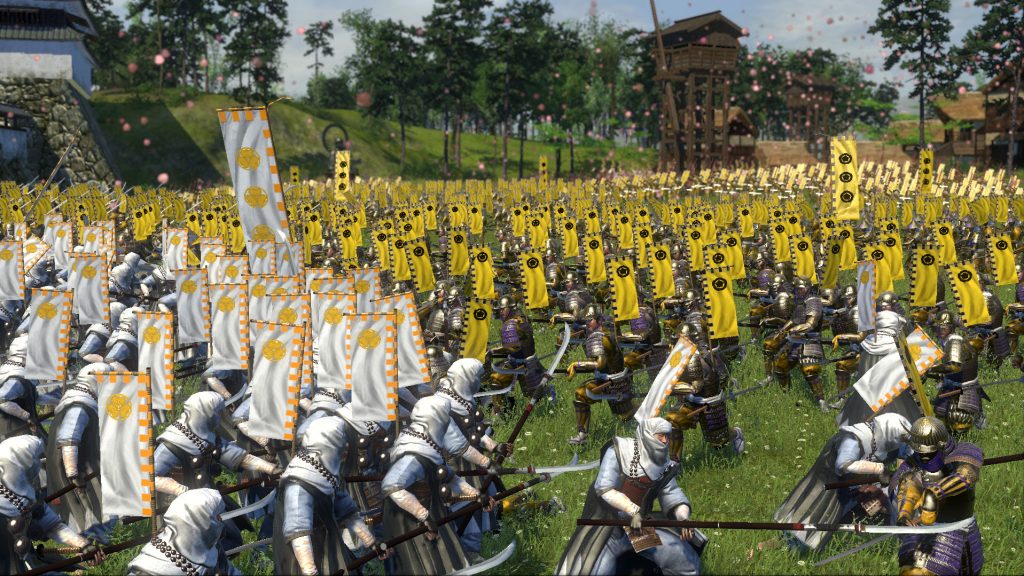
Choose SHOGUN 2 for a Japanese clan campaign with directly commanded land and sea battles. Choose Crusader Kings III for a medieval dynasty whose next playable heir continues the story. In Total War Shogun 2 vs Crusader Kings 3, the deciding issue is what you want to do with political power once you have it.
A Daimyo’s route to becoming Shogun gives SHOGUN 2 a defined historical ambition. CK3 asks you to establish and preserve a ruling house across generations. Both involve diplomacy and warfare, but those shared themes serve different kinds of campaign investment.

On this page
Two different ways to spend an evening
| Your main interest | Start with | The documented attraction |
|---|---|---|
| Commanding troops in a separate real-time battle | SHOGUN 2 | Land and sea battles connected to a turn-based campaign |
| Preparing a future playable ruler | Crusader Kings III | Heirs, guardians and dynastic continuation after a ruler dies |
| Clans competing to reunite Japan | SHOGUN 2 | A Daimyo uses warfare, economics and diplomacy to become Shogun |
| Personal schemes and managing titles | Crusader Kings III | Traits, lifestyles, agents and granting or claiming titles |
The table identifies fit rather than a winner for every player. It cannot establish relative learning time, campaign length or performance. Those depend on the actual version, settings, hardware and the player’s interests, rather than simply which historical period appears on the cover.
SHOGUN 2 keeps the army close to the campaign goal
The official SHOGUN 2 description puts you in sixteenth-century Japan as a Daimyo, the leader of a clan. Economics, diplomacy and military engagements all support the aim of reunifying Japan under your command. Choose it if that ambition makes the management between battles feel purposeful.
It explicitly offers real-time land and sea battles. Fire, siege tactics and multi-stage sieges appear among its documented features. The attraction for a battle-focused player is having a campaign that leads into a battlefield where army command remains part of the experience, rather than judging a strategy game only by its political map.
Generals and agents develop skills and experience. Spies and assassins belong to the listed toolkit, so SHOGUN 2 also gives you people and covert activity to consider between battles. Still, its advertised character progression is a different reason to care about a campaign from CK3’s succession through new playable heirs.

CK3 makes the ruling house the continuing project
The official Crusader Kings III description starts with choosing a noble house and leading a dynasty through a medieval setting. When a ruler dies, the lineage continues through new playable heirs. Prefer CK3 if preparing that next person is itself a satisfying strategy problem.
Traits and lifestyle choices influence character actions and schemes. Educating an heir or appointing a guardian gives future leadership a present-day decision. You also manage relationships with a broader cast of characters who can be influenced, betrayed or otherwise drawn into your plans. These features reward an interest in the people who hold power.
War is one tool among several. The documented options also include diplomatic skill, granting titles, and using agents for schemes such as blackmail or murder. Choose this game when you want political and personal actions to carry much of the campaign, rather than needing a manually commanded Total War battle to make the evening worthwhile.
What is the drawback for each buyer?
SHOGUN 2 is a weaker fit if the central wish is to guide a medieval dynasty through successive rulers. Its Japanese clan objective and direct battles offer a different campaign frame. Developing a general can be engaging without replacing the appeal of educating a future playable heir.
CK3 is a weaker fit if the main wish is commanding samurai-era formations in a separate real-time battlefield. Armies and warfare in its product description do not imply SHOGUN 2’s tactical combat format. Political depth is useful only if you want to spend time making those political decisions.
Keep the editions straight as well. This comparison concerns base SHOGUN 2’s sixteenth-century setting, not Fall of the Samurai’s later warfare. Check current listings for the campaign or edition you intend to buy rather than deciding from a bundle name alone.
Choose the decision you want to return to
Picture closing a session after a success. Would you be eager to plan the clan’s next campaign move and command its next battle? SHOGUN 2 fits that interest. Would you be eager to inspect the ruling family’s next generation, titles and relationships? CK3 is the stronger starting point. This is a buying exercise based on documented systems, not a report of measured play sessions.
Follow the SHOGUN 2 beginner guide for Japanese clan conquest, or the Crusader Kings III beginner guide for dynasty management. Choose the campaign activity you would keep enjoying after the novelty of its historical setting has passed.
Sources and further reading
Keep exploring
Crusader Kings 3 cultural innovations: choose the unlock your realm needs
Prioritize the innovation that removes a current realm obstacle; check the head, matching skill, cultural Development, spread and era restrictions.
Crusader Kings 3 faith reformation: holy sites, rites and the realm afterward
Reform an unreformed rite with holy-site access and Piety, then check doctrine choices, divergence and which rulers will follow the change.
Manor Lords vs Crusader Kings 3: build a town or guide a dynasty?
Pick Manor Lords for a medieval settlement and its household economy; pick Crusader Kings III for rulers, relationships and a realm passed between generations.