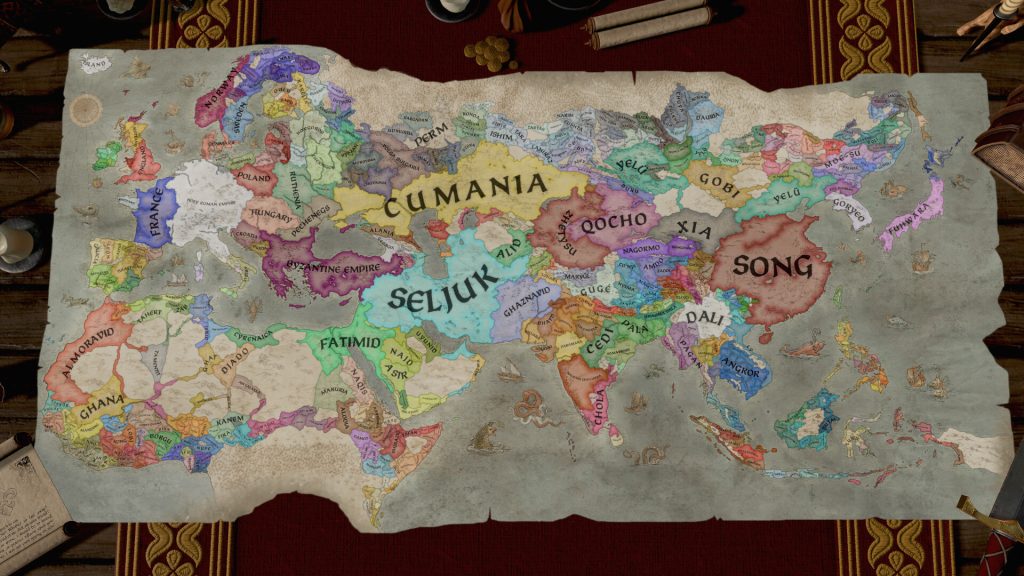
The normal route is to reform an unreformed rite while controlling at least three holy sites and paying its Piety cost. Crusader Kings 3 faith reformation now needs a careful distinction between a faith and its rites: the PC 1.20 Wiki assigns holy sites and religious organization to the faith, while a rite supplies the tenets and doctrines its followers practice. Check which action your religion panel offers before planning a war or saving Piety.
Reformation does not require replacing a tenet or doctrine. You can organize the existing religious practice without redesigning every rule. Creating a different rite within an organized faith and changing an existing rite are separate actions with their own restrictions.

On this page
Choose the religious action that matches your goal
If your rite is unreformed, investigate reformation. If you already belong to an organized faith and want different practices, investigate a new rite. If you are the Head of Rite, the current Wiki says you can edit that rite once per lifetime, but cannot create a new one. Being the person who can modify a rite is therefore different from being eligible to branch away from it.
Ordinary new-rite creation requires an adult ruler at peace, at least one changed core tenet or doctrine, and eligibility through independence, duke-or-higher rank or Ecclesiastical government. Game rules also limit whether branched rites are allowed, their number and the interval between their creation. By God Alone adds further requirements for theocratic faiths when that DLC is installed. These are new-rite conditions; do not assume every one is a universal reformation requirement.
Before pursuing custom rules, compare adopting an existing rite with creating your own. The existing option avoids designing a new set of practices, but its doctrines must fit your plans. The Wiki’s New rites section is the reference for the creation route; the adjacent Reformation section describes organizing an unreformed rite.
Follow the three-holy-site route
- Open your current faith and rite information. Confirm that the rite is unreformed, then identify the holy sites relevant to it. A famous religious location belonging to a different faith is not automatically a qualifying site.
- Check control of three sites. Read the requirement in your save before committing to conquest. A planned claim, an allied ruler or a county with sympathetic inhabitants does not itself prove that your ruler controls the site.
- Preview the reformation without adding unnecessary changes. The Wiki allows reformation with the existing tenets and doctrines. This gives you a starting design to compare against any more ambitious changes.
- Read the final Piety total and unmet conditions. The price follows the same cost and divergence mechanics as new rites. Fervor affects cost, and changing more of the religious practice increases the Piety expense.
- Review the people and realm affected before confirming. Budget for the religious transition as well as the wars that secured the sites.
On reformation, the new rite keeps the old rite’s name while the old rite is renamed. If two similarly named versions appear afterward, inspect their actual organization, doctrines and followers. Their names alone do not explain which religious rules a vassal now follows.
Landless characters require particular care: the Roads to Power section permits landless players to create rites, but explicitly says they cannot reform rites or become Heads of Rite. Saving enough Piety does not remove that restriction.

Can you reform without personally gathering three holy sites?
Royal Court provides a conditional holding-court event that lets you pay a large amount of Gold to remove the three-site restriction. The current Reformation section lists all of the following conditions:
- Your level of devotion is at least Faithful.
- At least three counties containing the rite’s holy sites follow the rite.
- At least one holy site is in your domain or belongs to a vassal of the same rite.
- Another independent ruler follows the same rite and has a holy site in their realm, without being Zealous or your Rival.
- A neighboring independent ruler, or one sharing a sea zone, follows a Hostile or Evil reformed rite from another religion and has won a war, controls one of your rite’s holy sites, or controls at least four counties following your rite.
This is a specific event route, so simply owning Royal Court or reaching the devotion level is insufficient. Compare the cost of satisfying these conditions and paying Gold with the cost of the ordinary holy-site campaign. Treat an unavailable event as a reason to inspect the entire list, rather than repeatedly holding court and expecting Piety alone to unlock it.
Change doctrines for a reason, then check divergence
Choose each change for a concrete problem in your realm. If marriage rules are your reason to reform, inspect their consequences for the family you intend to build. If you want different religious leadership, read the clerical and head-of-faith options together. A title or a promising tenet name is not enough to explain how the proposed religious structure will operate.
The 1.20 new-rite rules only allow known doctrines and tenets to be selected unless the creator has the Prophet lifestyle perk. That makes a missing option a knowledge check, not necessarily a Piety shortage. Check the option’s own explanation before copying a build that assumes every tenet is selectable.
Divergence measures a branched rite’s differences from the faith’s Mainline Rite. Passing that faith’s Heretical Threshold can expose it to being declared heretical; at 100% Divergence the Wiki says a rite creates a new faith. The threshold varies with the mainline doctrines. Review the preview when your goal is to remain within a larger faith, because a sufficiently different design can change the political relationship you expected to preserve.
Prepare for who follows the new rite
The new-rite section says the creator, close family and realm capital convert immediately, while vassal conversion depends on opinion and the difference in Learning. This is a warning to inspect support rather than count every subject as a guaranteed follower. Read the supporters shown in your own reformation preview and examine the resulting realm afterward.
Consider a hypothetical ruler who secures a third holy site just after an expensive war. Reforming immediately might complete the religious objective while leaving too little money for the next political problem. A more deliberate timing choice is to recover your resources, improve relations with important vassals and review your heir’s religious position. Use faction management and succession planning alongside the religious preview.
Organization has tradeoffs. The Wiki gives organized faiths stronger conversion and makes them compatible with the religious requirement for adopting feudal or clan ways. Unreformed faiths have advantages involving prestige, conquest, pagan combat and raiding. Check what still permits those actions under your government and other rules after reforming. Religious organization is one condition in a government transition; complete the actual adoption decision separately.
Before spending the Piety, be able to explain three things: which religious obstacle the change solves, why the proposed doctrines fit your dynasty, and how you will handle subjects who keep their previous practice. That produces a more usable reform than choosing every appealing option in the creator and discovering the price and opposition afterward.
Sources and version scope
Researched November 10, 2026 from the Paradox-hosted CK3 Wiki Religion page, explicitly verified for PC 1.20, especially Religion heads, New rites and Reformation. The Royal Court, By God Alone and Roads to Power paths above are conditional on the named DLC and listed requirements. Exact Piety totals and eligibility should be read in your current save. Archived official screenshots provide character and realm context; they do not depict the 1.20 reformation interface. Examples are hypothetical, with no claimed playtest. Older PC builds, console versions and mods may differ.
Sources and further reading
Keep exploring

Crusader Kings 3 cultural innovations: choose the unlock your realm needs
Prioritize the innovation that removes a current realm obstacle; check the head, matching skill, cultural Development, spread and era restrictions.

Manor Lords vs Crusader Kings 3: build a town or guide a dynasty?
Pick Manor Lords for a medieval settlement and its household economy; pick Crusader Kings III for rulers, relationships and a realm passed between generations.

Total War Three Kingdoms vs Crusader Kings 3: battles or heirs?
THREE KINGDOMS fits direct tactical battle command; Crusader Kings III fits a ruling house whose playable heirs carry its story forward.