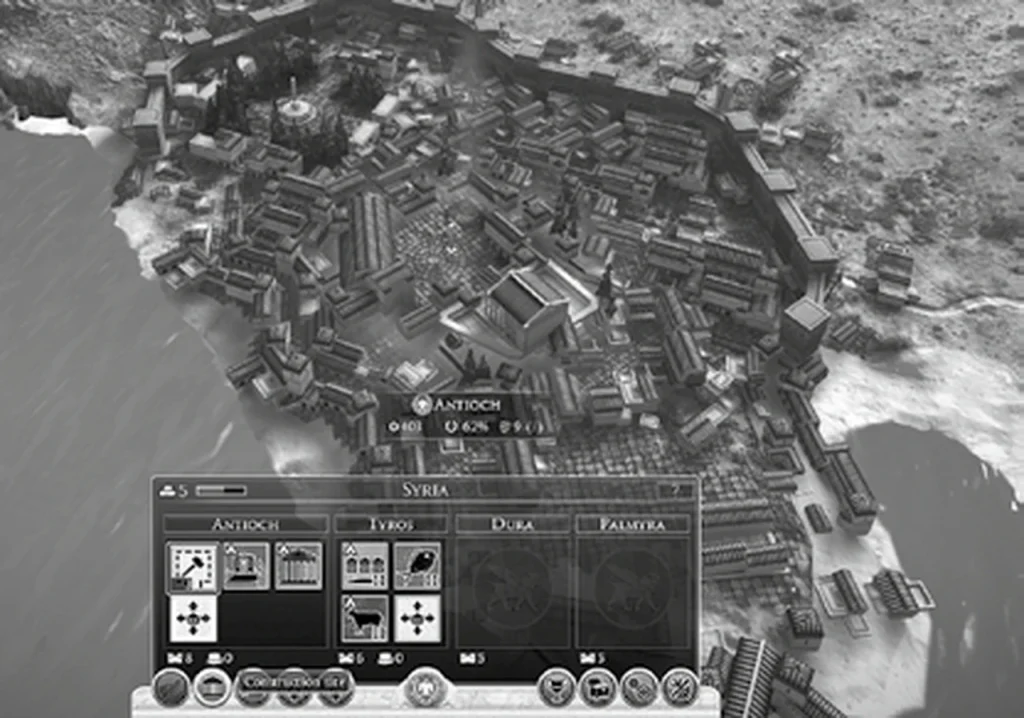
TL;DR: To improve Total War Rome 2 public order, identify the negative causes first, then choose a response that acts soon enough. Tax relief and a stronger local garrison can answer an immediate crisis; food supply and suitable entertainment or religious buildings address lasting causes. Public order accumulates over turns, so a province that still looks calm can be heading toward trouble if unhappiness keeps outweighing happiness.
Use two decisions: stop the decline now, then remove the reason it happened. A new building that finishes later will not necessarily save a province already in crisis. An army that holds unrest down temporarily is also not a permanent recovery plan if you intend to move it away.

Sources checked November 9, 2026: the official Rome II encyclopedia and Emperor Edition manual. Examples below are strategy recommendations, not personal playtest results. Screenshots are archived manual images; modded campaigns can change the rules.
On this page
Total War Rome 2 public order: separate the total from the trend
The official manual describes public order as an accumulated provincial condition affected by buildings and the garrison. Treat its present position and the direction of change as different information. A comfortable current position with continuing negative pressure deserves attention before it becomes an emergency.
The official public-order reference lists taxation, food shortages, entertainment, religious buildings and repression through garrison size. It also identifies enemy armies and cultural unrest as possible causes of trouble. Start with those actual contributing factors rather than assuming every unhappy province needs the same construction project.
1. Sort the causes into immediate and lasting problems
Select the troubled settlement or province and open its details. Find the public-order factors and identify the largest continuing negative pressure. Then ask whether the cause is a recurring policy, a resource shortage, a military threat or a local condition that needs time to improve.
Tax burden is a policy problem you can respond to quickly. A shortage of food needs a supply correction. Cultural unrest or a weak building base usually calls for a longer plan. These causes can coexist, so removing one does not automatically mean the remaining balance is healthy.
Do not confuse a temporary improvement with a completed recovery. If the change comes from an army being present, calculate your next campaign decision with that army’s departure in mind. If a new building is still in the queue, its promised contribution is not yet doing the job.
Use the cause list to limit spending. Buying every available improvement makes it harder to preserve money for the actual emergency.

2. Use tax relief when the response must be immediate
The Trade & Finance reference describes tax controls, the effect of taxation on public order and wealth, and tax exemption as a temporary remedy. Lowering tax pressure can be a direct response when taxation is part of the crisis.
Open Trade & Finance and distinguish the global tax setting from an exemption for the trouble area. A global reduction affects the wider economy. A targeted exemption can concentrate relief, but still gives up revenue that you may need elsewhere.
Review the projected income after the change. If your army and construction expenses already consume most income, a broad tax cut can trade a public-order problem for a financial one. Use relief with a plan for the costs you will carry while the province recovers.
Do not restore the previous burden merely because one turn looks better. Check whether the underlying cause has been corrected. If food or building problems remain, immediately returning to the old policy can restart the same decline.
3. Use a garrison as a bridge to recovery
A local garrison contributes repression, and the official public-order guide recommends increasing it when unrest is becoming dangerous. This makes military presence an immediate tool. Its purpose here is to contain the problem while other measures take effect.
Keep the force proportionate to the campaign task. An important field army may be too expensive to leave indefinitely in a quiet interior area. If it must remain temporarily, use those turns to complete the lasting correction instead of treating the army’s presence as the entire solution.
Military costs still matter. Recruitment and upkeep are separate expenses, as explained in the official manual. More troops can help the local position while reducing the treasury available for food or public-order buildings. Check both sides of that decision.
Before the army moves, reassess the province without relying on its contribution. If the recovery disappears when the troops depart, postpone the departure, replace the temporary support or change the local plan. A campaign advance should not leave an avoidable crisis directly behind it.

4. Correct food and damaged-building problems
Food shortages contribute to unhappiness. The construction reference identifies farms as an essential food source. If a shortage appears after your development choices, make restoring food part of the recovery rather than trying to suppress its consequences indefinitely with troops.
Use the construction panel to choose a food-producing project your area can actually build. Check its completion time and cost before counting on it. If the correction takes several turns, use a suitable temporary measure to keep unrest under control during that wait.
Inspect damaged or ruined buildings that your plan depends on. The official construction guide distinguishes slow automatic repair of damage from a ruined building that requires the Repair control. A building icon alone does not establish that the intended facility is ready to support the province.
Keep this correction focused on public order. You do not need to redesign the entire empire to answer one identified food problem. Restore the missing support, then reconsider further development once the province’s direction is sustainable.
5. Build lasting local support
Entertainment and religious buildings are among the public-order contributors listed by the official reference. Choose a chain whose actual effects address your problem. Different factions and campaign settings offer different construction choices, so do not assume one named building is available everywhere.
The construction guide gives a useful inspection method: right-click the building picture for its description and statistics. Compare its contribution, prerequisites, cost and time, then add the chosen building to the construction queue. This turns a general recommendation into a specific purchase decision.
When cultural unrest is listed, keep it distinct from an ordinary tax burden. Reducing taxes can buy time, but it does not prove the cultural cause has vanished. Consider the locally available religious or other relevant effects rather than assuming every positive happiness bonus solves every contributing factor.
Avoid demolishing useful support just to make space for another profitable chain. First decide what replaces its role and when that replacement becomes active. Provincial development is easier to manage when the public-order effect is considered before removing the old building.

6. Respond to military pressure without overspending on buildings
The official guide identifies rampaging enemy armies as a source of unrest. When that is part of the problem, a distant construction plan may not answer the cause. Deal with the military situation while using appropriate temporary support for the affected population.
Distinguish protecting the province from merely adding repression. A force stationed locally may help public order, but an enemy still damaging your position remains a campaign problem. Consider whether the army needs to defend, intercept or preserve a safe settlement rather than sit without a defined job.
After the threat changes, recheck the remaining pressures. A province can still have excessive taxation or inadequate support even once the enemy is gone. Do not spend on another military solution when the continuing cause now belongs to the economy.
Coordinate the recovery with your wider campaign. If every troubled province consumes an expensive army, expansion will slow and upkeep can dominate income. Lasting local support is what makes it possible to release those forces for other work.
7. Use a complete recovery sequence
Imagine a recently troubled area with heavy tax pressure, a food shortage and an army you want to move. Start with relief that acts now, then queue the food correction and inspect the available public-order support. Leave the army long enough for the continuing causes to improve.
When the construction completes, re-evaluate the direction of public order and projected income. Restore tax pressure cautiously only when the balance can tolerate it. Then move the army after considering how the loss of its local contribution changes the situation.
This sequence separates three jobs: stop deterioration, remove the shortage and release the temporary force. The Rome II hub and strategy guide archive provide adjacent campaign lessons. Use those for deeper economy and military planning rather than treating public order as an isolated number.
Common public-order mistakes
One mistake is reacting only when the accumulated position is already very poor. Another is counting a queued building before it finishes. A third is restoring taxes or moving an army at the first sign of improvement, before the lasting causes are corrected.
The common remedy is a recovery plan with a clear exit condition: the province can tolerate its intended tax policy and the planned military departure. That is more useful than keeping every emergency measure forever or repeatedly buying support without identifying the cause.
Public order questions
Does a positive current position mean I can ignore the province?
No. Public order accumulates over turns. Continuing unhappiness can erode a healthy-looking position. Examine the causes and direction before choosing another burden or moving the local army away.
Should I build first or lower taxes first?
Choose by urgency. Tax relief can answer immediate tax pressure, while construction needs time. Combine a temporary response with the appropriate lasting correction when waiting for the new building would leave the crisis unchecked.
Can I leave an army there permanently?
You can plan around military presence, but it uses a force and its upkeep. If the army is needed elsewhere, develop a recovery that does not depend on it. Repression is a tool with a campaign cost, not free provincial support.
Sources and further reading
- https://store.steampowered.com/manual/214950
- https://r2enc.totalwar.com/en/manual/single-player/0044b_enc_page_campaign_play_province_public_order/
- https://r2enc.totalwar.com/en/manual/single-player/0039a_enc_page_campaign_play_province_trade_finance/
- https://r2enc.totalwar.com/en/manual/single-player/0045_enc_page_campaign_play_province_construction/
- https://store.steampowered.com/app/214950/
Keep exploring
Total War Rome 2 Diplomatic Expansion: protect your next conquest
Use diplomacy to support an expansion plan through reputation, understood treaty obligations and bounded allied war coordination.

Total War Warhammer 3 vs Total War Rome 2: fantasy or empire?
Choose WARHAMMER III for fantasy races and Legendary Lords; choose ROME II for classical empire building, politics and historical battles.
Total War Rome 2 vs Total War Attila: build an empire or survive?
Choose ROME II for classical empire growth; choose ATTILA for late-antique survival, a vulnerable Western Roman Empire and destruction mechanics.