A systems-based review for readers choosing CK3: dynasty continuity and character politics are the strongest fit, with succession uncertainty and context-reading as tradeoffs.
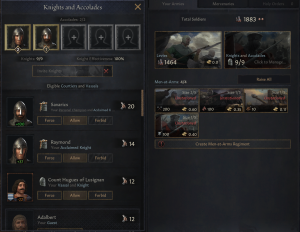
Manage accolades as continuing honors: match primary attributes to a long-term role and maintain glory, holders, successors and army presence.
Keep a useful personal domain within capacity and prepare for the next ruler’s different limit.
Fix poor control, build appropriate income, and use development for the longer-term domain.
Fabrication creates a claim to pursue; it does not transfer the land or pay for the war.
Read faction type and membership, then address the strongest actionable grievance.
Negotiate feudal obligations as a package of income, rights and political costs.
Choose an alliance that can help the intended conflict without sacrificing the dynasty plan.
Appropriate siege engines shorten the occupation phase; protecting them and choosing the target remain essential.
Spread armies for sustainable movement and regroup deliberately for a decisive battle.
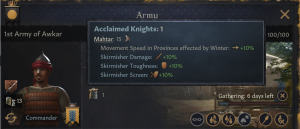
Knight effectiveness multiplies the value of the knights actually serving; prowess and roster management remain separate priorities.
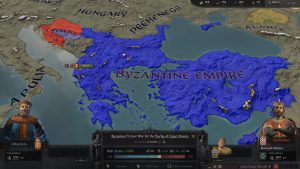
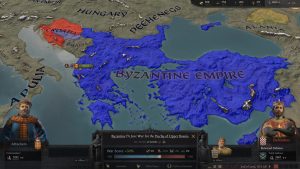
Choose a war by the resulting ownership and costs, not only by the visible target.